Chen Chun-Nan, Lin Che-Yi, Chi Fan-Hsiang, Chou Chen-Han, Hsu Ya-Ching, Kuo Yen-Lin, Lin Chih-Feng, Chen Tseng-Cheng, Wang Cheng-Ping, Lou Pei-Jen, Ko Jenq-Yuh, Hsiao Tzu-Yu, Yang Tsung-Lin
From the Department of Otolaryngology, National Taiwan University Hospital and National Taiwan University College of Medicine, Taipei, Taiwan (CN-C, CY-L, CH-C, YC-H, YL-K, CH-L, TC-C, CP-W, PJ-L, JY-K, TY-H, TL-Y); Department of Otolaryngology, National Taiwan University Hospital Hsin-Chu Branch, Hsin-Chu, Taiwan (CN-C, YC-H, YL-K); Graduate Institute of Clinical Medicine, National Taiwan University College of Medicine, Taipei, Taiwan (CN-C, CY-L); Department of Otolaryngology, National Taiwan University Hospital Yun-Lin Branch, Yun-Lin, Taiwan (CY-L, FH-C, CH-C); and Research Center for Developmental Biology and Regenerative Medicine, National Taiwan University, Taipei, Taiwan (TL-Y).
Medicine (Baltimore). 2016 Jan;95(4):e2172. doi: 10.1097/MD.0000000000002172.
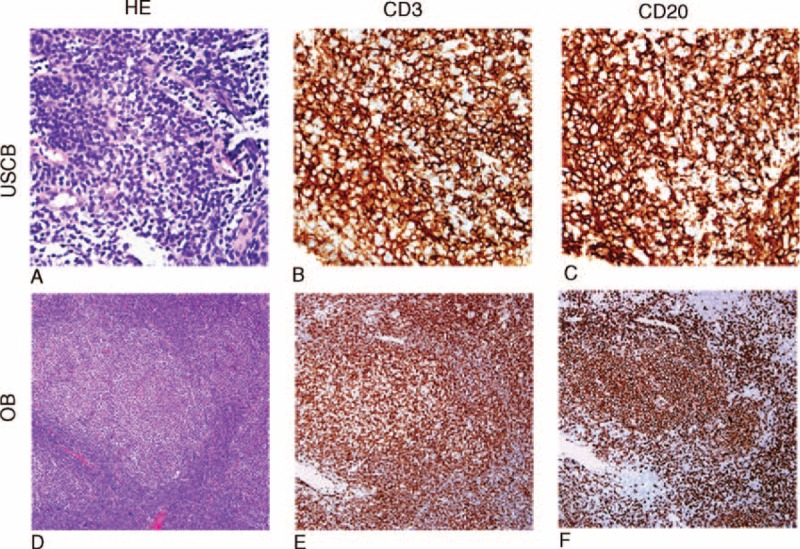
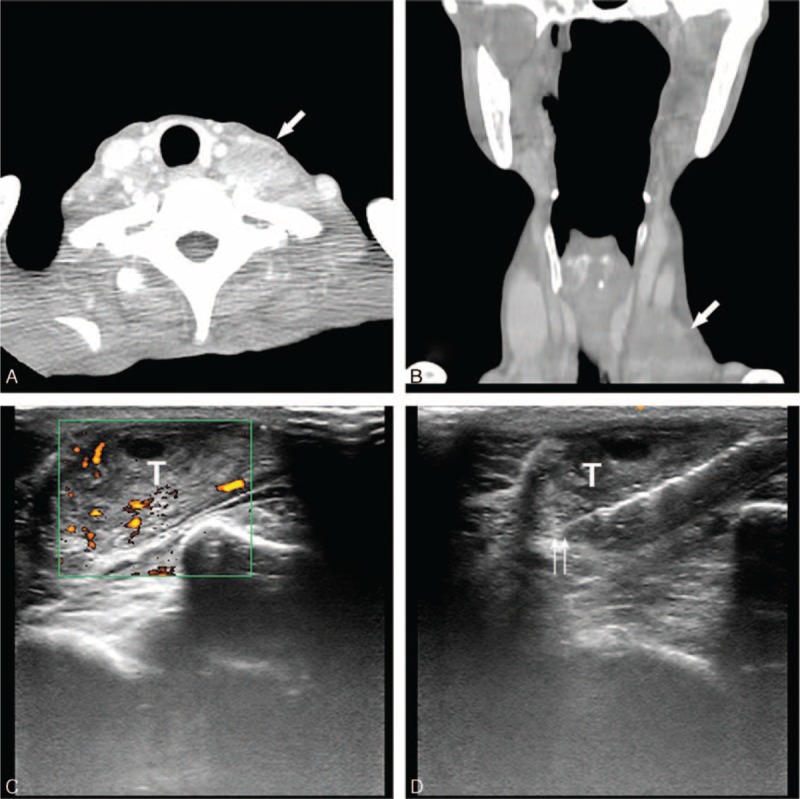
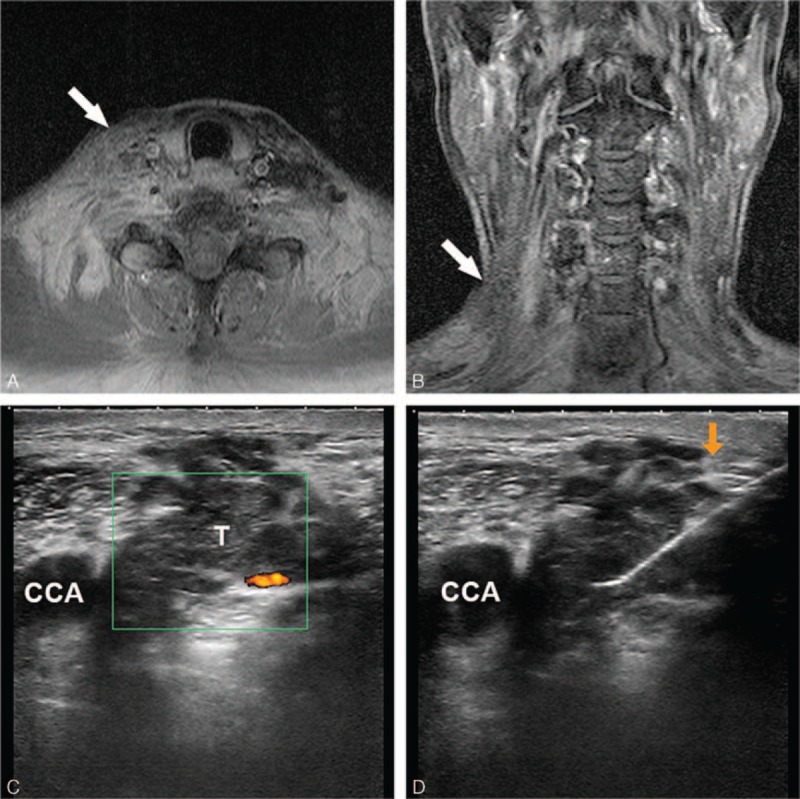
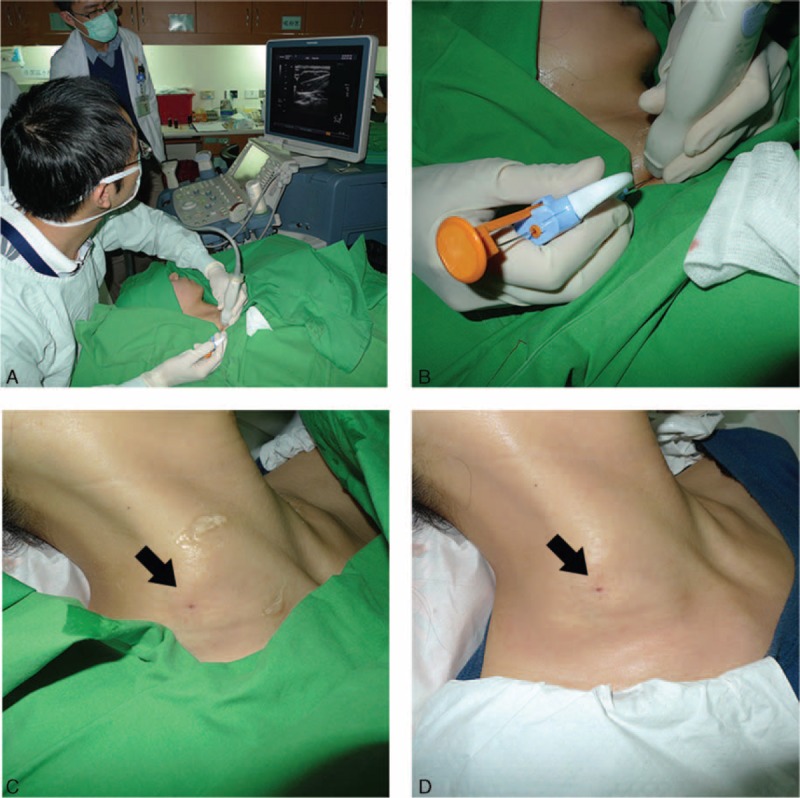
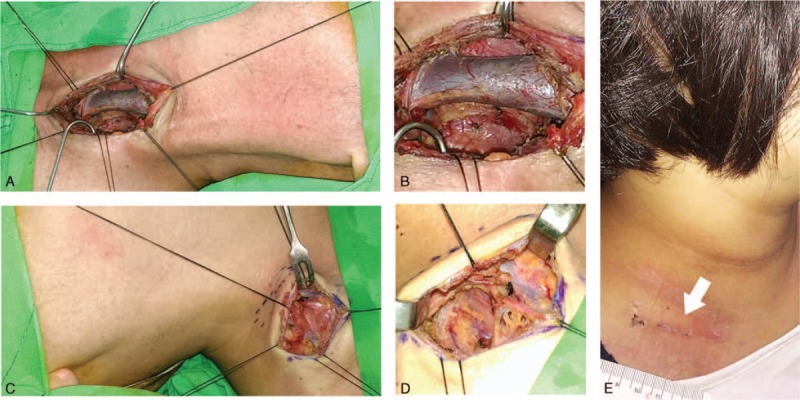
Tumors of the supraclavicular fossa (SC) is clinically challenging because of anatomical complexity and tumor pathological diversity. Because of varied diseases entities and treatment choices of SC tumors, making the accurate decision among numerous differential diagnoses is imperative. Sampling by open biopsy (OB) remains the standard procedure for pathological confirmation. However, complicated anatomical structures of SC always render surgical intervention difficult to perform. Ultrasound-guided core biopsy (USCB) is a minimally invasive and office-based procedure for tissue sampling widely applied in many diseases of head and neck. This study aims to evaluate the clinical efficacy and utility of using USCB as the sampling method of SC tumors. From 2009 to 2014, consecutive patients who presented clinical symptoms and signs of supraclavicular tumors and were scheduled to receive sampling procedures for diagnostic confirmation were recruited. The patients received USCB or OB respectively in the initial tissue sampling. The accurate diagnostic rate based on pathological results was 90.2% for USCB, and 93.6% for OB. No significant difference was noted between USCB and OB groups in terms of diagnostic accuracy and the percentage of inadequate specimens. All cases in the USCB group had the sampling procedure completed within 10 minutes, but not in the OB group. No scars larger than 1 cm were found in USCB. Only patients in the OB groups had the need to receive general anesthesia and hospitalization and had scars postoperatively. Accordingly, USCB can serve as the first-line sampling tool for SC tumors with high diagnostic accuracy, minimal invasiveness, and low medical cost.
由于解剖结构复杂和肿瘤病理多样,锁骨上窝(SC)肿瘤的临床诊断具有挑战性。鉴于SC肿瘤的疾病实体和治疗选择各不相同,在众多鉴别诊断中做出准确决策至关重要。开放式活检(OB)采样仍然是病理确诊的标准程序。然而,SC复杂的解剖结构总是使手术干预难以实施。超声引导下的粗针活检(USCB)是一种微创且可在门诊进行的组织采样方法,广泛应用于许多头颈疾病。本研究旨在评估使用USCB作为SC肿瘤采样方法的临床疗效和实用性。从2009年到2014年,招募了出现锁骨上肿瘤临床症状和体征并计划接受采样程序以进行诊断确认的连续患者。患者在初始组织采样中分别接受了USCB或OB。基于病理结果的准确诊断率,USCB为90.2%,OB为93.6%。USCB组和OB组在诊断准确性和标本不合格率方面没有显著差异。USCB组的所有病例采样程序均在10分钟内完成,而OB组则不然。USCB未发现大于1厘米的疤痕。只有OB组的患者需要接受全身麻醉和住院治疗,术后有疤痕。因此,USCB可作为SC肿瘤的一线采样工具,具有高诊断准确性、微创性和低医疗成本。