Wu Huangming, Zheng Yan, Liu Jing, Zhang Heting, Chen Huiping
College of Horticulture and Landscape Architecture, Hainan University Haikou, China.
Front Plant Sci. 2016 Jan 19;6:1267. doi: 10.3389/fpls.2015.01267. eCollection 2015.
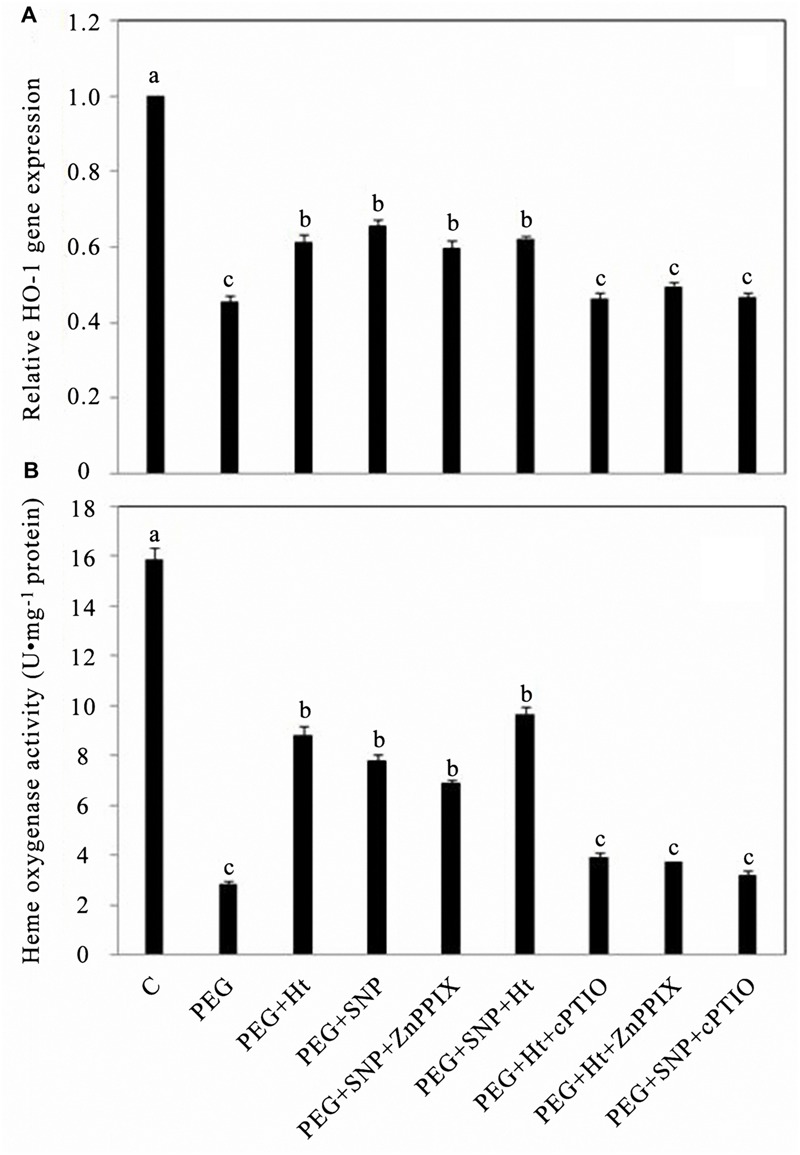
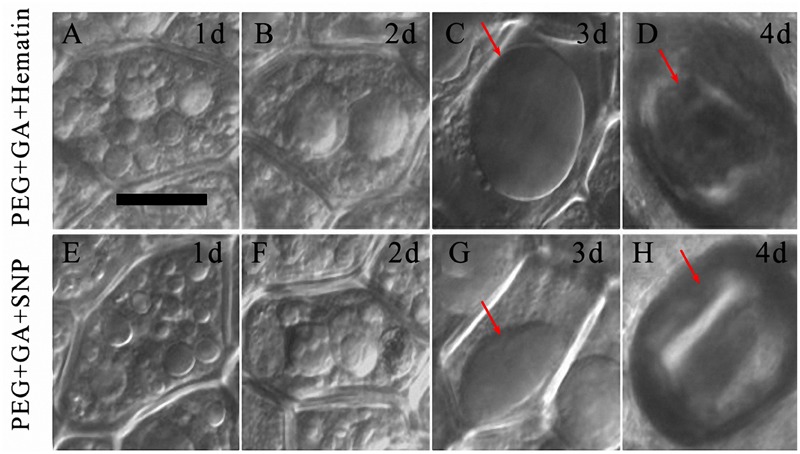
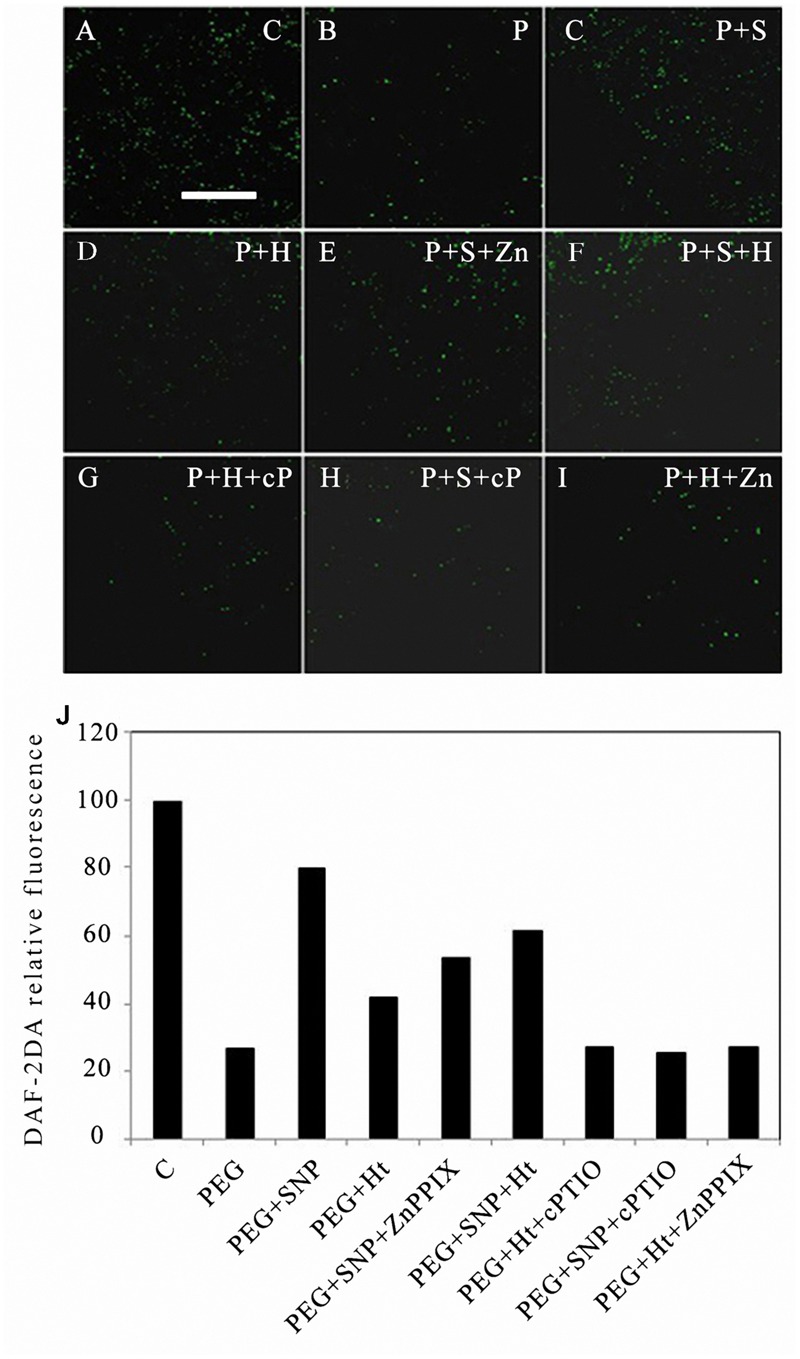
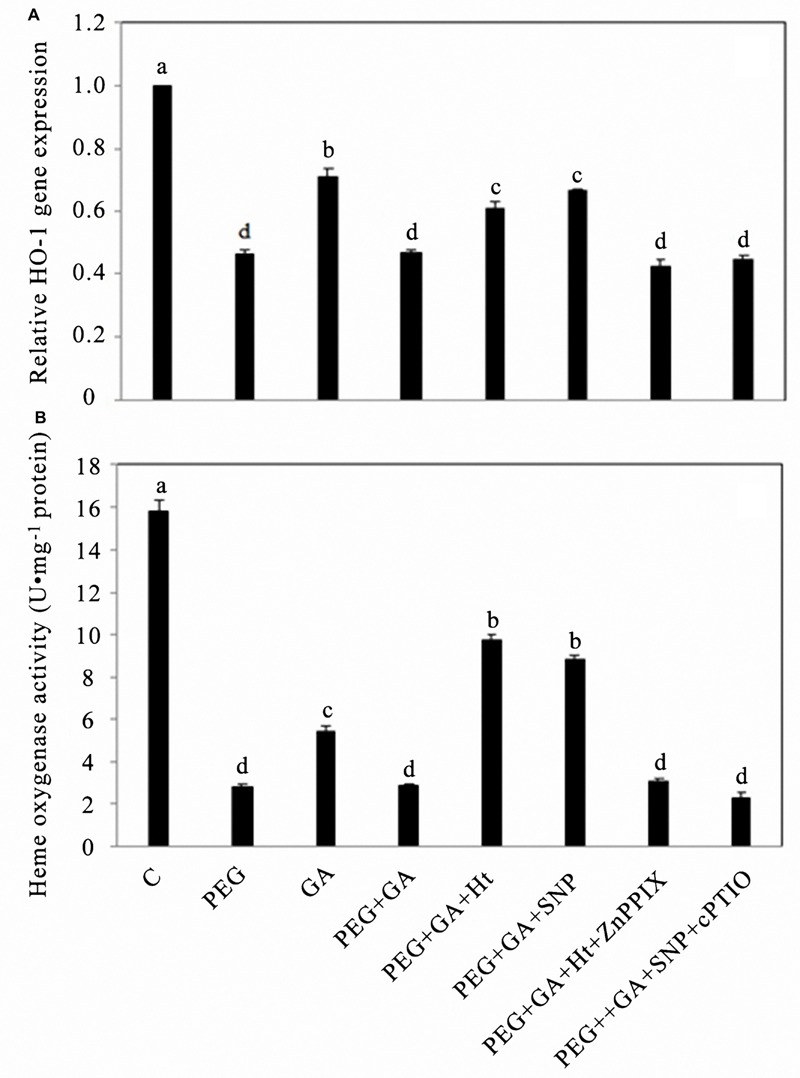
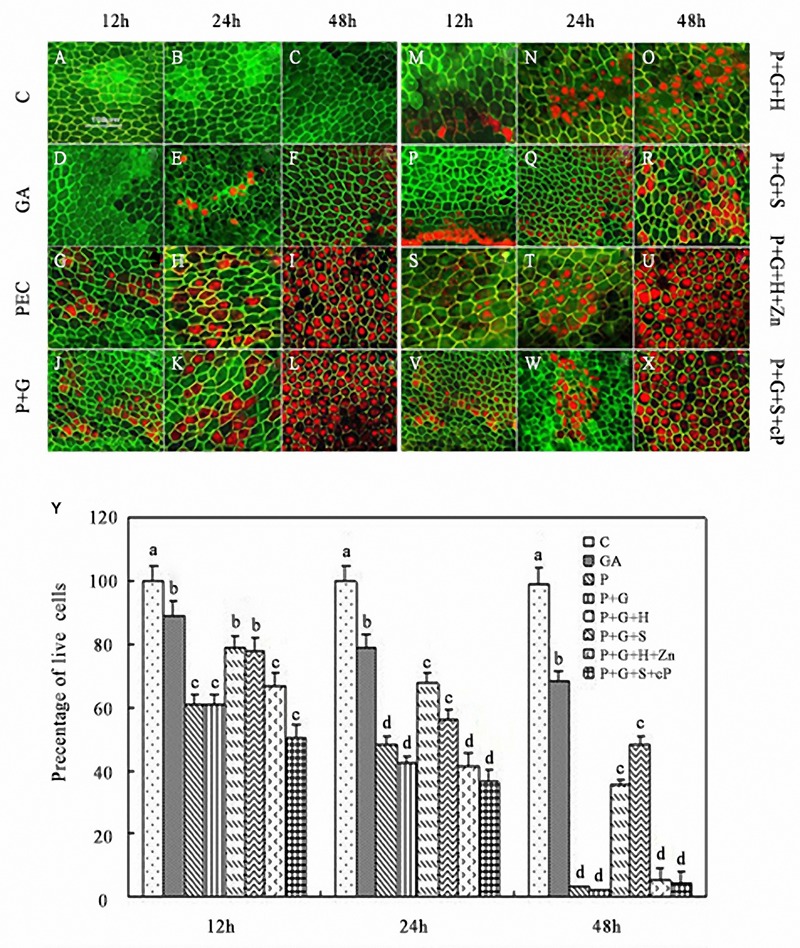
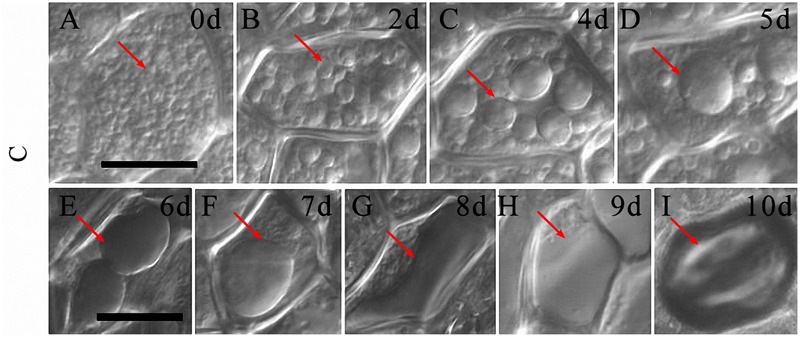
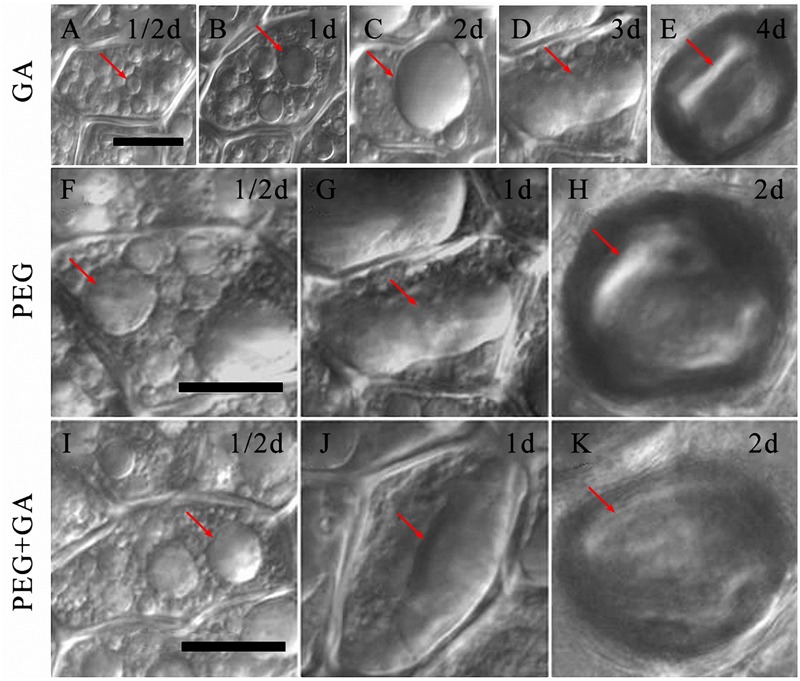
Cereal aleurone layers undergo a gibberellin (GA)-regulated process of programmed cell death (PCD) following germination. Heme oxygenase-1 (HO-1) is known as a rate-liming enzyme in the degradation of heme to biliverdin IXα, carbon monoxide (CO), and free iron ions (Fe(2+)). It is a critical component in plant development and adaptation to environment stresses. Our previous studies confirmed that HO-1 inducer hematin (Ht) promotes the germination of rice seeds in drought (20% polyethylene glycol-6000, PEG) conditions, but the corresponding effects of HO-1 on the alleviation of germination-triggered PCD in GA-treated rice aleurone layers remain unknown. The present study has determined that GA co-treated with PEG results in lower HO-1 transcript levels and HO activity, which in turn results in the development of vacuoles in aleurone cells, followed by PCD. The pharmacology approach illustrated that up- or down-regulated HO-1 gene expression and HO activity delayed or accelerated GA-induced PCD. Furthermore, the application of the HO-1 inducer Ht and nitric oxide (NO) donor sodium nitroprusside (SNP) not only activated HO-1 gene expression, HO activity, and endogenous NO content, but also blocked GA-induced rapid vacuolation and accelerated aleurone layers PCD under drought stress. However, both HO-1 inhibitor zinc protoporphyrin IX (ZnPPIX) and NO scavenger 2-(4-carboxyphenyl0-4, 4,5,5-tetramethylimidazoline-l-oxyl-3-oxide potassium salt (cPTIO) reserved the effects of Ht and SNP on rice aleurone layer PCD under drought stress by down-regulating endogenous HO-1 and NO, respectively. The inducible effects of Ht and SNP on HO-1 gene expression, HO activity, and NO content were blocked by cPTIO. Together, these results clearly suggest that HO-1 is involved in the alleviation of GA-induced PCD of drought-triggered rice aleurone layers by associating with NO.
谷物糊粉层在萌发后会经历一个由赤霉素(GA)调控的程序性细胞死亡(PCD)过程。血红素加氧酶-1(HO-1)是血红素降解为胆绿素IXα、一氧化碳(CO)和游离铁离子(Fe(2+))过程中的限速酶。它是植物发育和适应环境胁迫的关键成分。我们之前的研究证实,HO-1诱导剂血红素(Ht)能促进水稻种子在干旱(20%聚乙二醇-6000,PEG)条件下的萌发,但HO-1对GA处理的水稻糊粉层中萌发引发的PCD缓解作用的相应影响仍不清楚。本研究确定,GA与PEG共同处理会导致HO-1转录水平和HO活性降低,进而导致糊粉细胞中液泡的形成,随后发生PCD。药理学方法表明,HO-1基因表达和HO活性的上调或下调会延迟或加速GA诱导的PCD。此外,HO-1诱导剂Ht和一氧化氮(NO)供体硝普钠(SNP)的应用不仅激活了HO-1基因表达、HO活性和内源性NO含量,还在干旱胁迫下阻断了GA诱导的快速液泡化并加速了糊粉层PCD。然而,HO-1抑制剂原卟啉锌IX(ZnPPIX)和NO清除剂2-(4-羧基苯基)-4,4,5,5-四甲基咪唑啉-1-氧基-3-氧化物钾盐(cPTIO)分别通过下调内源性HO-1和NO,保留了Ht和SNP对干旱胁迫下水稻糊粉层PCD的影响。cPTIO阻断了Ht和SNP对HO-1基因表达、HO活性和NO含量的诱导作用。总之,这些结果清楚地表明,HO-1通过与NO结合参与缓解干旱引发的水稻糊粉层GA诱导的PCD。