Pelicioni Maristela C X, Novaes Morgana M, Peres Andre S C, Lino de Souza Altay A, Minelli Cesar, Fabio Soraia R C, Pontes-Neto Octavio M, Santos Antonio C, de Araujo Draulio B
Radiology Division, Department of Internal Medicine, Ribeirao Preto School of Medicine, University of Sao Paulo, 14049-900 Ribeirao Preto, SP, Brazil.
Brain Institute/Onofre Lopes University Hospital, Federal University of Rio Grande do Norte, 59153-155 Natal, RN, Brazil.
Neural Plast. 2016;2016:6353218. doi: 10.1155/2016/6353218. Epub 2015 Dec 28.
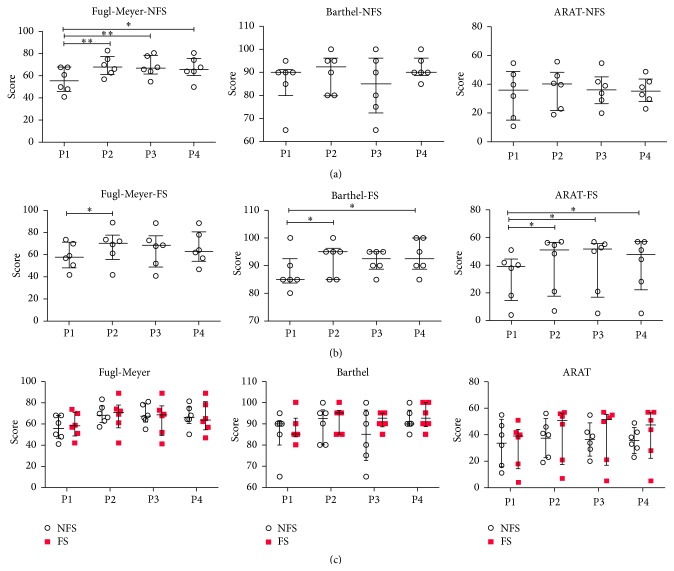
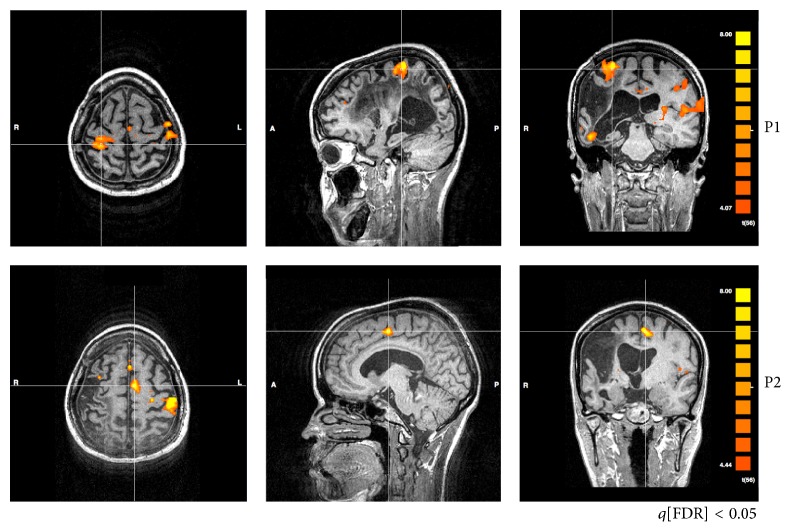
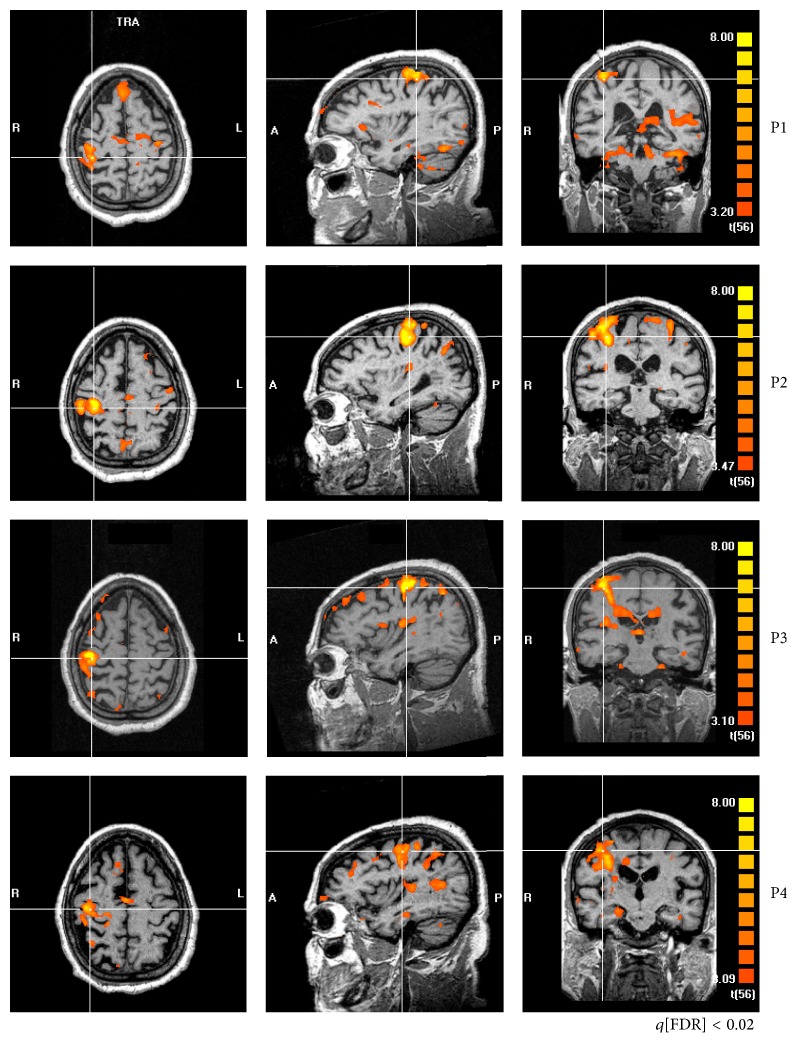
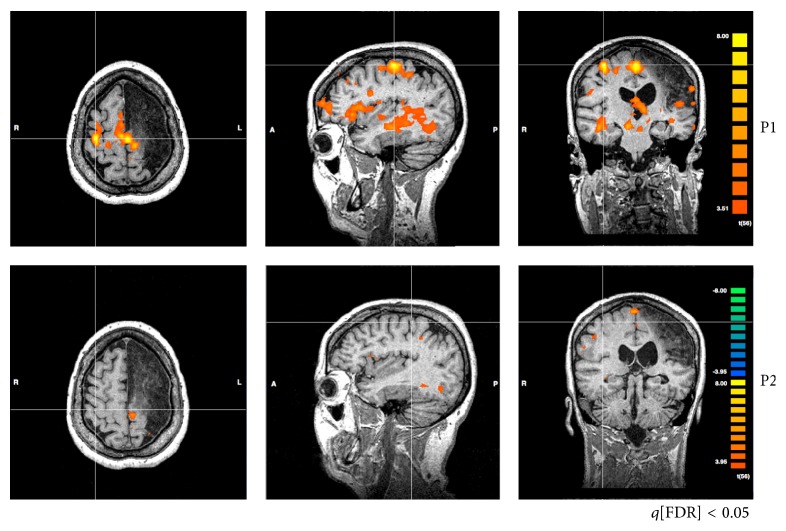
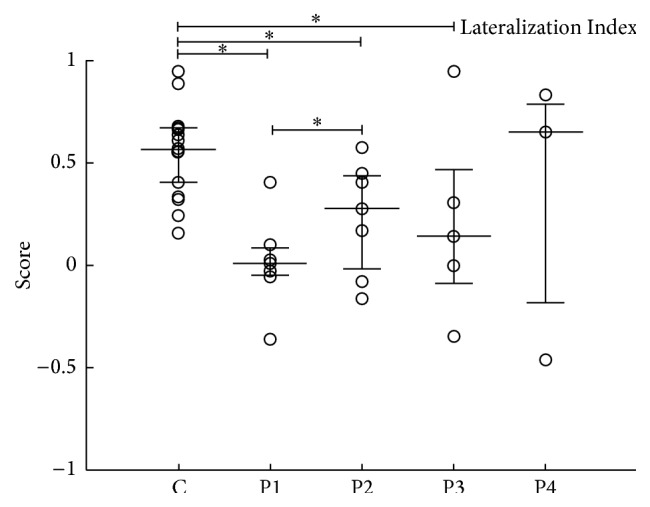
Motor rehabilitation of stroke survivors may include functional and/or nonfunctional strategy. The present study aimed to compare the effect of these two rehabilitation strategies by means of clinical scales and functional Magnetic Resonance Imaging (fMRI). Twelve hemiparetic chronic stroke patients were selected. Patients were randomly assigned a nonfunctional (NFS) or functional (FS) rehabilitation scheme. Clinical scales (Fugl-Meyer, ARA test, and modified Barthel) and fMRI were applied at four moments: before rehabilitation (P1) and immediately after (P2), 1 month after (P3), and three months after (P4) the end of rehabilitation. The NFS group improved significantly and exclusively their Fugl-Meyer scores at P2, P3, and P4, when compared to P1. On the other hand, the FS group increased significantly in Fugl-Meyer at P2, when compared to P1, and also in their ARA and Barthel scores. fMRI inspection at the individual level revealed that both rehabilitation schemes most often led to decreased activation sparseness, decreased activity of contralesional M1, increased asymmetry of M1 activity to the ipsilesional side, decreased perilesional activity, and decreased SMA activity. Increased M1 asymmetry with rehabilitation was also confirmed by Lateralization Indexes. Our clinical analysis revealed subtle differences between FS and NFS.
中风幸存者的运动康复可能包括功能性和/或非功能性策略。本研究旨在通过临床量表和功能磁共振成像(fMRI)比较这两种康复策略的效果。选取了12名慢性偏瘫中风患者。患者被随机分配到非功能性(NFS)或功能性(FS)康复方案。在四个时间点应用临床量表(Fugl-Meyer、ARA测试和改良Barthel指数)和fMRI:康复前(P1)、康复后立即(P2)、康复结束后1个月(P3)和康复结束后3个月(P4)。与P1相比,NFS组在P2、P3和P4时Fugl-Meyer评分显著且仅有所改善。另一方面,与P1相比,FS组在P2时Fugl-Meyer评分显著增加,其ARA和Barthel评分也增加。个体水平的fMRI检查显示,两种康复方案最常导致激活稀疏度降低、对侧M1活动降低、M1活动向患侧的不对称性增加、病灶周围活动降低以及辅助运动区活动降低。侧化指数也证实了康复后M1不对称性增加。我们的临床分析揭示了FS和NFS之间的细微差异。