Schwager Joseph, Richard Nathalie, Mussler Bernd, Raederstorff Daniel
DSM Nutritional Products, P. O. Box 2676, Basel 4002, Switzerland.
Molecules. 2016 Jan 29;21(2):168. doi: 10.3390/molecules21020168.
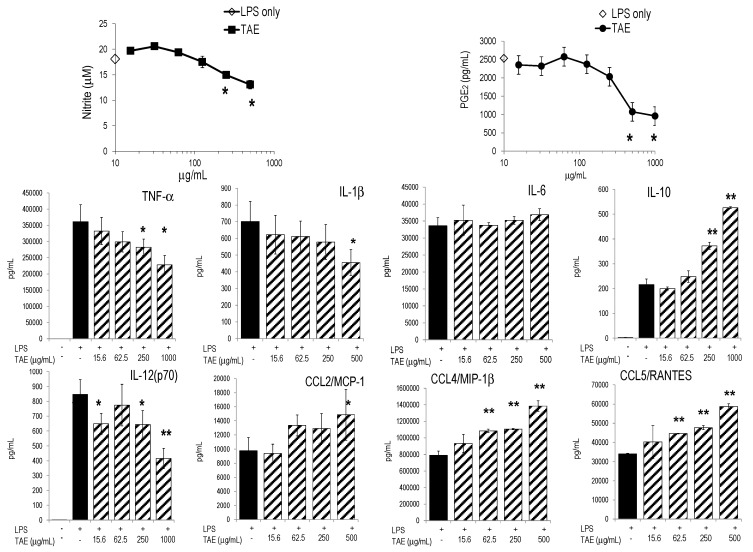
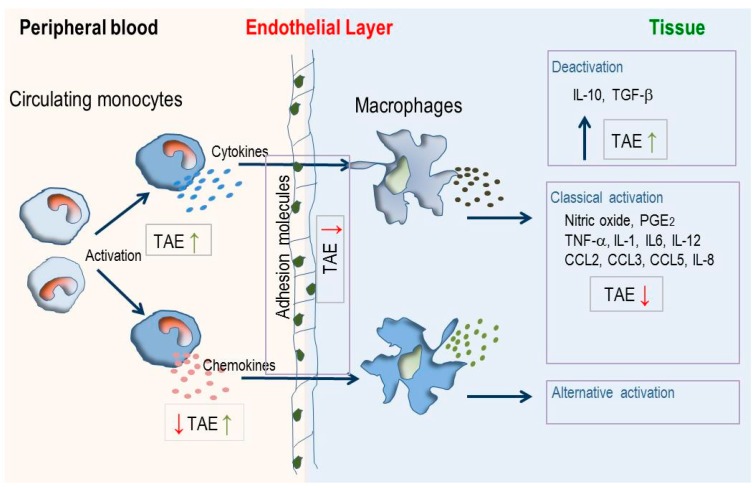
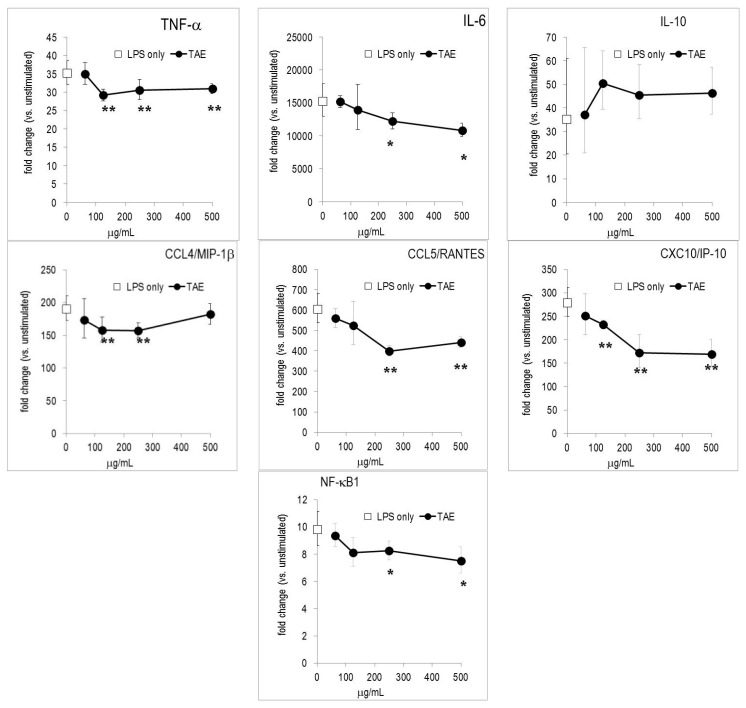
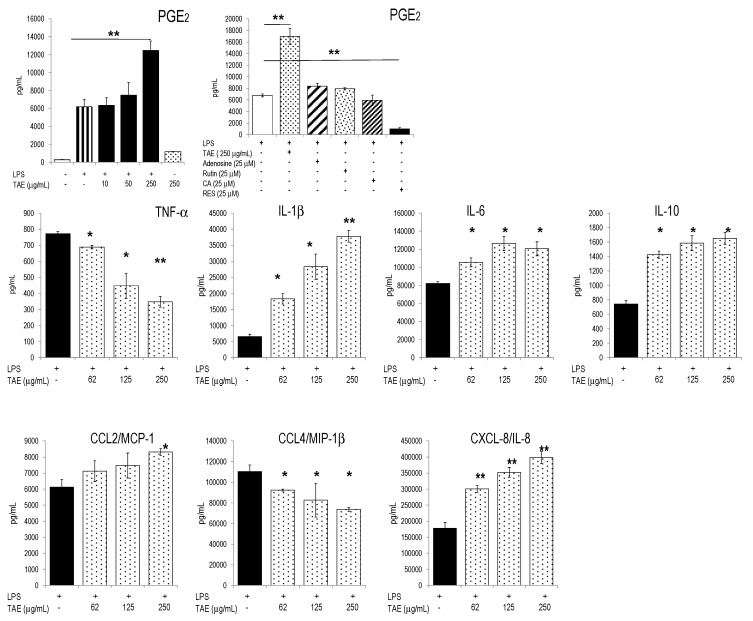
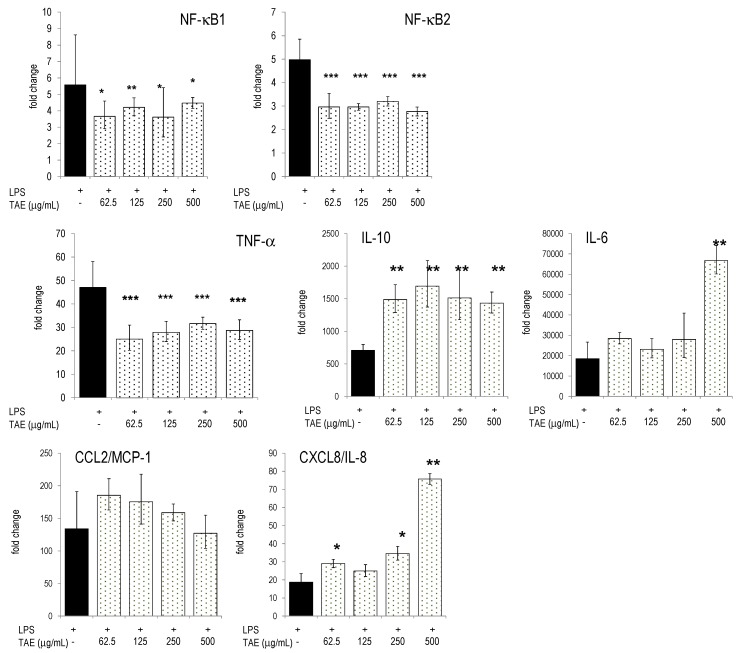
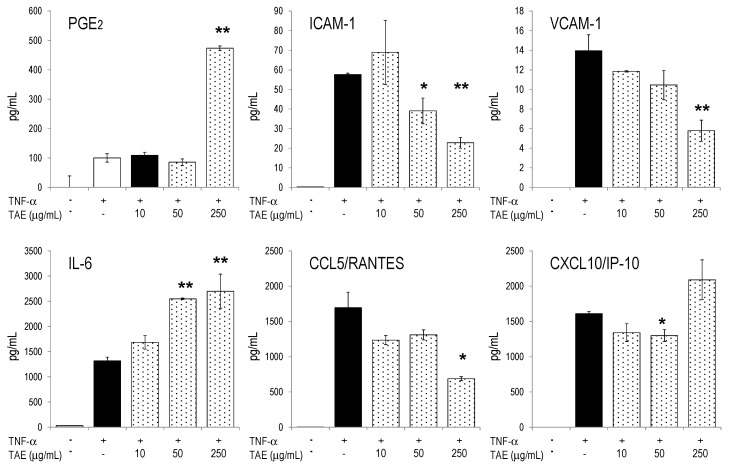
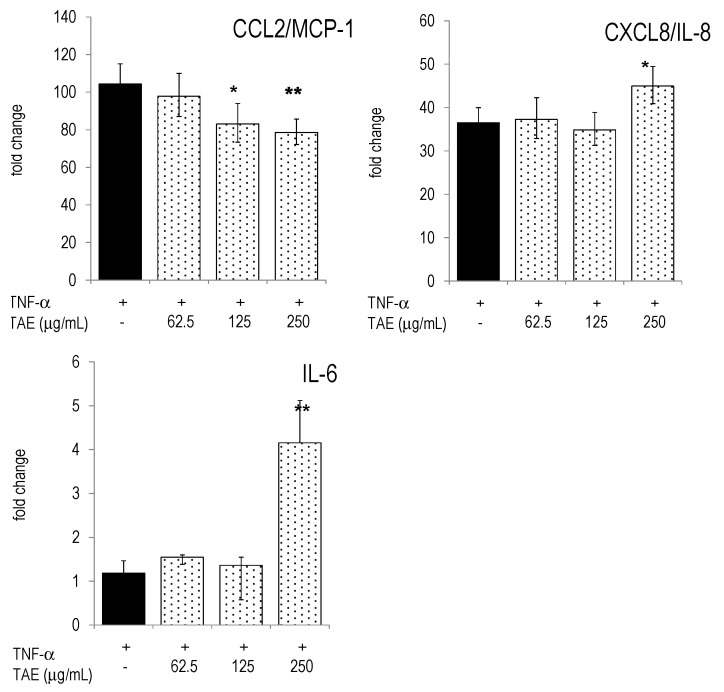
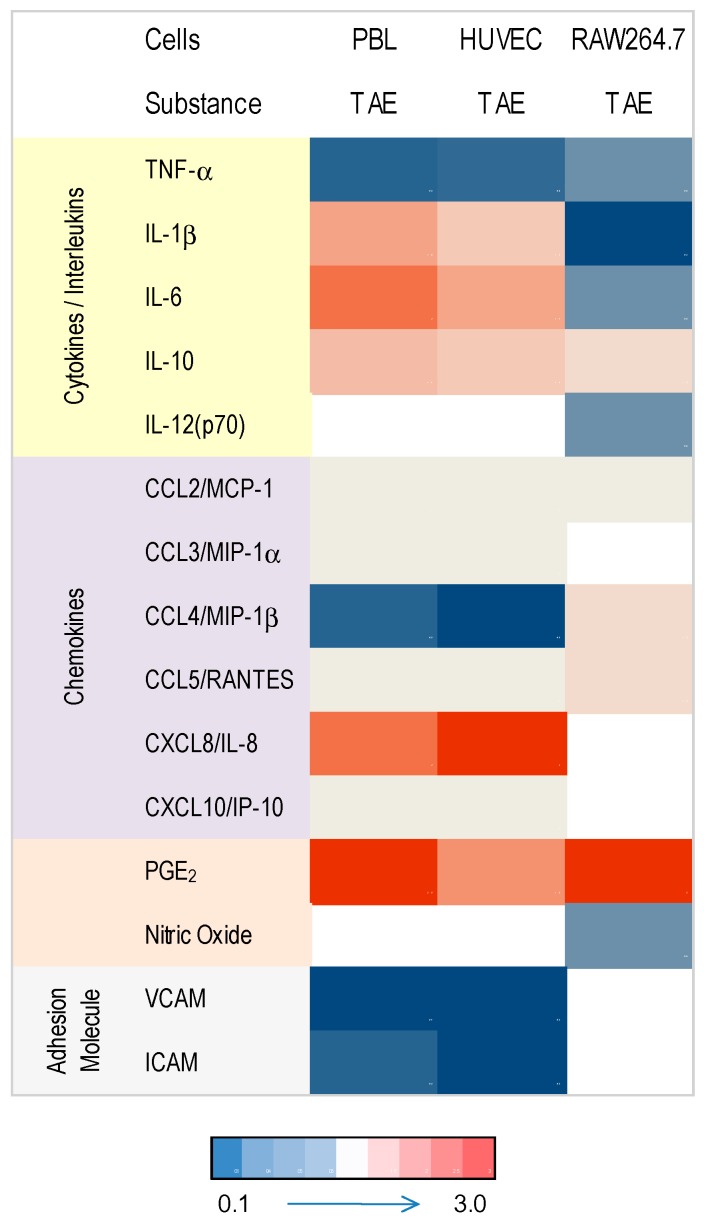
Nutrients transiently or chronically modulate functional and biochemical characteristics of cells and tissues both in vivo and in vitro. The influence of tomato aqueous extract (TAE) on the in vitro inflammatory response of activated human peripheral blood leukocytes (PBLs) and macrophages was investigated. Its effect on endothelial dysfunction (ED) was analyzed in human umbilical vein endothelial cells (HUVECs). Murine macrophages (RAW264.7 cells), PBLs and HUVECs were incubated with TAE. They were activated with LPS or TNF-α in order to induce inflammatory processes and ED, respectively. Inflammatory mediators and adhesion molecules were measured by immune assay-based multiplex analysis. Gene expression was quantified by RT-PCR. TAE altered the production of interleukins (IL-1β, IL-6, IL-10, IL-12) and chemokines (CCL2/MCP-1, CCL3/MIP-1α, CCL5/RANTES, CXCL8/IL-8, CXCL10/IP-10) in PBLs. TAE reduced ED-associated expression of adhesion molecules (ICAM-1, VCAM-1) in endothelial cell. In macrophages, the production of nitric oxide, PGE2, cytokines and ILs (TNF-α, IL-1β, IL-6, IL-12), which reflects chronic inflammatory processes, was reduced. Adenosine was identified as the main bioactive of TAE. Thus, TAE had cell-specific and context-dependent effects. We infer from these in vitro data, that during acute inflammation TAE enhances cellular alertness and therefore the sensing of disturbed immune homeostasis in the vascular-endothelial compartment. Conversely, it blunts inflammatory mediators in macrophages during chronic inflammation. A novel concept of immune regulation by this extract is proposed.
营养素可在体内和体外短暂或长期调节细胞和组织的功能及生化特性。研究了番茄水提取物(TAE)对活化的人外周血白细胞(PBLs)和巨噬细胞体外炎症反应的影响。分析了其对人脐静脉内皮细胞(HUVECs)内皮功能障碍(ED)的作用。将小鼠巨噬细胞(RAW264.7细胞)、PBLs和HUVECs与TAE一起孵育。分别用脂多糖(LPS)或肿瘤坏死因子-α(TNF-α)激活它们,以诱导炎症过程和ED。通过基于免疫分析的多重分析测量炎症介质和黏附分子。通过逆转录聚合酶链反应(RT-PCR)对基因表达进行定量。TAE改变了PBLs中白细胞介素(IL-1β、IL-6、IL-10、IL-12)和趋化因子(CCL2/单核细胞趋化蛋白-1、CCL3/巨噬细胞炎性蛋白-1α、CCL5/调节激活正常T细胞表达和分泌因子、CXCL8/IL-8、CXCL10/干扰素γ诱导蛋白10)的产生。TAE降低了内皮细胞中与ED相关的黏附分子(细胞间黏附分子-1、血管细胞黏附分子-1)的表达。在巨噬细胞中,反映慢性炎症过程的一氧化氮、前列腺素E2、细胞因子和白细胞介素(TNF-α、IL-1β、IL-6、IL-12)的产生减少。腺苷被确定为TAE的主要生物活性成分。因此,TAE具有细胞特异性和背景依赖性作用。我们从这些体外数据推断,在急性炎症期间,TAE增强细胞警觉性,从而增强对血管内皮区室中免疫稳态紊乱的感知。相反,在慢性炎症期间,它可抑制巨噬细胞中的炎症介质。提出了这种提取物免疫调节的新概念。