Seppelt Philipp Christian, Schwill Simon, Weymann Alexander, Arif Rawa, Weber Antje, Zaradzki Marcin, Richter Karsten, Ensminger Stephan, Robinson Peter Nicholas, Wagner Andreas H, Karck Matthias, Kallenbach Klaus
Department of Cardiac Surgery, University Hospital Heidelberg, Heidelberg, Germany.
German Cancer Research Center, Division of Molecular Genetics, Heidelberg, Germany.
PLoS One. 2016 Feb 3;11(2):e0148012. doi: 10.1371/journal.pone.0148012. eCollection 2016.
Marfan syndrome is an autosomal dominant inherited disorder of connective tissue. The vascular complications of Marfan syndrome have the biggest impact on life expectancy. The aorta of Marfan patients reveals degradation of elastin layers caused by increased proteolytic activity of matrix metalloproteinases (MMPs). In this study we performed adenoviral gene transfer of human tissue inhibitor of matrix metalloproteinases-1 (hTIMP-1) in aortic grafts of fibrillin-1 deficient Marfan mice (mgR/mgR) in order to reduce elastolysis.
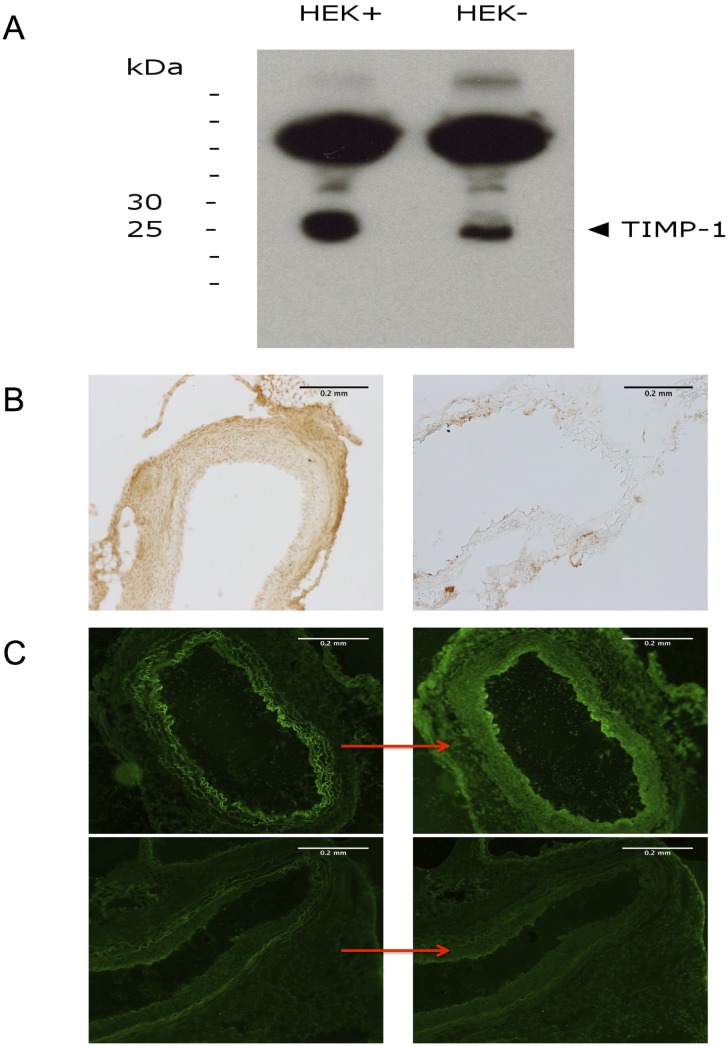
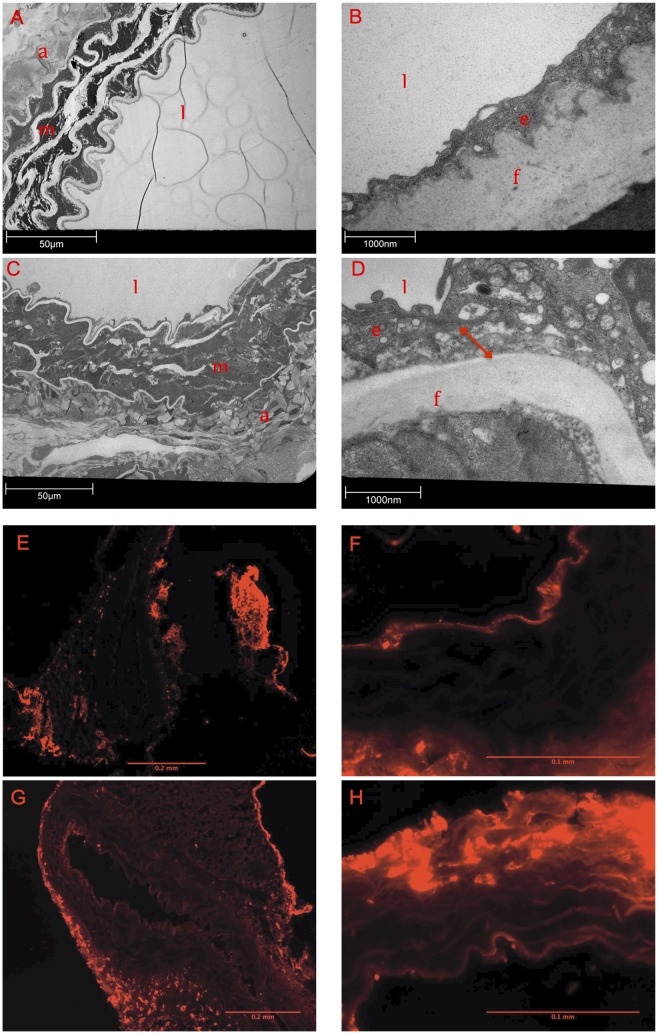
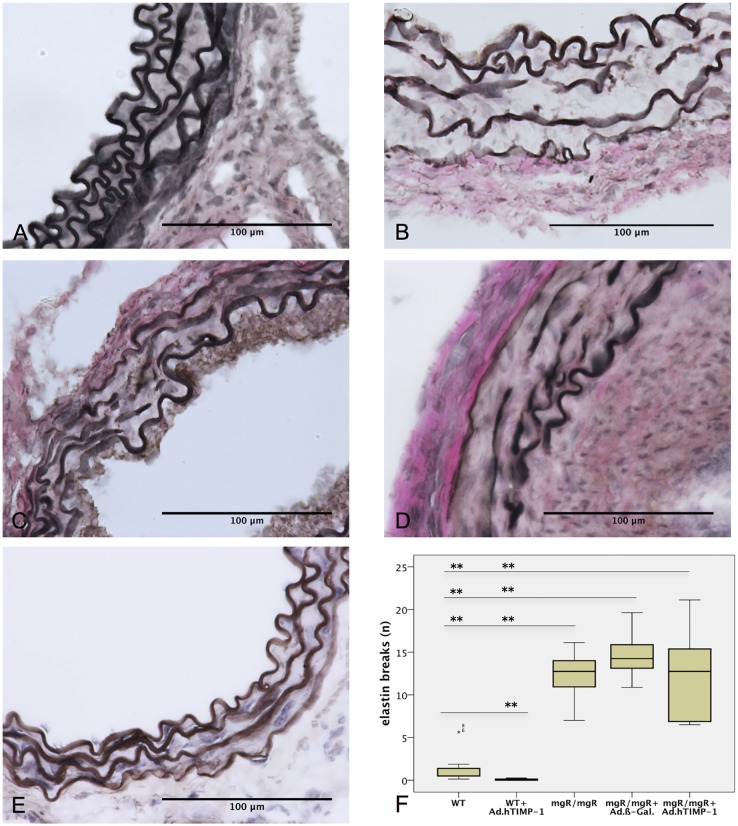
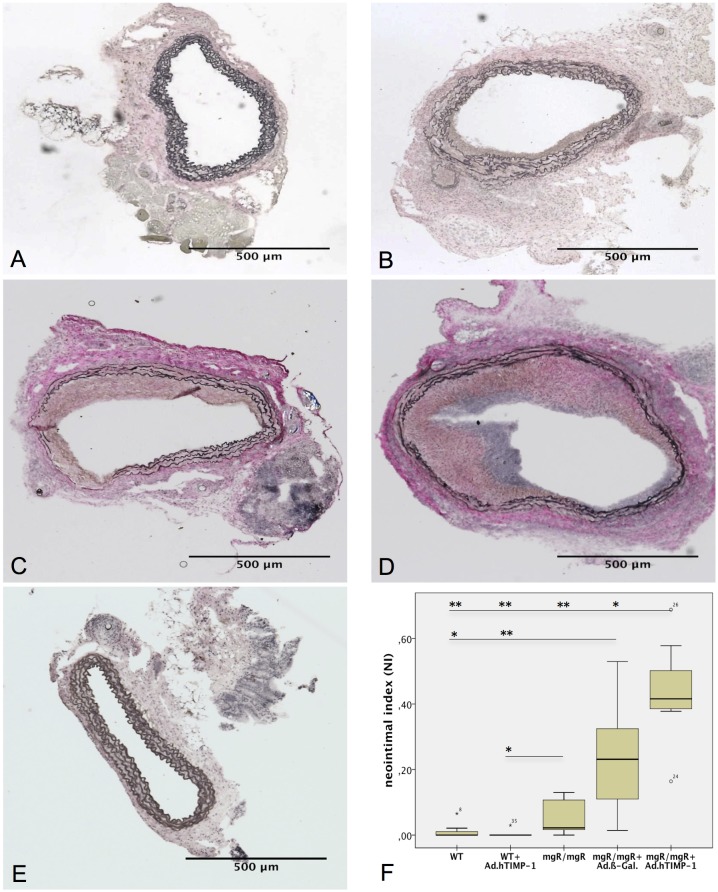
We performed heterotopic infrarenal transplantation of the thoracic aorta in female mice (n = 7 per group). Before implantation, mgR/mgR and wild-type aortas (WT, C57BL/6) were transduced ex vivo with an adenoviral vector coding for human TIMP-1 (Ad.hTIMP-1) or β-galactosidase (Ad.β-Gal). As control mgR/mgR and wild-type aortas received no gene therapy. Thirty days after surgery, overexpression of the transgene was assessed by immunohistochemistry (IHC) and collagen in situ zymography. Histologic staining was performed to investigate inflammation, the neointimal index (NI), and elastin breaks. Endothelial barrier function of native not virus-exposed aortas was evaluated by perfusion of fluorescent albumin and examinations of virus-exposed tissue were performed by transmission electron microscopy (TEM).
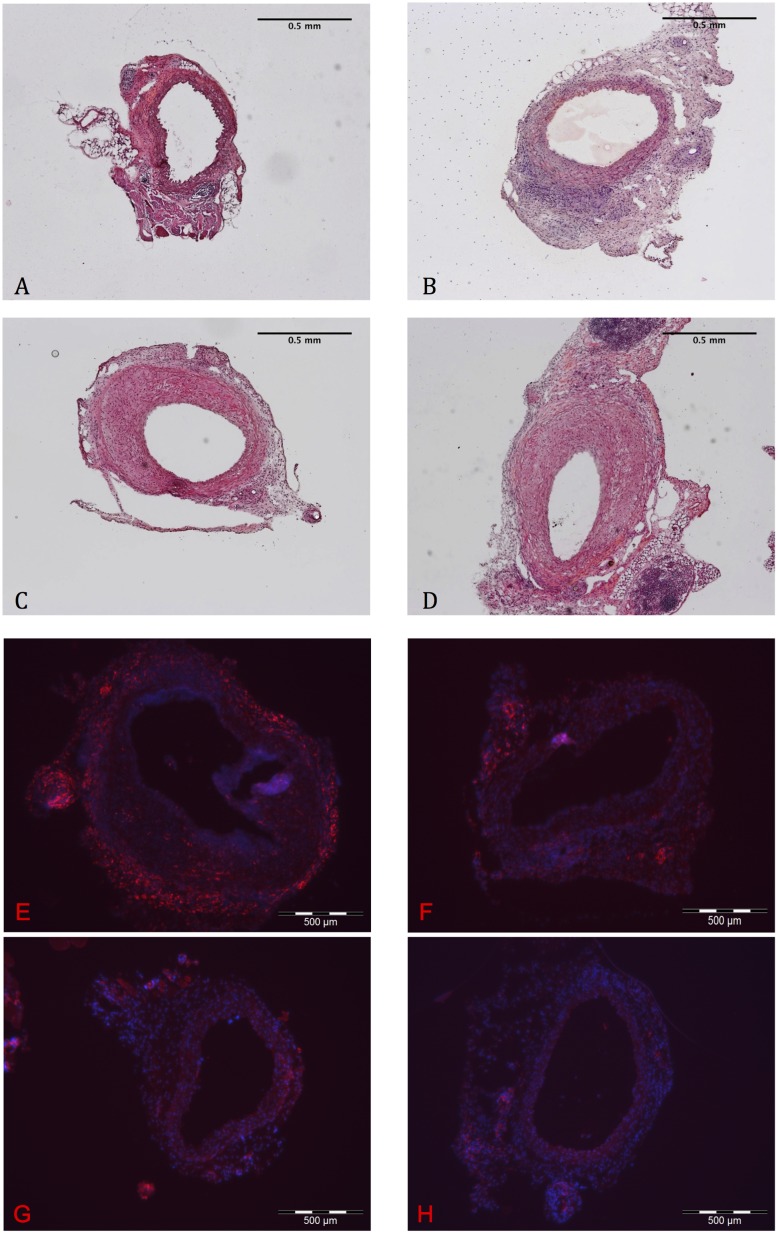
IHC and ISZ revealed sufficient expression of the transgene. Severe cellular inflammation and intima hyperplasia were seen only in adenovirus treated mgR/mgR aortas (Ad.β-Gal, Ad.hTIMP-1 NI: 0.23; 0.43), but not in native and Ad.hTIMP-1 treated WT (NI: 0.01; 0.00). Compared to native mgR/mgR and Ad.hTIMP-1 treated WT aorta, the NI is highly significant greater in Ad.hTIMP-1 transduced mgR/mgR aorta (p = 0.001; p = 0.001). As expected, untreated Marfan grafts showed significant more elastolysis compared to WT (p = 0.001). However, elastolysis in Marfan aortas was not reduced by adenoviral overexpression of hTIMP-1 (compared to untreated Marfan aorta: Ad.hTIMP-1 p = 0.902; control Ad.β-Gal. p = 0.165). The virus-untreated and not transplanted mgR/mgR aorta revealed a significant increase of albumin diffusion through the endothelial barrier (p = 0.037). TEM analysis of adenovirus-exposed mgR/mgR aortas displayed disruption of the basement membrane and basolateral space.
Murine Marfan aortic grafts developed severe inflammation after adenoviral contact. We demonstrated that fibrillin-1 deficiency is associated with relevant dysfunction of the endothelial barrier that enables adenovirus to induce vessel-harming inflammation. Endothelial dysfunction may play a pivotal role in the development of the vascular phenotype of Marfan syndrome.
马凡综合征是一种常染色体显性遗传性结缔组织疾病。马凡综合征的血管并发症对预期寿命影响最大。马凡综合征患者的主动脉显示出由于基质金属蛋白酶(MMPs)蛋白水解活性增加导致的弹性蛋白层降解。在本研究中,我们在原纤维蛋白-1缺陷的马凡小鼠(mgR/mgR)的主动脉移植物中进行了人基质金属蛋白酶组织抑制剂-1(hTIMP-1)的腺病毒基因转移,以减少弹性蛋白溶解。
我们在雌性小鼠中进行了胸主动脉的异位肾下移植(每组n = 7)。在植入前,将mgR/mgR和野生型主动脉(WT,C57BL/6)用编码人TIMP-1(Ad.hTIMP-1)或β-半乳糖苷酶(Ad.β-Gal)的腺病毒载体进行体外转导。作为对照,mgR/mgR和野生型主动脉未接受基因治疗。手术后30天,通过免疫组织化学(IHC)和胶原原位酶谱法评估转基因的过表达。进行组织学染色以研究炎症、内膜指数(NI)和弹性蛋白断裂。通过灌注荧光白蛋白评估未暴露于病毒的天然主动脉的内皮屏障功能,并通过透射电子显微镜(TEM)对暴露于病毒的组织进行检查。
IHC和ISZ显示转基因表达充分。仅在腺病毒处理的mgR/mgR主动脉(Ad.β-Gal,Ad.hTIMP-1 NI:0.23;0.43)中观察到严重的细胞炎症和内膜增生,而在天然和Ad.hTIMP-1处理的WT主动脉中未观察到(NI:0.01;0.00)。与天然mgR/mgR和Ad.hTIMP-1处理的WT主动脉相比,Ad.hTIMP-1转导的mgR/mgR主动脉中的NI显著更高(p = 0.001;p = 0.001)。正如预期的那样,未治疗的马凡移植物与WT相比显示出更多的弹性蛋白溶解(p = 0.001)。然而,hTIMP-1的腺病毒过表达并未减少马凡主动脉中的弹性蛋白溶解(与未治疗的马凡主动脉相比:Ad.hTIMP-1 p = 0.902;对照Ad.β-Gal p = 0.165)。未用病毒处理且未移植的mgR/mgR主动脉显示白蛋白通过内皮屏障的扩散显著增加(p = 0.037)。对暴露于腺病毒的mgR/mgR主动脉的TEM分析显示基底膜和基底外侧间隙破坏。
小鼠马凡主动脉移植物在腺病毒接触后发生严重炎症。我们证明原纤维蛋白-1缺乏与内皮屏障的相关功能障碍有关,这使得腺病毒能够诱导损害血管的炎症。内皮功能障碍可能在马凡综合征血管表型的发展中起关键作用。