Zhang Qian, Zhao Dong, Xie Wuxiang, Xie Xueqin, Guo Moning, Wang Miao, Wang Wei, Liu Wanru, Liu Jing
From the Department of Epidemiology, Beijing Anzhen Hospital, Capital Medical University, Beijing Institute of Heart, Lung and Blood Vessel Diseases (QZ, DZ, WX, MW, WW, JL), and Beijing Public Health Information Center, Beijing, China (XX, MG, WL).
Medicine (Baltimore). 2016 Feb;95(5):e2677. doi: 10.1097/MD.0000000000002677.
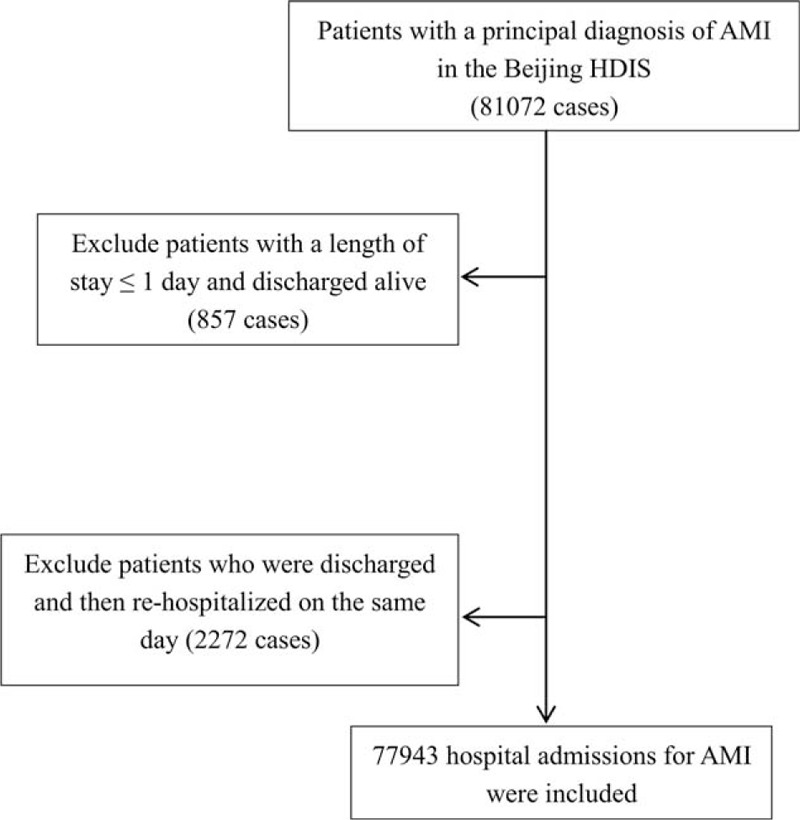
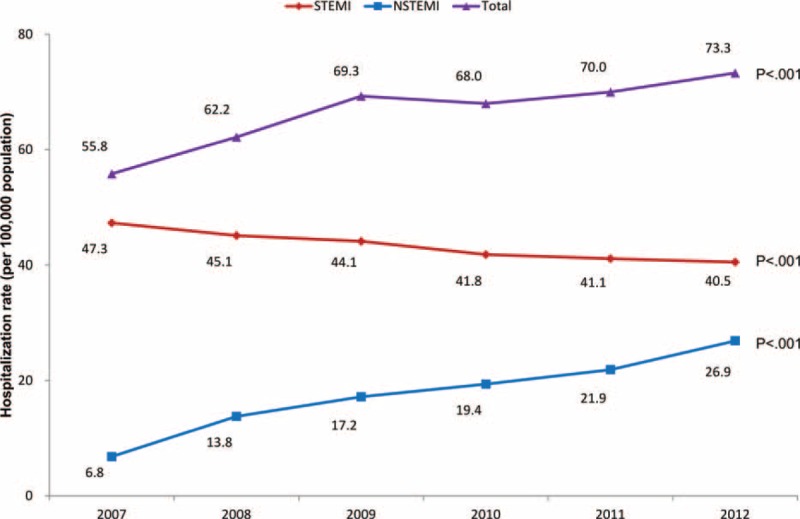
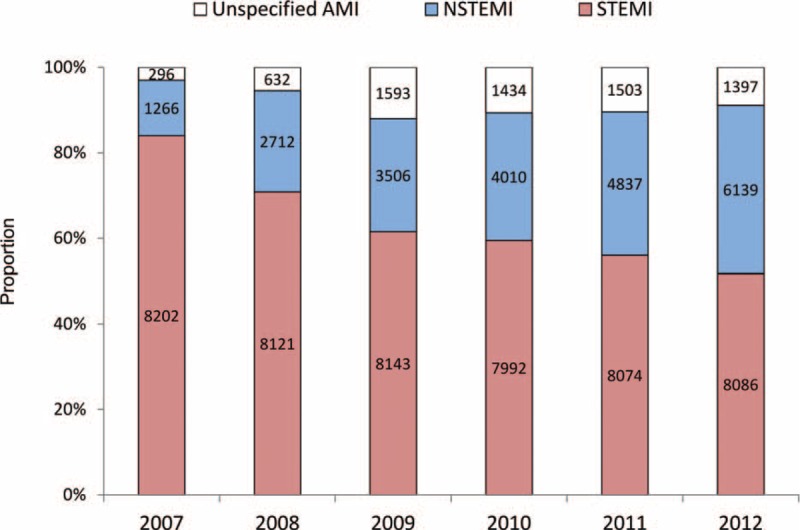
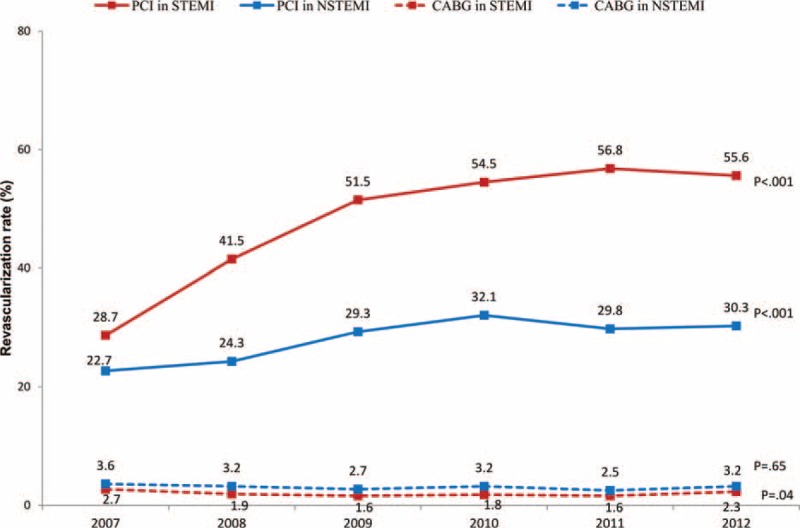
Comparable data on trends of hospitalization rates for ST-segment elevation myocardial infarction (STEMI) and non-STEMI (NSTEMI) remain unavailable in representative Asian populations.To examine the temporal trends of hospitalization for acute myocardial infarction (AMI) and its subtypes in Beijing.Patients hospitalized for AMI in Beijing from January 1, 2007 to December 31, 2012 were identified from the validated Hospital Discharge Information System. Trends in hospitalization rates, in-hospital mortality, length of stay (LOS), and hospitalization costs were analyzed by regression models for total AMI and for STEMI and NSTEMI separately. In total, 77,943 patients were admitted for AMI in Beijing during the 6 years, among whom 67.5% were males and 62.4% had STEMI. During the period, the rate of AMI hospitalization per 100,000 population increased by 31.2% (from 55.8 to 73.3 per 100,000 population) after age standardization, with a slight decrease in STEMI but a 3-fold increase in NSTEMI. The ratio of STEMI to NSTEMI decreased dramatically from 6.5:1.0 to 1.3:1.0. The age-standardized in-hospital mortality decreased from 11.2% to 8.6%, with a significant decreasing trend evident for STEMI in males and females (P < 0.001) and for NSTEMI in males (P = 0.02). The rate of percutaneous coronary intervention increased from 28.7% to 55.6% among STEMI patients. The total cost for AMI hospitalization increased by 56.8% after adjusting for inflation, although the LOS decreased by 1 day.The hospitalization burden for AMI has been increasing in Beijing with a transition from STEMI to NSTEMI. Diverse temporal trends in AMI subtypes from the unselected "real-world" data in Beijing may help to guide the management of AMI in China and other developing countries.
在具有代表性的亚洲人群中,关于ST段抬高型心肌梗死(STEMI)和非ST段抬高型心肌梗死(NSTEMI)住院率趋势的可比数据仍然缺乏。为了研究北京急性心肌梗死(AMI)及其亚型的住院时间趋势。从经过验证的医院出院信息系统中确定了2007年1月1日至2012年12月31日在北京因AMI住院的患者。分别通过回归模型分析了总AMI以及STEMI和NSTEMI的住院率、住院死亡率、住院时间(LOS)和住院费用趋势。在这6年中,北京共有77943例患者因AMI入院,其中67.5%为男性,62.4%为STEMI。在此期间,年龄标准化后,每10万人口中AMI住院率增加了31.2%(从每10万人口55.8例增至73.3例),STEMI略有下降,而NSTEMI增加了3倍。STEMI与NSTEMI的比例从6.5:1.0急剧下降至1.3:1.0。年龄标准化的住院死亡率从11.2%降至8.