Ciurus Tomasz, Cichocka-Radwan Anna, Lelonek Małgorzata
Department of Cardiology, Medical University of Lodz, Lodz, Poland.
Kardiochir Torakochirurgia Pol. 2015 Dec;12(4):334-40. doi: 10.5114/kitp.2015.56784. Epub 2015 Dec 30.
The risk of complications in anticoagulation therapy can be reduced by maximising the percentage of time spent by the patient in the optimal therapeutic range (TTR). However, little is known about the predictors of anticoagulation control. The aim of this paper was to assess the quality of anticoagulant therapy in patients on warfarin and to identify the factors affecting its deterioration.
We studied 149 patients who required anticoagulant therapy with warfarin due to non-valvular atrial fibrillation and/or venous thromboembolism. Each patient underwent proper training regarding the implemented treatment and remained under constant medical care.
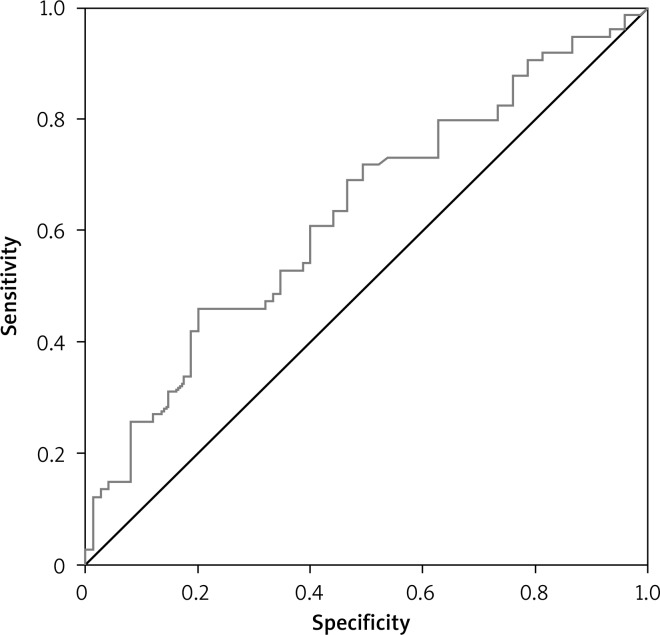
The mean age of the patients was 68.8 ± 12.6 years, and 59% were male. A total of 2460 international normalised ratio (INR) measurements were collected during the 18-month period. The mean TTR in the studied cohort was 76 ± 21%, and the median was 80%. The level at which high-quality anticoagulation was recorded for this study was based on TTR values above 80%. Seventy-five patients with TTR ≥ 80% were included in the stable anticoagulation group (TTR ≥ 80%); the remaining 74 patients constituted the unstable anticoagulation group (TTR < 80%). According to multivariate stepwise regression analysis, the independent variables increasing the risk of deterioration of anticoagulation quality were: arterial hypertension (OR 2.74 [CI 95%: 1.06-7.10]; p = 0.038), amiodarone therapy (OR 4.22 [CI 95%: 1.30-13.70]; p = 0.017), and obesity (OR 1.11 [CI 95%: 1.02-1.21]; p = 0.013).
The presence of obesity, hypertension, or amiodarone therapy decreases the quality of anticoagulation with warfarin. High quality of anticoagulation can be achieved through proper monitoring and education of patients.
通过使患者处于最佳治疗范围(TTR)的时间百分比最大化,可以降低抗凝治疗并发症的风险。然而,关于抗凝控制的预测因素知之甚少。本文旨在评估服用华法林患者的抗凝治疗质量,并确定影响其恶化的因素。
我们研究了149例因非瓣膜性房颤和/或静脉血栓栓塞而需要接受华法林抗凝治疗的患者。每位患者均接受了关于所实施治疗的适当培训,并持续接受医疗护理。
患者的平均年龄为68.8±12.6岁,男性占59%。在18个月的研究期间共收集了2460次国际标准化比值(INR)测量值。研究队列的平均TTR为76±21%,中位数为80%。本研究中记录高质量抗凝的水平是基于TTR值高于80%。75例TTR≥80%的患者被纳入稳定抗凝组(TTR≥80%);其余74例患者构成不稳定抗凝组(TTR<80%)。根据多因素逐步回归分析,增加抗凝质量恶化风险的独立变量为:动脉高血压(OR 2.74 [95%CI:1.06 - 7.10];p = 0.038)、胺碘酮治疗(OR 4.22 [95%CI:1.30 - 13.70];p = 0.017)和肥胖(OR 1.11 [95%CI:1.02 - 1.21];p = 0.013)。
肥胖、高血压或胺碘酮治疗的存在会降低华法林抗凝的质量。通过对患者进行适当的监测和教育可以实现高质量的抗凝。