Jaafarpour Zahra, Soleimani Masoud, Hosseinkhani Saman, Karimi Mohammad Hossein, Yaghmaei Parichehreh, Mobarra Naser, Geramizadeh Bita
Department of Biology, Science and Research Branch, Islamic Azad University, Tehran, Iran.
Department of Hematology, Faculty of Medical Science, Tarbiat Modares University, Tehran, Iran.
Avicenna J Med Biotechnol. 2016 Jan-Mar;8(1):2-8.
The Definitive Endoderm (DE) differentiation using the undefined media and non-human feeders can cause contaminations in the generated cells for therapeutic applications. Therefore, generating safer and more appropriate DE cells is needed. This study compared five different methods to establish an appropriate method for inducing an efficient DE differentiation from Human Induced Pluripotent Stem Cells (hiPSCs) on an appropriate feeder in a more defined medium.
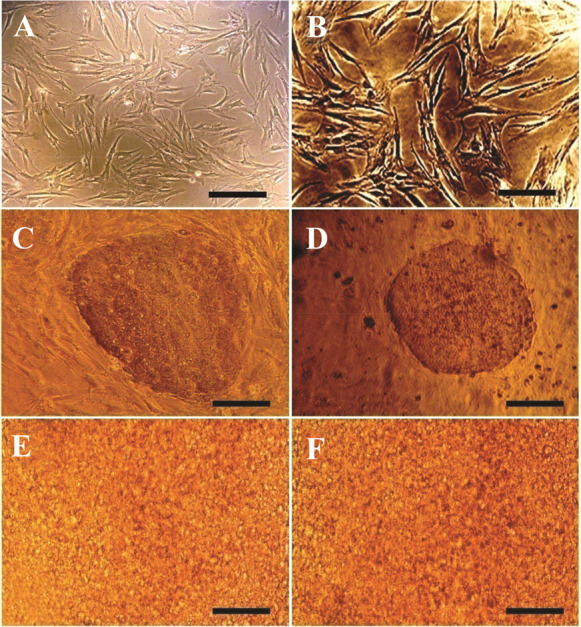
Human Induced Pluripotent Stem Cells (hiPSCs) were cultured on inactivated feeders. Passaged hiPSCs, without feeder, were incubated for three days with Activin-A and different endodermal differentiation media including 1-FBS, 2-B27, 3-ITS and albumin fraction-V, 4-B27 and ITS and 5-like the third medium. The feeder cells in the first four methods were Mouse Embryonic Fibroblasts (MEFs) and in the fifth method were human adult bone marrow Mesenchymal Stem Cells (hMSCs). DE markers FOXA2, SOX17 and CXCR4 and also pluripotency marker OCT4 were evaluated using qRT-PCR, as well as FOXA2 by the immunocytochemistry.
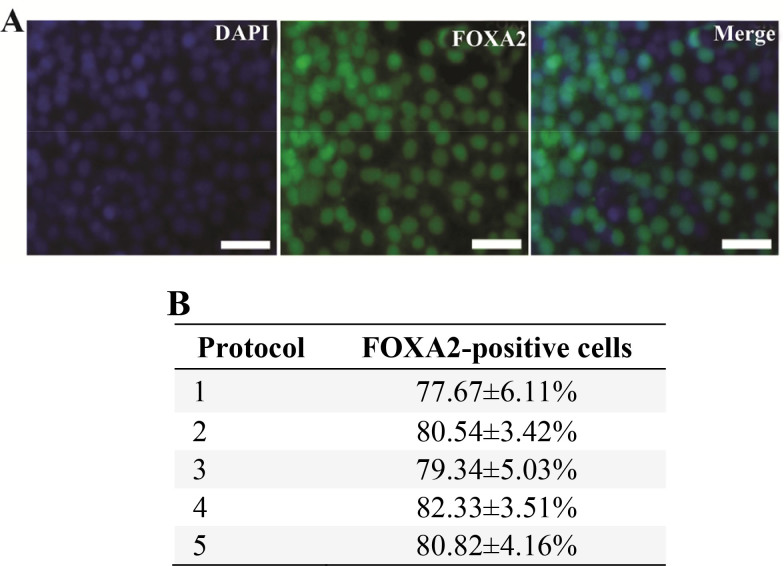
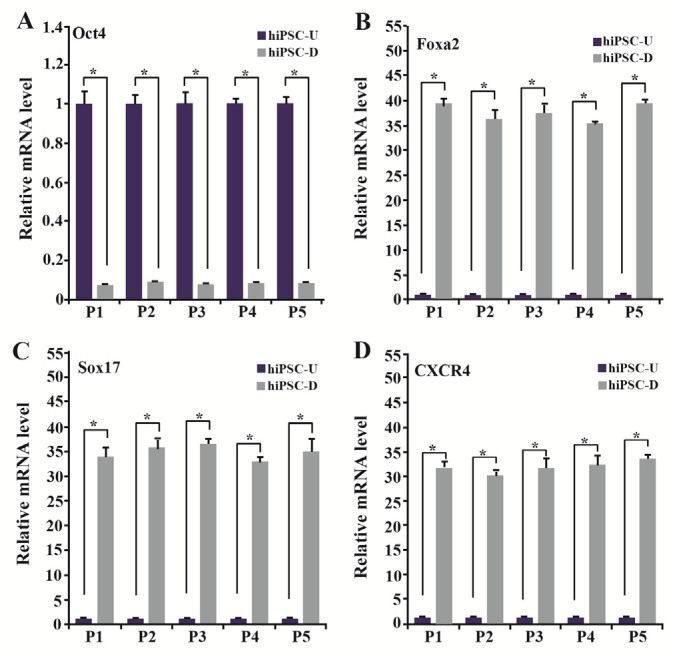
QRT-PCR analysis showed that after three days, the expression levels of DE and pluripotency markers in the differentiated hiPSCs among all five groups did not have any significant differences. Similarly, the immunocytochemistry analysis demonstrated that the differentiated hiPSCs expressed FOXA2, with no significant differences.
Despite this similarity in the results, the third differentiation medium has more defined and cost effective components. Furthermore, hMSC, a human feeder, is safer than MEF. Therefore, the fifth method is preferable among other DE differentiation methods and can serve as a fundamental method helping the development of regenerative medicine.
使用成分不明确的培养基和非人类饲养层进行确定内胚层(DE)分化,可能会导致用于治疗的生成细胞受到污染。因此,需要生成更安全、更合适的DE细胞。本研究比较了五种不同方法,以建立一种合适的方法,在更明确的培养基中,于合适的饲养层上从人诱导多能干细胞(hiPSC)高效诱导DE分化。
人诱导多能干细胞(hiPSC)在灭活的饲养层上培养。传代后的无饲养层hiPSC与激活素-A和不同的内胚层分化培养基一起孵育三天,这些培养基包括1-FBS、2-B27、3-ITS和白蛋白组分-V、4-B27和ITS以及5-类似于第三种培养基。前四种方法中的饲养细胞是小鼠胚胎成纤维细胞(MEF),第五种方法中的饲养细胞是成人骨髓间充质干细胞(hMSC)。使用qRT-PCR评估DE标志物FOXA2、SOX17和CXCR4以及多能性标志物OCT4,同时通过免疫细胞化学评估FOXA2。
qRT-PCR分析表明,三天后,所有五组分化的hiPSC中DE和多能性标志物的表达水平没有任何显著差异。同样,免疫细胞化学分析表明,分化的hiPSC表达FOXA2,无显著差异。
尽管结果相似,但第三种分化培养基的成分更明确且成本效益更高。此外,人饲养层hMSC比MEF更安全。因此,在其他DE分化方法中,第五种方法更可取,可作为有助于再生医学发展的基础方法。