Stewart Katherine, Gaitan Yaned, Shafer Maxwell E R, Aoudjit Lamine, Hu Di, Sharma Richa, Tremblay Mathieu, Ishii Hidetaka, Marcotte Michael, Stanga Daniela, Tang You Chi, Boualia Sami Kamel, Nguyen Alana H T, Takano Tomoko, Lamarche-Vane Nathalie, Vidal Silvia, Bouchard Maxime
Goodman Cancer Research Centre and Department of Biochemistry, McGill University, Montreal, Quebec, Canada.
Department of Medicine, McGill University Health Centre, Montreal, Quebec, Canada.
PLoS Genet. 2016 Feb 9;12(2):e1005785. doi: 10.1371/journal.pgen.1005785. eCollection 2016 Feb.
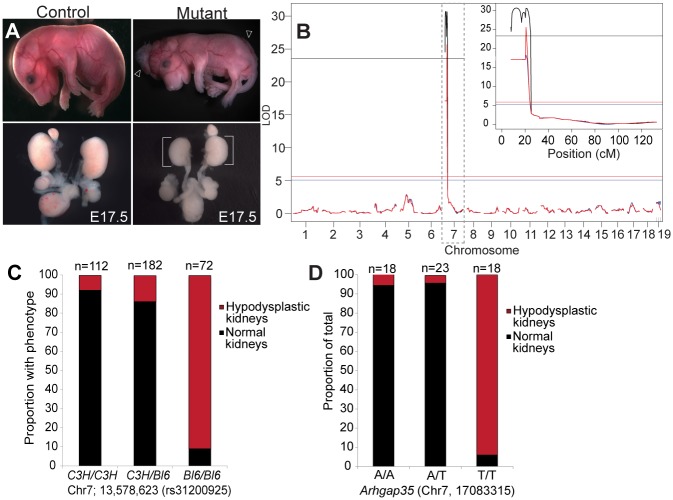
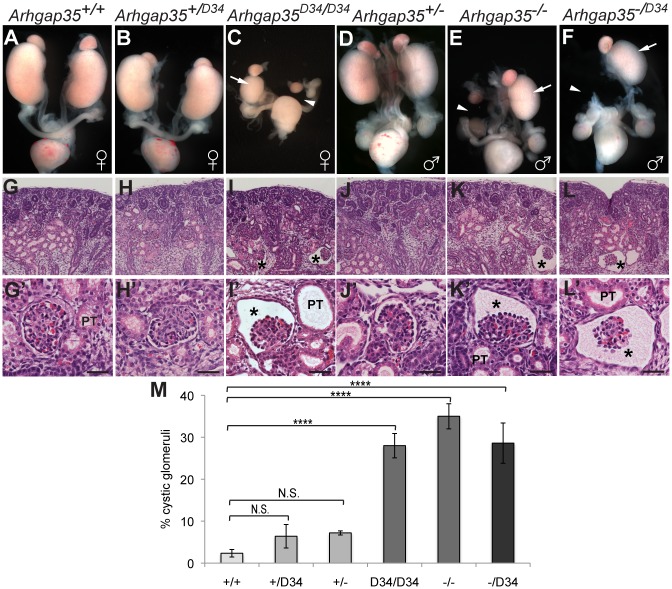
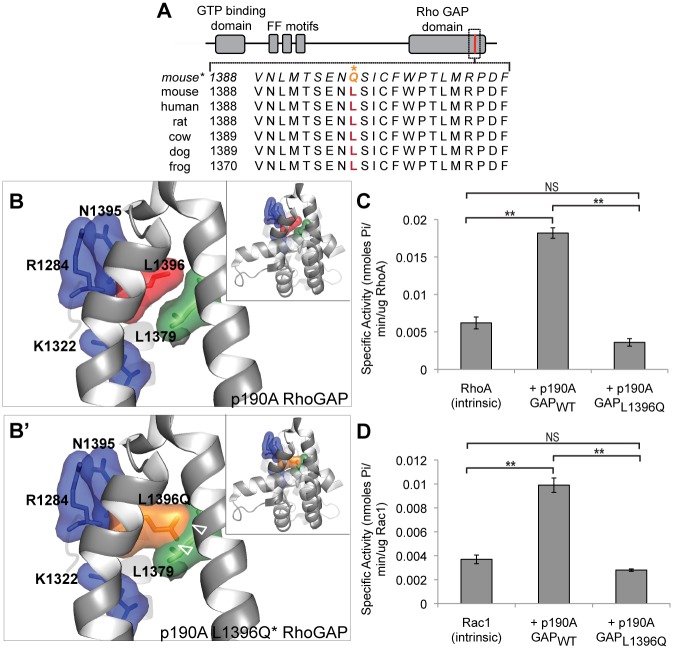
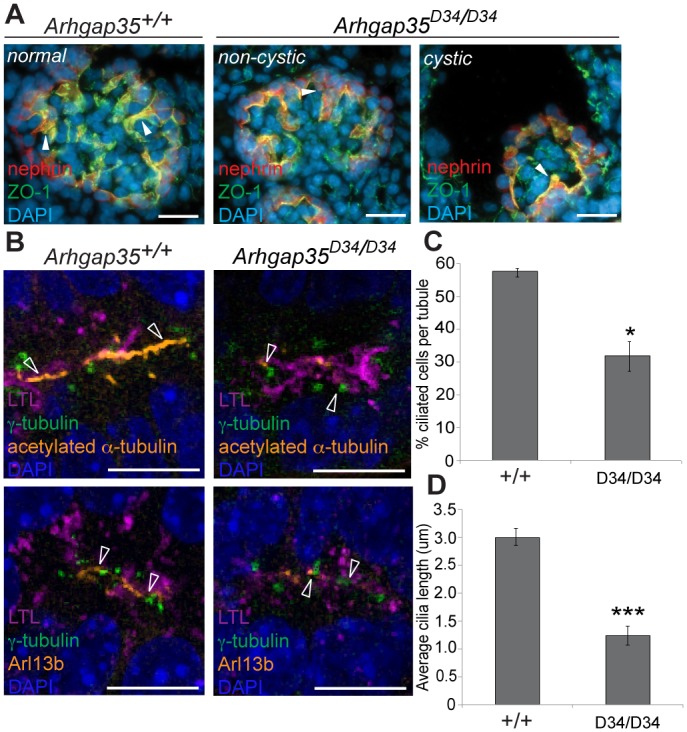
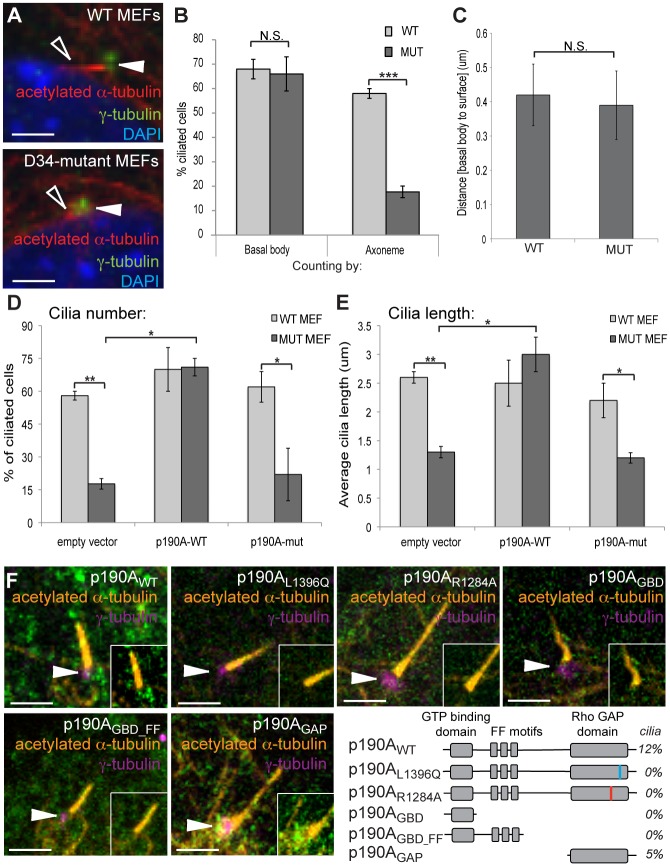
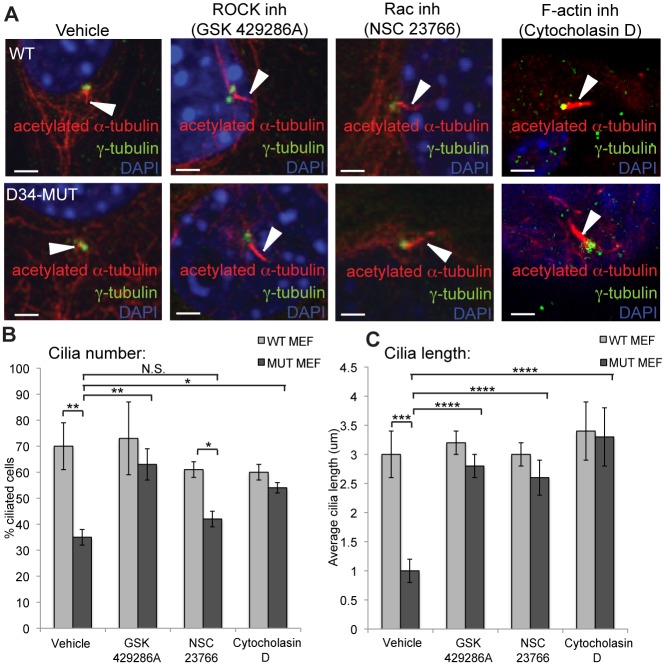
Rho family GTPases act as molecular switches regulating actin cytoskeleton dynamics. Attenuation of their signaling capacity is provided by GTPase-activating proteins (GAPs), including p190A, that promote the intrinsic GTPase activity of Rho proteins. In the current study we have performed a small-scale ENU mutagenesis screen and identified a novel loss of function allele of the p190A gene Arhgap35, which introduces a Leu1396 to Gln substitution in the GAP domain. This results in decreased GAP activity for the prototypical Rho-family members, RhoA and Rac1, likely due to disrupted ordering of the Rho binding surface. Consequently, Arhgap35-deficient animals exhibit hypoplastic and glomerulocystic kidneys. Investigation into the cystic phenotype shows that p190A is required for appropriate primary cilium formation in renal nephrons. P190A specifically localizes to the base of the cilia to permit axoneme elongation, which requires a functional GAP domain. Pharmacological manipulations further reveal that inhibition of either Rho kinase (ROCK) or F-actin polymerization is able to rescue the ciliogenesis defects observed upon loss of p190A activity. We propose a model in which p190A acts as a modulator of Rho GTPases in a localized area around the cilia to permit the dynamic actin rearrangement required for cilia elongation. Together, our results establish an unexpected link between Rho GTPase regulation, ciliogenesis and glomerulocystic kidney disease.
Rho家族GTP酶作为分子开关调节肌动蛋白细胞骨架动力学。GTP酶激活蛋白(GAPs),包括p190A,可降低其信号传导能力,这些蛋白可促进Rho蛋白的内在GTP酶活性。在本研究中,我们进行了小规模ENU诱变筛选,鉴定出p190A基因Arhgap35的一个新的功能缺失等位基因,该等位基因在GAP结构域中引入了Leu1396到Gln的替换。这导致典型的Rho家族成员RhoA和Rac1的GAP活性降低,这可能是由于Rho结合表面的有序性被破坏。因此,Arhgap35缺陷的动物表现出肾发育不全和肾小球囊肿性肾脏。对囊肿表型的研究表明,p190A是肾单位中适当的初级纤毛形成所必需的。P190A特异性定位于纤毛基部以允许轴丝伸长,这需要一个功能性的GAP结构域。药理学操作进一步揭示,抑制Rho激酶(ROCK)或F-肌动蛋白聚合能够挽救在p190A活性丧失时观察到的纤毛发生缺陷。我们提出了一个模型,其中p190A在纤毛周围的局部区域作为Rho GTP酶的调节剂,以允许纤毛伸长所需的动态肌动蛋白重排。总之,我们的结果在Rho GTP酶调节、纤毛发生和肾小球囊肿性肾病之间建立了意想不到的联系。