Ibitoye Morufu Olusola, Hamzaid Nur Azah, Hasnan Nazirah, Abdul Wahab Ahmad Khairi, Davis Glen M
Department of Biomedical Engineering, Faculty of Engineering, University of Malaya, Kuala Lumpur, Malaysia.
Department of Biomedical Engineering, Faculty of Engineering and Technology, University of Ilorin, Ilorin, Nigeria.
PLoS One. 2016 Feb 9;11(2):e0149024. doi: 10.1371/journal.pone.0149024. eCollection 2016.
Rapid muscle fatigue during functional electrical stimulation (FES)-evoked muscle contractions in individuals with spinal cord injury (SCI) is a significant limitation to attaining health benefits of FES-exercise. Delaying the onset of muscle fatigue is often cited as an important goal linked to FES clinical efficacy. Although the basic concept of fatigue-resistance has a long history, recent advances in biomedical engineering, physiotherapy and clinical exercise science have achieved improved clinical benefits, especially for reducing muscle fatigue during FES-exercise. This review evaluated the methodological quality of strategies underlying muscle fatigue-resistance that have been used to optimize FES therapeutic approaches. The review also sought to synthesize the effectiveness of these strategies for persons with SCI in order to establish their functional impacts and clinical relevance.
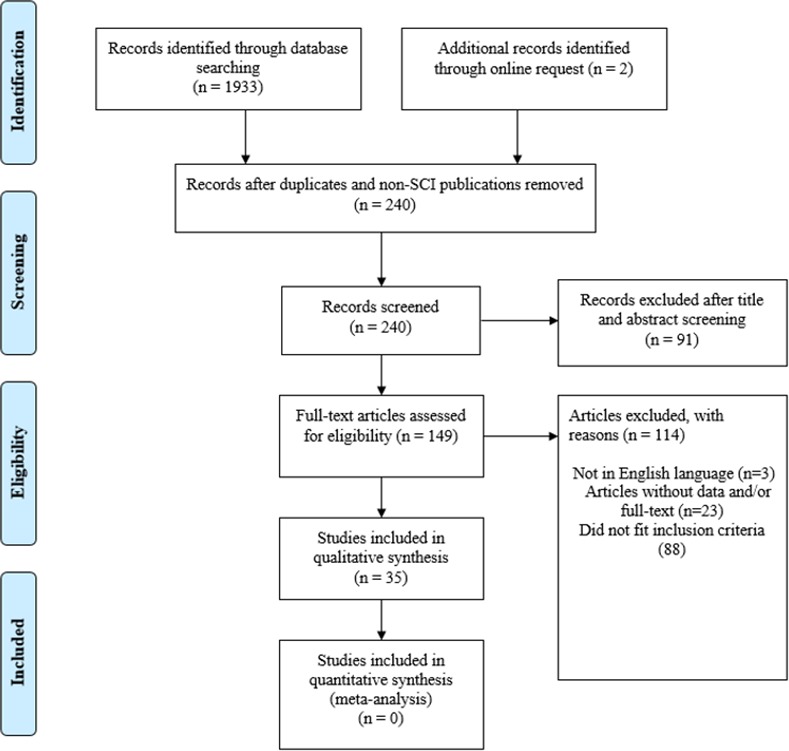
Published scientific literature pertaining to the reduction of FES-induced muscle fatigue was identified through searches of the following databases: Science Direct, Medline, IEEE Xplore, SpringerLink, PubMed and Nature, from the earliest returned record until June 2015. Titles and abstracts were screened to obtain 35 studies that met the inclusion criteria for this systematic review.
Following the evaluation of methodological quality (mean (SD), 50 (6) %) of the reviewed studies using the Downs and Black scale, the largest treatment effects reported to reduce muscle fatigue mainly investigated isometric contractions of limited functional and clinical relevance (n = 28). Some investigations (n = 13) lacked randomisation, while others were characterised by small sample sizes with low statistical power. Nevertheless, the clinical significance of emerging trends to improve fatigue-resistance during FES included (i) optimizing electrode positioning, (ii) fine-tuning of stimulation patterns and other FES parameters, (iii) adjustments to the mode and frequency of exercise training, and (iv) biofeedback-assisted FES-exercise to promote selective recruitment of fatigue-resistant motor units.
Although the need for further in-depth clinical trials (especially RCTs) was clearly warranted to establish external validity of outcomes, current evidence was sufficient to support the validity of certain techniques for rapid fatigue-reduction in order to promote FES therapy as an integral part of SCI rehabilitation. It is anticipated that this information will be valuable to clinicians and other allied health professionals administering FES as a treatment option in rehabilitation and aid the development of effective rehabilitation interventions.
脊髓损伤(SCI)患者在功能性电刺激(FES)诱发肌肉收缩过程中,肌肉快速疲劳是限制FES运动获得健康益处的一个重要因素。延迟肌肉疲劳的发生通常被认为是与FES临床疗效相关的一个重要目标。尽管抗疲劳的基本概念由来已久,但生物医学工程、物理治疗和临床运动科学的最新进展已带来了更好的临床效益,尤其是在减少FES运动期间的肌肉疲劳方面。本综述评估了用于优化FES治疗方法的抗肌肉疲劳策略的方法学质量。该综述还试图综合这些策略对SCI患者的有效性,以确定其功能影响和临床相关性。
通过检索以下数据库确定已发表的有关减少FES诱发肌肉疲劳的科学文献:Science Direct、Medline、IEEE Xplore、SpringerLink、PubMed和Nature,检索时间从最早返回的记录到2015年6月。对标题和摘要进行筛选,以获得35项符合本系统综述纳入标准的研究。
使用唐斯和布莱克量表对纳入研究的方法学质量(均值(标准差),50(6)%)进行评估后发现,报告的减少肌肉疲劳的最大治疗效果主要研究了功能和临床相关性有限的等长收缩(n = 28)。一些研究(n = 13)缺乏随机化,而其他研究的特点是样本量小且统计效力低。然而,FES期间改善抗疲劳能力的新趋势的临床意义包括:(i)优化电极位置;(ii)微调刺激模式和其他FES参数;(iii)调整运动训练的模式和频率;(iv)生物反馈辅助FES运动,以促进抗疲劳运动单位的选择性募集。
尽管显然需要进一步深入的临床试验(尤其是随机对照试验)来确定结果的外部有效性,但目前的证据足以支持某些快速减轻疲劳技术的有效性,以便将FES治疗作为SCI康复的一个组成部分加以推广。预计这些信息将对将FES作为康复治疗选择的临床医生和其他相关健康专业人员有价值,并有助于开发有效的康复干预措施。