Gallay Marc N, Moser David, Rossi Franziska, Pourtehrani Payam, Magara Anouk E, Kowalski Milek, Arnold Alexander, Jeanmonod Daniel
Sonimodul, Center for Ultrasound Functional Neurosurgery, Leopoldstrasse 1, CH-4500 Solothurn, Switzerland.
Rodiag Diagnostics Centers, Leopoldstrasse 1, CH-4500 Solothurn, Switzerland.
J Ther Ultrasound. 2016 Feb 13;4:5. doi: 10.1186/s40349-016-0049-8. eCollection 2016.
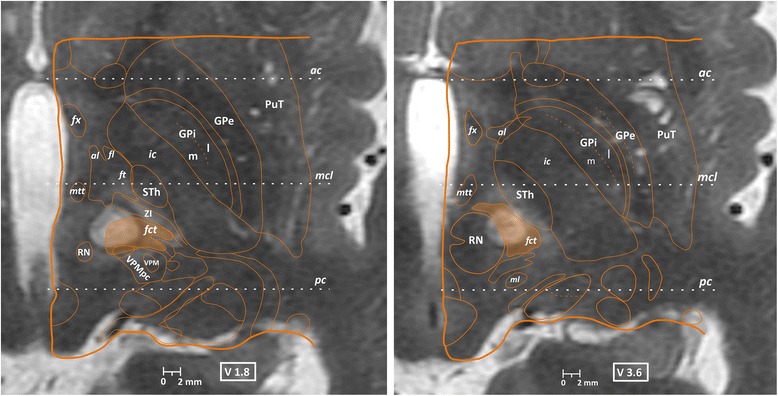
Already in the late 1960s and early 1970s, targeting of the "posterior subthalamic area (PSA)" was explored by different functional neurosurgical groups applying the radiofrequency (RF) technique to treat patients suffering from essential tremor (ET). Recent advances in magnetic resonance (MR)-guided focused ultrasound (MRgFUS) technology offer the possibility to perform thermocoagulation of the cerebellothalamic fiber tract in the PSA without brain penetration, allowing a strong reduction of the procedure-related risks and increased accuracy. We describe here the first results of the MRgFUS cerebellothalamic tractotomy (CTT).
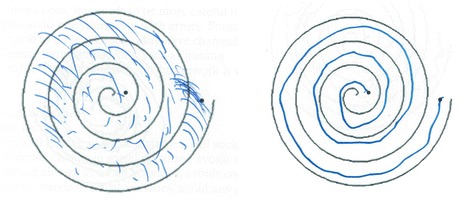
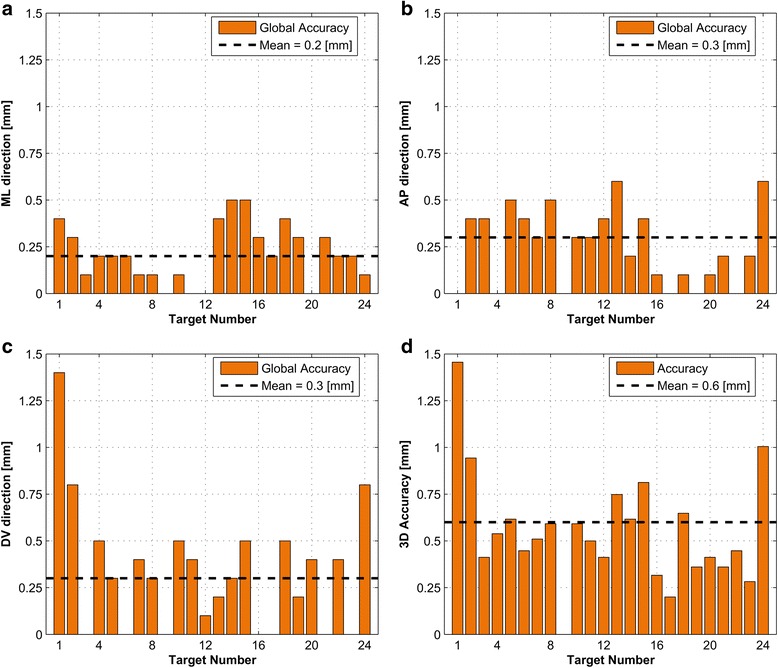
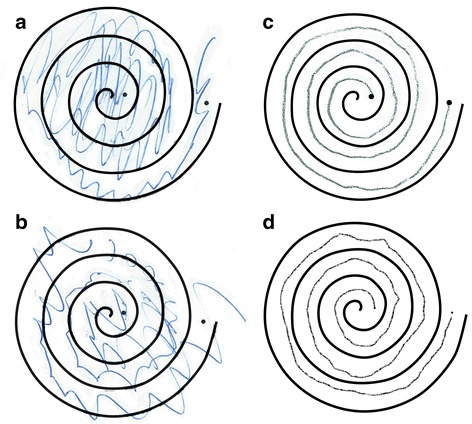
Twenty-one consecutive patients suffering from chronic (mean disease duration 29.9 years), therapy-resistant ET were treated with MRgFUS CTT. Three patients received bilateral treatment with a 1-year interval. Primary relief assessment indicators were the Essential Tremor Rating Scale (Fahn, Tolosa, and Marin) (ETRS) taken at follow-up (3 months to 2 years) with accent on the hand function subscores (HF16 for treated hand and HF32 for both hands) and handwriting. The evolution of seven patients with HF32 above 28 points over 32 (group 1) differentiated itself from the others' (group 2) and was analyzed separately. Global tremor relief estimations were provided by the patients. Lesion reconstruction and measurement of targeting accuracy were done on 2-day post-treatment MR pictures for each CTT lesion.
The mean ETRS score for all patients was 57.6 ± 13.2 at baseline and 25.8 ± 17.6 at 1 year (n = 10). The HF16 score reduction was 92 % in group 2 at 3 months and stayed stable at 1 year (90 %). Group 1 showed only an improvement of 41 % at 3 months and 40 % at 1 year. Nevertheless, two patients of group 1 treated bilaterally had an HF16 score reduction of 75 and 88 % for the dominant hand at 1 year after the second side. The mean patient estimation of global tremor relief after CTT was 92 % at 2 days and 77 % at 1-year follow-up.
CTT with MRgFUS was shown to be an effective and safe approach for patients with therapy-refractory essential tremor, combining neurological function sparing with precise targeting and the possibility to treat patients bilaterally.
早在20世纪60年代末和70年代初,不同的功能神经外科团队就探索了对“丘脑底后区(PSA)”进行靶向治疗,应用射频(RF)技术治疗特发性震颤(ET)患者。磁共振(MR)引导聚焦超声(MRgFUS)技术的最新进展提供了一种可能性,即在不穿透大脑的情况下对PSA中的小脑丘脑纤维束进行热凝,从而大大降低了与手术相关的风险并提高了准确性。我们在此描述MRgFUS小脑丘脑束切断术(CTT)的初步结果。
连续21例患有慢性(平均病程29.9年)、对治疗耐药的ET患者接受了MRgFUS CTT治疗。3例患者接受双侧治疗,间隔1年。主要缓解评估指标是随访时(3个月至2年)采用的特发性震颤评定量表(法恩、托洛萨和马林)(ETRS),重点是手部功能子评分(患侧手为HF16,双手为HF32)和书写。7例HF32高于28分的患者在32分以上的变化(第1组)与其他患者(第2组)不同,并单独进行分析。患者提供整体震颤缓解估计。在每次CTT病变治疗后2天的MR图像上进行病变重建和靶向准确性测量。
所有患者的平均ETRS评分在基线时为57.6±13.2,在1年时为25.8±17.6(n = 10)。第2组在3个月时HF16评分降低了92%,在1年时保持稳定(90%)。第1组在3个月时仅改善了41%,在1年时改善了40%。然而,第1组中接受双侧治疗的2例患者在第二次手术后1年时,患侧手的HF16评分分别降低了75%和88%。患者对CTT后整体震颤缓解的平均估计在术后2天为92%,在1年随访时为77%。
对于治疗难治性特发性震颤患者,MRgFUS CTT被证明是一种有效且安全的方法,它将保留神经功能与精确靶向以及双侧治疗患者的可能性相结合。