Wang Jieyi, Goetsch Liliane, Tucker Lora, Zhang Qian, Gonzalez Alexandra, Vaidya Kedar S, Oleksijew Anatol, Boghaert Erwin, Song Minghao, Sokolova Irina, Pestova Ekaterina, Anderson Mark, Pappano William N, Ansell Peter, Bhathena Anahita, Naumovski Louie, Corvaia Nathalie, Reilly Edward B
AbbVie, North Chicago, IL, USA.
AbbVie Biotherapeutics, 1500 Seaport Blvd., Redwood City, CA, 94063, USA.
BMC Cancer. 2016 Feb 16;16:105. doi: 10.1186/s12885-016-2138-z.
c-Met is the receptor tyrosine kinase for hepatocyte growth factor (HGF) encoded by the MET proto-oncogene. Aberrant activation of c-Met resulting from MET amplification and c-Met overexpression is associated with poor clinical outcome in multiple malignancies underscoring the importance of c-Met signaling in cancer progression. Several c-Met inhibitors have advanced to the clinic; however, the development of inhibitory c-Met-directed therapeutic antibodies has been hampered by inherent agonistic activity.
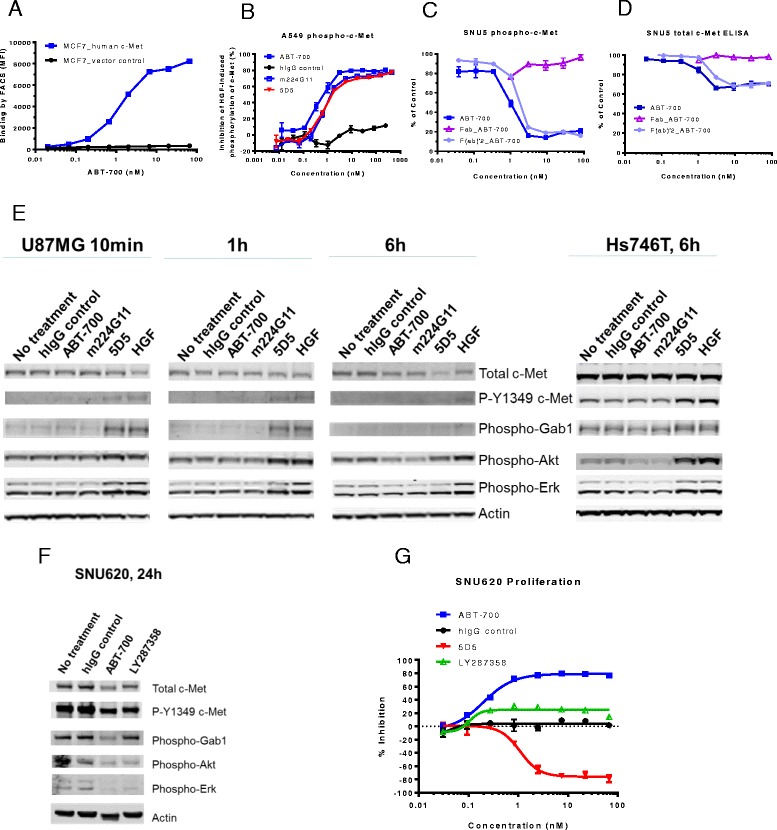
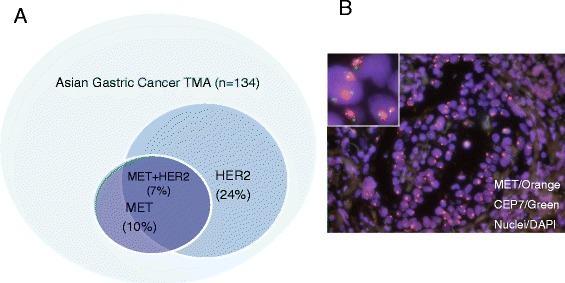
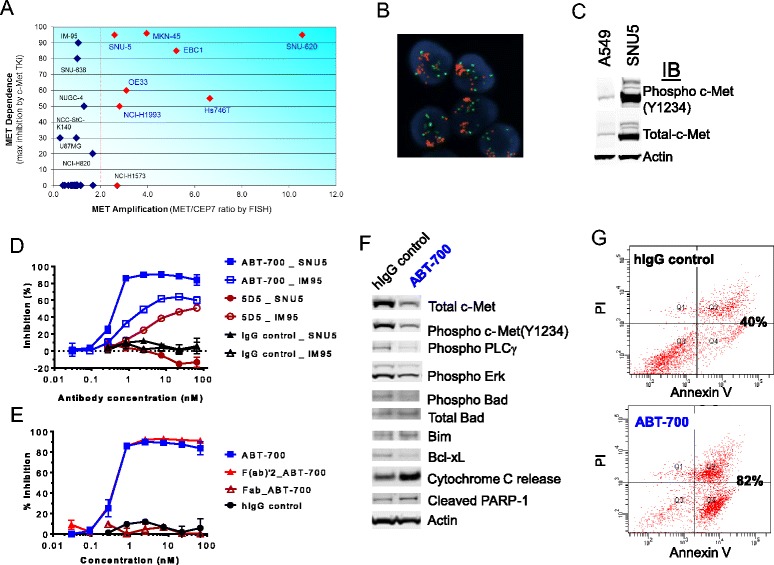
We generated and tested a bivalent anti-c-Met monoclonal antibody ABT-700 in vitro for binding potency and antagonistic activity and in vivo for antitumor efficacy in human tumor xenografts. Human cancer cell lines and gastric cancer tissue microarrays were examined for MET amplification by fluorescence in situ hybridization (FISH).
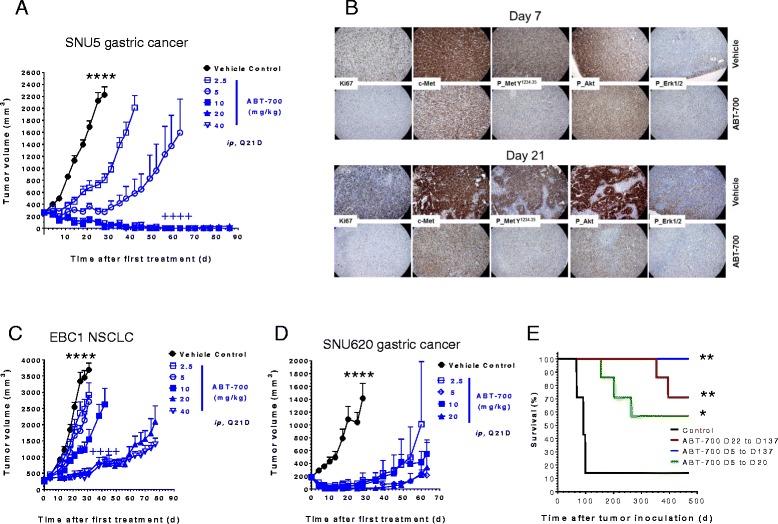
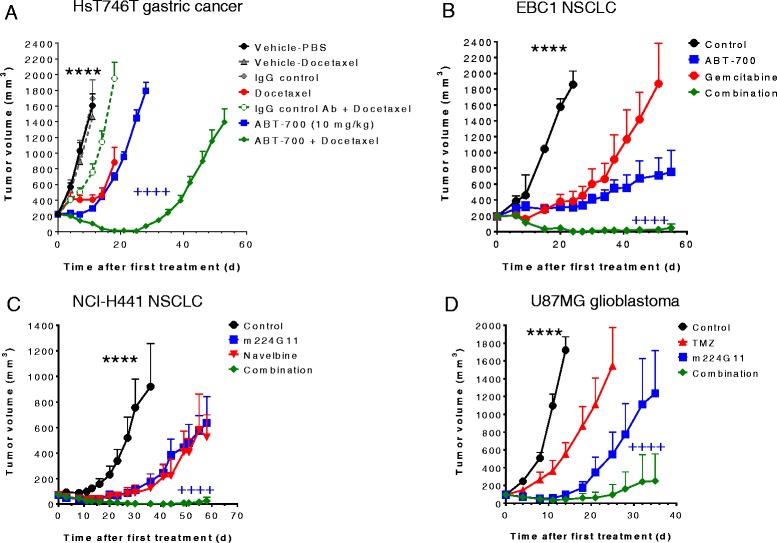
ABT-700 exhibits a distinctive ability to block both HGF-independent constitutive c-Met signaling and HGF-dependent activation of c-Met. Cancer cells addicted to the constitutively activated c-Met signaling driven by MET amplification undergo apoptosis upon exposure to ABT-700. ABT-700 induces tumor regression and tumor growth delay in preclinical tumor models of gastric and lung cancers harboring amplified MET. ABT-700 in combination with chemotherapeutics also shows additive antitumor effect. Amplification of MET in human cancer tissues can be identified by FISH.
The preclinical attributes of ABT-700 in blocking c-Met signaling, inducing apoptosis and suppressing tumor growth in cancers with amplified MET provide rationale for examining its potential clinical utility for the treatment of cancers harboring MET amplification.
c-Met是由MET原癌基因编码的肝细胞生长因子(HGF)的受体酪氨酸激酶。由MET扩增和c-Met过表达导致的c-Met异常激活与多种恶性肿瘤的不良临床结局相关,这突出了c-Met信号传导在癌症进展中的重要性。几种c-Met抑制剂已进入临床试验;然而,抑制性c-Met导向治疗性抗体的开发受到其内在激动活性的阻碍。
我们制备并在体外测试了一种二价抗c-Met单克隆抗体ABT-700的结合效力和拮抗活性,并在体内测试了其对人肿瘤异种移植物的抗肿瘤疗效。通过荧光原位杂交(FISH)检测人癌细胞系和胃癌组织微阵列中的MET扩增情况。
ABT-700具有独特的能力,既能阻断不依赖HGF的组成性c-Met信号传导,又能阻断HGF依赖的c-Met激活。依赖于由MET扩增驱动的组成性激活的c-Met信号传导的癌细胞在暴露于ABT-700后会发生凋亡。在携带扩增MET的胃癌和肺癌临床前肿瘤模型中,ABT-700可诱导肿瘤消退并延迟肿瘤生长。ABT-700与化疗药物联合使用也显示出相加的抗肿瘤效果。通过FISH可鉴定人癌组织中的MET扩增情况。
ABT-700在阻断c-Met信号传导、诱导凋亡以及抑制MET扩增癌症的肿瘤生长方面的临床前特性,为研究其在治疗携带MET扩增癌症方面的潜在临床应用价值提供了理论依据。