Department of Fundamental Oncology, University of Lausanne, Lausanne, Switzerland ; Ludwig Center for Cancer Research, University of Lausanne, Lausanne, Switzerland.
J Immunother Cancer. 2016 Feb 16;4:4. doi: 10.1186/s40425-016-0109-1. eCollection 2016.
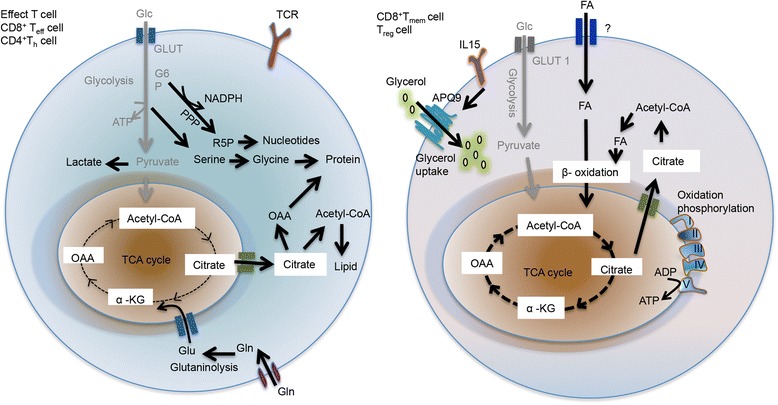
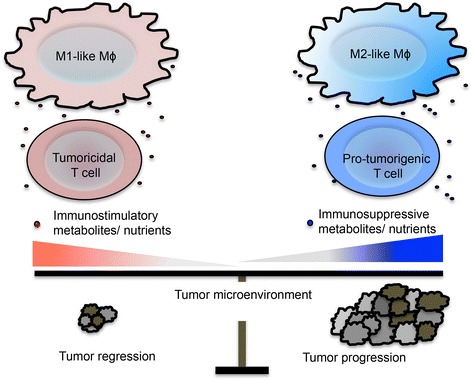
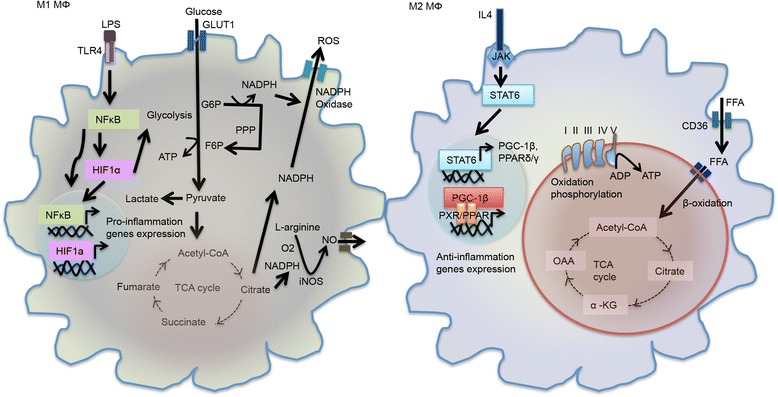
The success of cancer immunotherapy reveals the power of host immunity on killing cancer cells and the feasibility to unleash restraints of anti-tumor immunity. However, the immunosuppressive tumor microenvironment and low immunogenicity of cancer cells restrict the therapeutic efficacy of cancer immunotherapies in a small fraction of patients. Therefore deciphering the underlying mechanisms promoting the generation of an immunosuppressive tumor microenvironment is direly needed to better harness host anti-tumor immunity. Early works revealed that deregulated metabolic activities in cancer cells support unrestricted proliferation and survival by producing macromolecules. Intriguingly, recent studies uncovered that metabolic switch in immune and endothelial cells modulate cellular activities and contribute to the progression of several diseases, including cancers. Herein, we review the progress on immunometabolic regulations on fine-tuning activities of immune cells and discuss how metabolic communication between cancer and infiltrating immune cells contributes to cancer immune evasion. Moreover, we would like to discuss how we might exploit this knowledge to improve current immunotherapies and the unresolved issues in this field.
癌症免疫疗法的成功揭示了宿主免疫在杀伤癌细胞方面的强大作用,也证明了释放抗肿瘤免疫抑制的可行性。然而,免疫抑制性肿瘤微环境和癌细胞的低免疫原性限制了癌症免疫疗法在一小部分患者中的治疗效果。因此,迫切需要破译促进免疫抑制性肿瘤微环境产生的潜在机制,以更好地利用宿主抗肿瘤免疫。早期的研究表明,癌细胞中失调的代谢活动通过产生大分子物质来支持不受限制的增殖和存活。有趣的是,最近的研究揭示了免疫细胞和内皮细胞中的代谢转换调节细胞活动,并有助于包括癌症在内的几种疾病的进展。在此,我们综述了免疫代谢调控对免疫细胞活性的精细调节的研究进展,并讨论了癌细胞与浸润免疫细胞之间的代谢通讯如何促进癌症免疫逃逸。此外,我们还将讨论如何利用这些知识来改进当前的免疫疗法以及该领域尚未解决的问题。