Li You-Zhi, Zhao Jian-Yu, Wu San-Min, Fan Xian-Wei, Luo Xing-Lu, Chen Bao-Shan
State Key Laboratory for Conservation and Utilization of Subtropical Agro-bioresources; Key Laboratory of Ministry of Education for Microbial and Plant Genetic Engineering; College of Life Science and Technology, Guangxi University; 100 Daxue Road, Nanning, Guangxi 530004, P. R. China.
Sci Rep. 2016 Feb 19;6:19823. doi: 10.1038/srep19823.
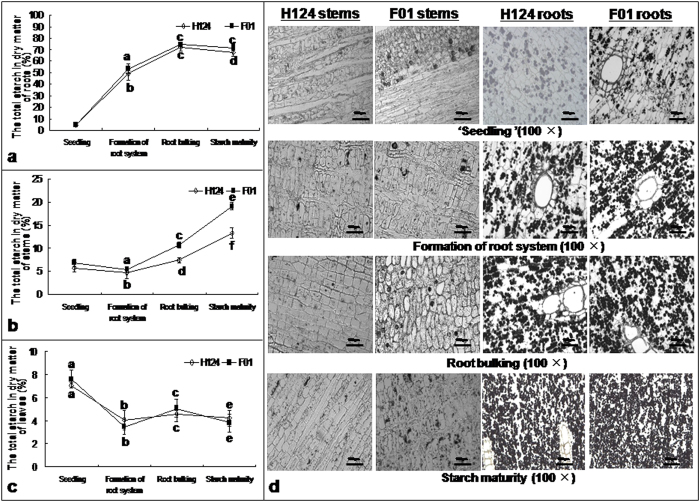
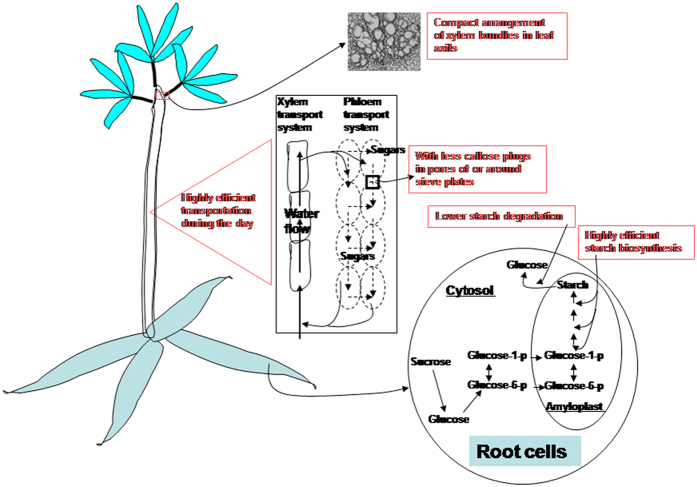
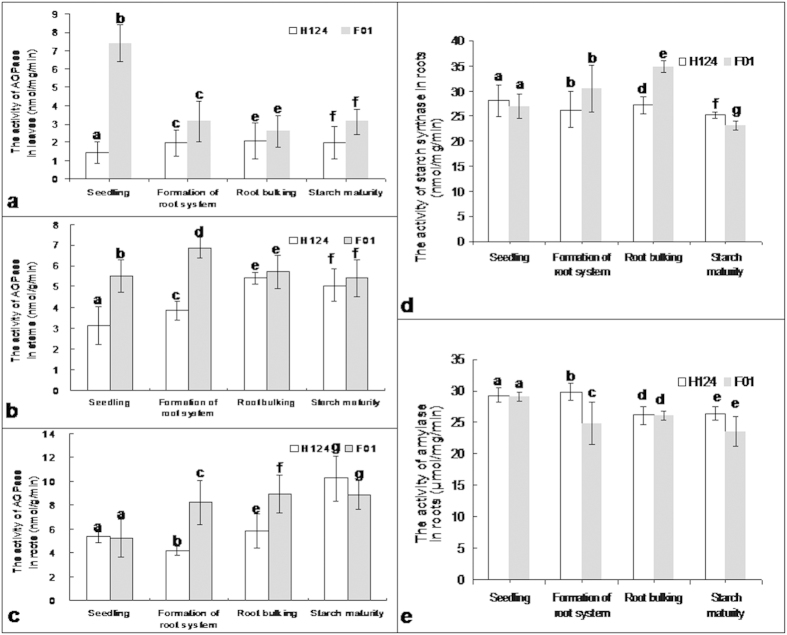
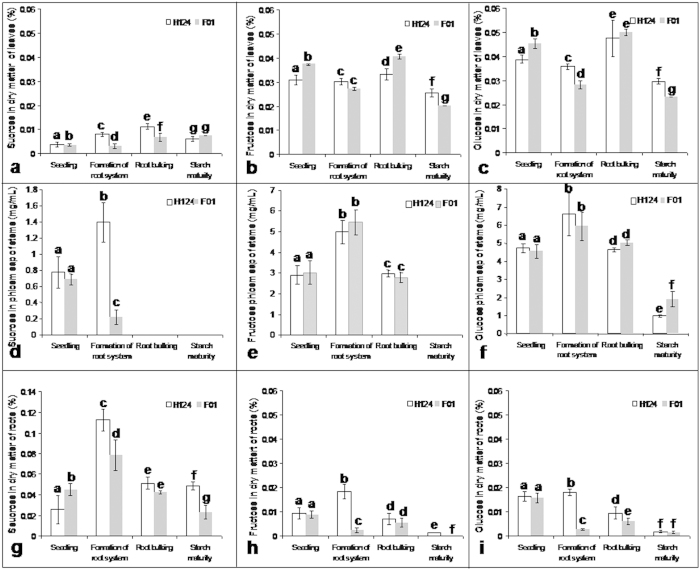
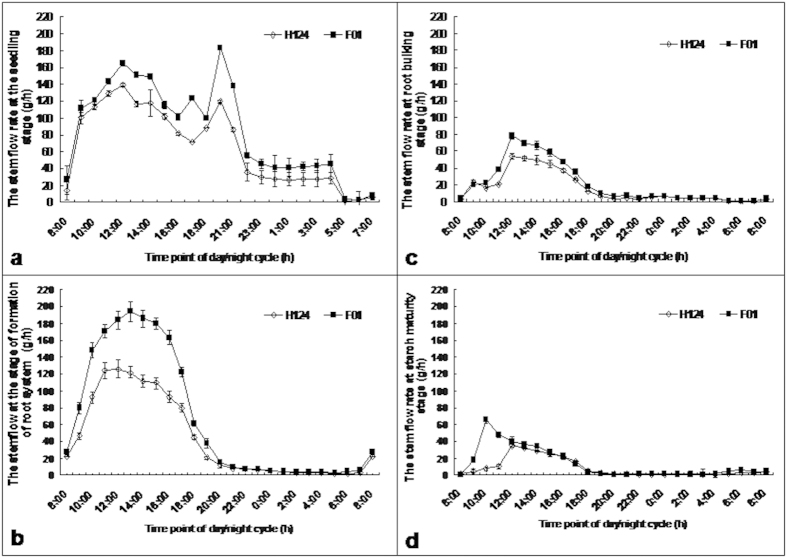
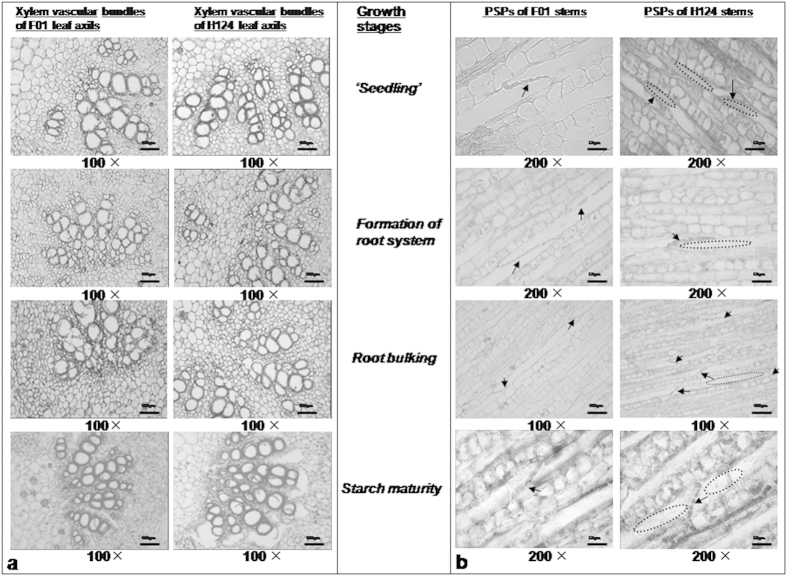
Cassava (Manihot esculenta) is valued mainly for high content starch in its roots. Our understanding of mechanisms promoting high starch accumulation in the roots is, however, still very limited. Two field-grown cassava cultivars, Huanan 124(H124) with low root starch and Fuxuan 01(F01) with high root starch, were characterised comparatively at four main growth stages. Changes in key sugars in the leaves, stems and roots seemed not to be strongly associated with the final amount of starch accumulated in the roots. However, when compared with H124, F01 exhibited a more compact arrangement of xylem vascular bundles in the leaf axils, much less callose around the phloem sieve plates in the stems, higher starch synthesis-related enzymatic activity but lower amylase activity in the roots, more significantly up-regulated expression of related genes, and a much higher stem flow rate (SFR). In conclusion, higher starch accumulation in the roots results from the concurrent effects of powerful stem transport capacity highlighted by higher SFR, high starch synthesis but low starch degradation in the roots, and high expression of sugar transporter genes in the stems. A model of high starch accumulation in cassava roots was therefore proposed and discussed.
木薯(Manihot esculenta)主要因其根部高含量的淀粉而受到重视。然而,我们对促进根部高淀粉积累机制的了解仍然非常有限。对两个田间种植的木薯品种进行了比较研究,其中华南124(H124)根部淀粉含量低,福选01(F01)根部淀粉含量高,在四个主要生长阶段对其进行了特征分析。叶片、茎和根中关键糖类的变化似乎与根部最终积累的淀粉量没有强烈关联。然而,与H124相比,F01在叶腋处木质部维管束排列更紧密,茎中韧皮部筛板周围的胼胝质更少,根部淀粉合成相关酶活性更高但淀粉酶活性更低,相关基因表达上调更为显著,并且茎流率(SFR)更高。总之,根部较高的淀粉积累是由较高的SFR突出的强大茎运输能力、根部高淀粉合成但低淀粉降解以及茎中糖转运蛋白基因的高表达共同作用的结果。因此,提出并讨论了木薯根部高淀粉积累的模型。