Gallegos Alena M, Xiong Huizhong, Leiner Ingrid M, Sušac Bože, Glickman Michael S, Pamer Eric G, van Heijst Jeroen W J
Immunology Program, Sloan-Kettering Institute, Memorial Sloan-Kettering Cancer Center, New York, New York, USA.
Infectious Diseases Service, Department of Medicine, Memorial Sloan-Kettering Cancer Center, New York, New York, USA.
Nat Immunol. 2016 Apr;17(4):379-86. doi: 10.1038/ni.3386. Epub 2016 Feb 22.
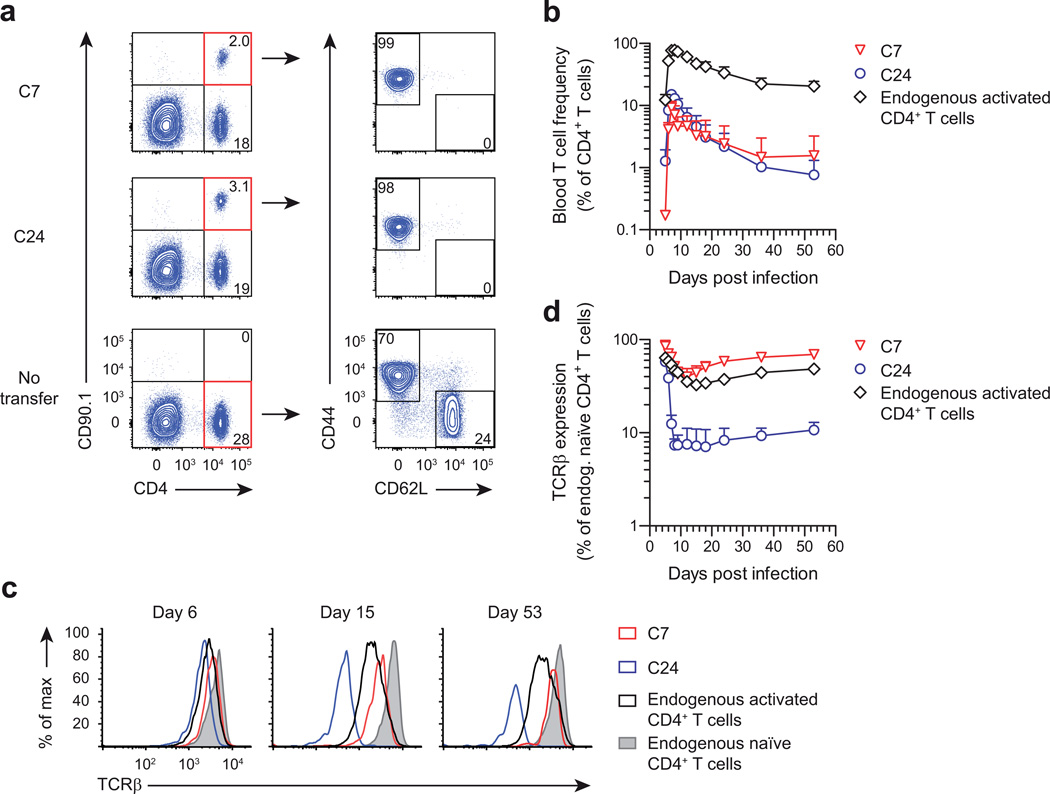
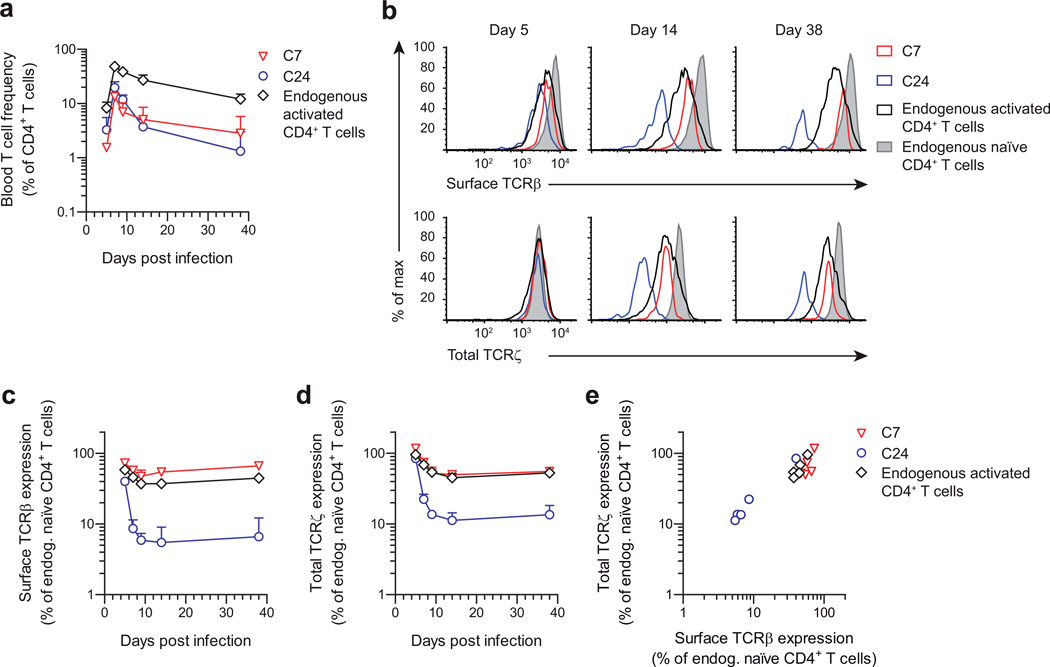
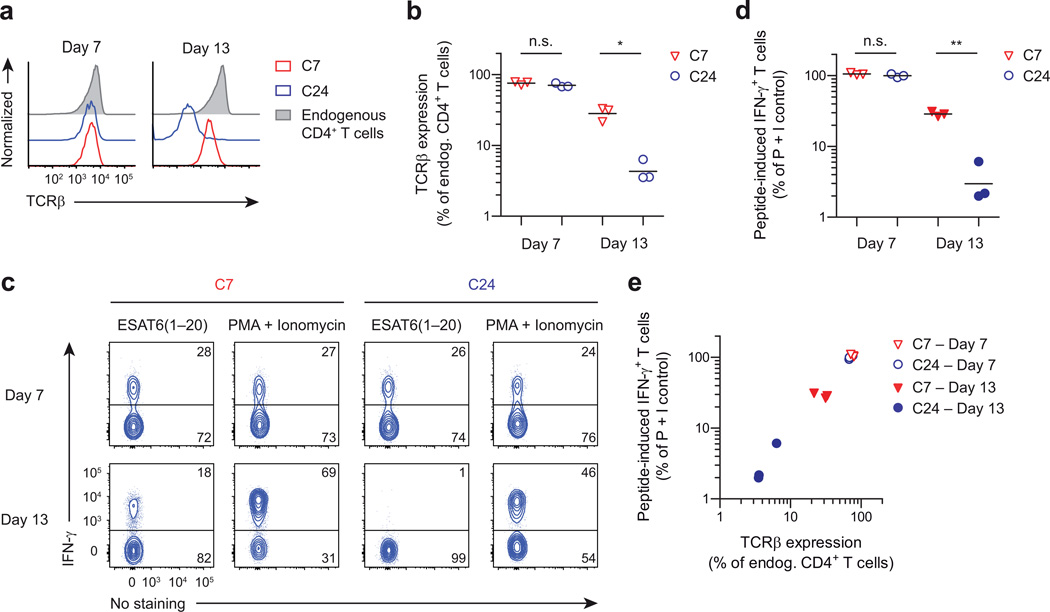
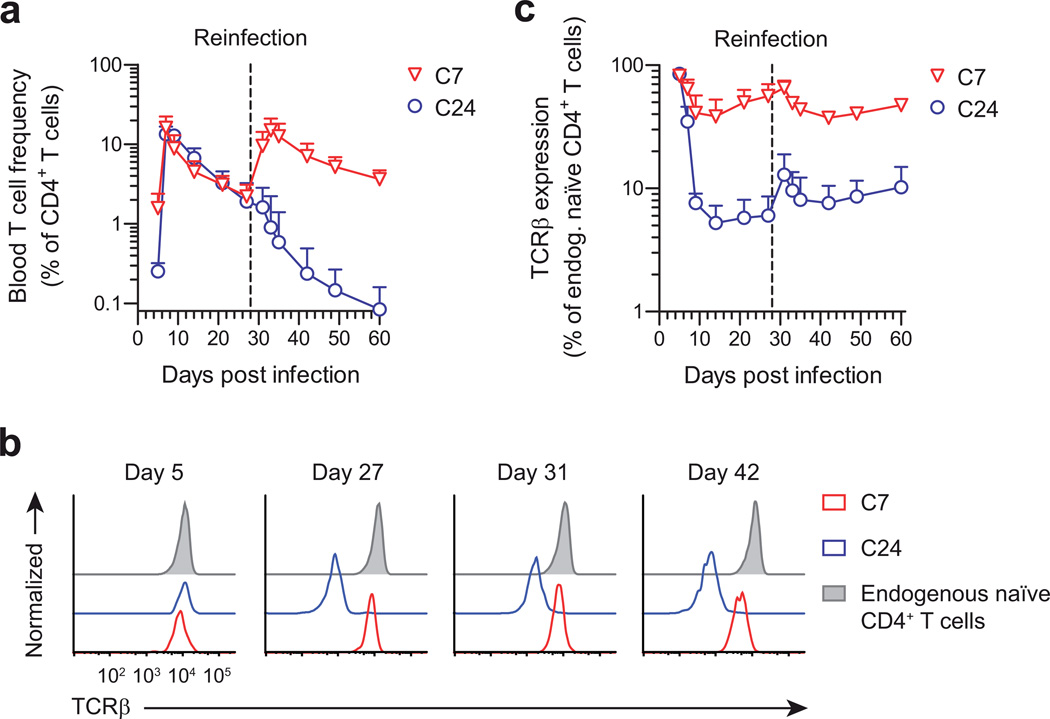
The T cell antigen receptor (TCR) is unique in that its affinity for ligand is unknown before encounter and can vary by orders of magnitude. How the immune system regulates individual T cells that display very different reactivity to antigen remains unclear. Here we found that activated CD4(+) T cells, at the peak of clonal expansion, persistently downregulated their TCR expression in proportion to the strength of the initial antigen recognition. This programmed response increased the threshold for cytokine production and recall proliferation in a clone-specific manner and ultimately excluded clones with the highest antigen reactivity. Thus, programmed downregulation of TCR expression represents a negative feedback mechanism for constraining T cell effector function with a suitable time delay to thereby allow pathogen control while avoiding excess inflammatory damage.
T细胞抗原受体(TCR)的独特之处在于,其在接触配体之前对配体的亲和力未知,并且其亲和力可以相差几个数量级。免疫系统如何调节对抗原表现出非常不同反应性的单个T细胞仍不清楚。在这里,我们发现活化的CD4(+) T细胞在克隆扩增的高峰期,会根据初始抗原识别的强度持续下调其TCR表达。这种程序性反应以克隆特异性方式提高了细胞因子产生和回忆增殖的阈值,并最终排除了具有最高抗原反应性的克隆。因此,TCR表达的程序性下调代表了一种负反馈机制,用于以适当的时间延迟来限制T细胞效应功能,从而在避免过度炎症损伤的同时实现病原体控制。