Chen Yan, Zheng Junfeng, Huang Qiaoniang, Deng Fengyuan, Huang Renliang, Zhao Wenjie, Yin Junping, Song Lina, Chen Juan, Gao Xing, Liu Zuguo, Petersen Frank, Yu Xinhua
Laboratory of Autoimmunity, Medical College of Xiamen University, Xiamen, China.
Department of Pharmacy, The First Affiliated Hospital of Xinxiang Medical University, Henan, China.
PLoS One. 2016 Feb 22;11(2):e0149485. doi: 10.1371/journal.pone.0149485. eCollection 2016.
Anti-muscarinic acetylcholine type-3 receptor (anti-M3R) autoantibodies have been suggested to be pathogenic for primary Sjögren's syndrome (pSS), and the second extracellular loop of M3R is suspected to carry a disease-promoting epitope. In this study, we aimed to evaluate the pathogenicity of autoantibodies against peptides derived from the second extracellular loop of M3R in mice and to determine whether those autoantibodies could be used as biomarker for pSS.
BALB/c mice were immunized with modified linear or cyclic peptides of the second extracellular loop of M3R. The function of exocrine glands was evaluated by measuring the secretion of saliva and tears. The histological evaluations were performed by using H&E staining or direct immunofluorescence staining. Autoantibodies against linear or cyclic peptides of the second extracellular loop of M3R in human and mice were determined using ELISA.
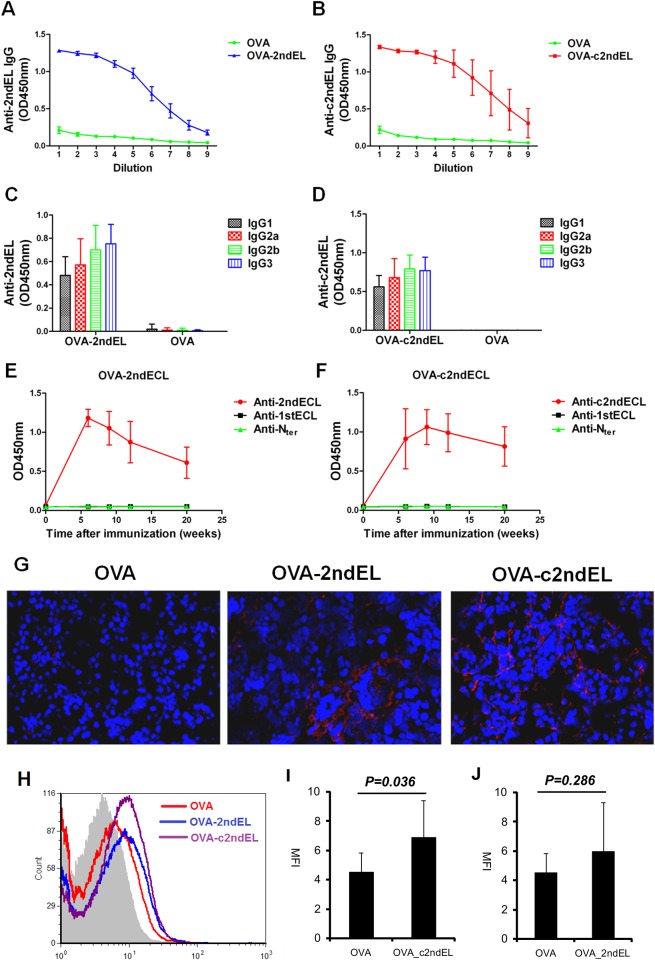
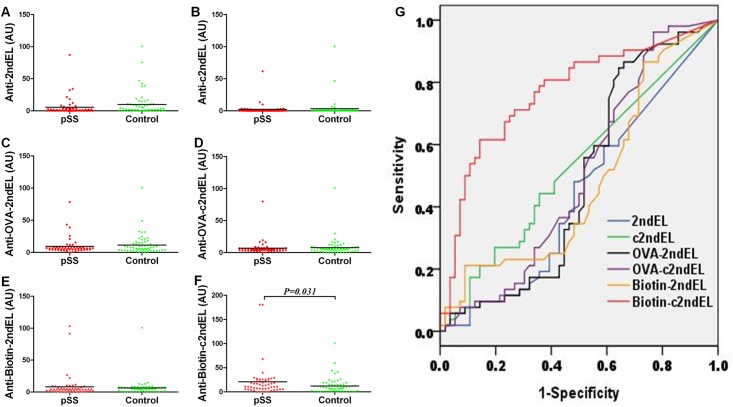
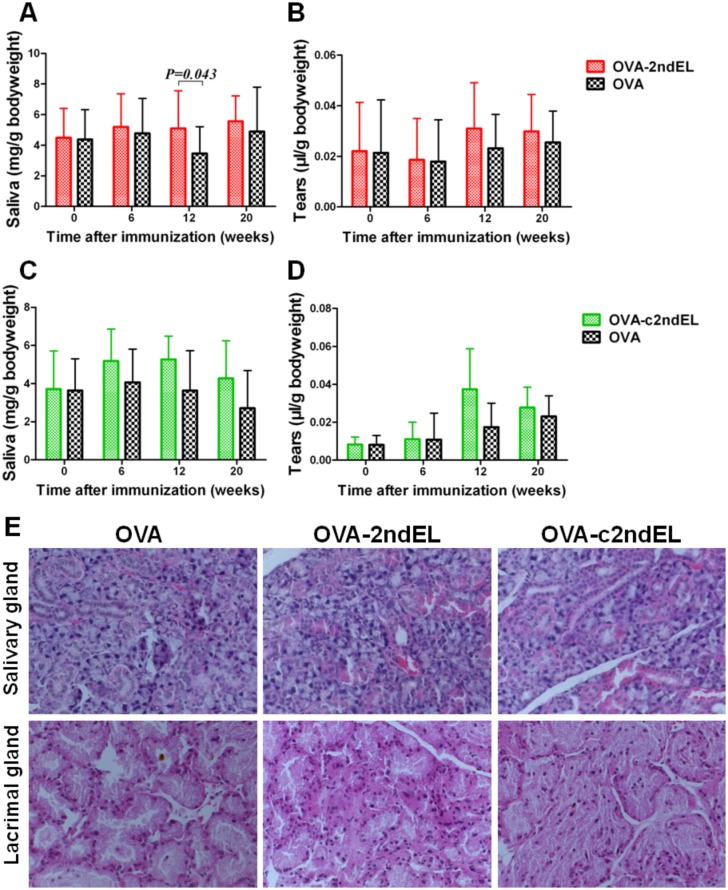
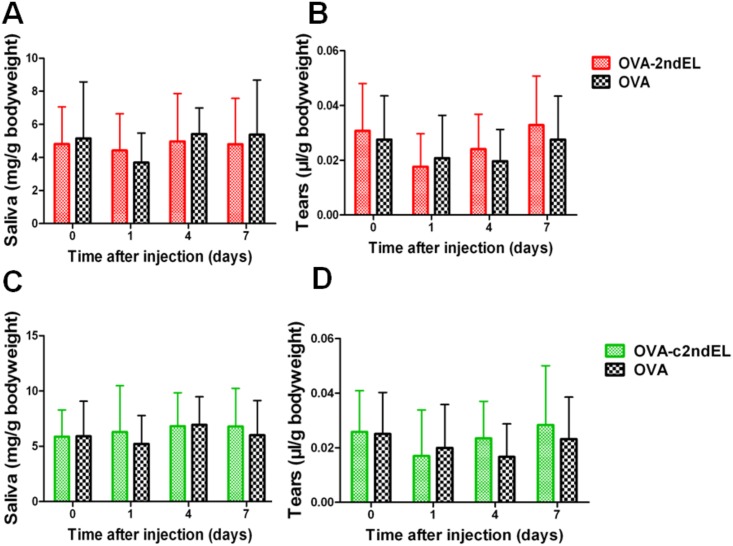
Immunization induced mice to produce autoantibodies against the linear or cyclic peptides of the second extracellular loop of M3R, and those autoantibodies could bind onto salivary glands. However, those mice showed neither impairment in the secretion of tears or saliva nor histological abnormality in the exocrine glands. Furthermore, passive transfer of the IgG isolated from the immunized mice into healthy mice did not induced the dysfunction of the exocrine glands. The prevalence of autoantibodies against the peptides of the second extracellular loop of M3R was low in pSS patients, and it did not differ significantly from that in healthy controls.
Our results suggest that the autoantibodies against peptides of the second extracellular loop of M3R are not pathogenic in vivo and they are not suitable as biomarkers for pSS diagnosis.
抗毒蕈碱型乙酰胆碱3型受体(抗M3R)自身抗体被认为是原发性干燥综合征(pSS)的致病因素,且M3R的第二个细胞外环被怀疑携带促病表位。在本研究中,我们旨在评估针对源自M3R第二个细胞外环的肽段的自身抗体在小鼠中的致病性,并确定这些自身抗体是否可作为pSS的生物标志物。
用M3R第二个细胞外环的修饰线性或环肽免疫BALB/c小鼠。通过测量唾液和泪液分泌来评估外分泌腺的功能。使用苏木精和伊红染色或直接免疫荧光染色进行组织学评估。采用酶联免疫吸附测定法(ELISA)测定人和小鼠中针对M3R第二个细胞外环线性或环肽的自身抗体。
免疫诱导小鼠产生针对M3R第二个细胞外环线性或环肽的自身抗体,且这些自身抗体可结合到唾液腺上。然而,这些小鼠的泪液或唾液分泌均未受损,外分泌腺也无组织学异常。此外,将从免疫小鼠中分离的IgG被动转移到健康小鼠中并未诱导外分泌腺功能障碍。pSS患者中针对M3R第二个细胞外环肽段的自身抗体患病率较低,与健康对照相比无显著差异。
我们的结果表明,针对M3R第二个细胞外环肽段的自身抗体在体内无致病性,不适用于作为pSS诊断的生物标志物。