Sreekanth Gopinathan Pillai, Chuncharunee Aporn, Sirimontaporn Aunchalee, Panaampon Jutatip, Noisakran Sansanee, Yenchitsomanus Pa-Thai, Limjindaporn Thawornchai
Department of Anatomy, Faculty of Medicine Siriraj Hospital, Mahidol University, Bangkok, Thailand.
Medical Biotechnology Unit, National Center for Genetic Engineering and Biotechnology, National Science and Technology Development Agency, Bangkok, Thailand.
PLoS One. 2016 Feb 22;11(2):e0149486. doi: 10.1371/journal.pone.0149486. eCollection 2016.
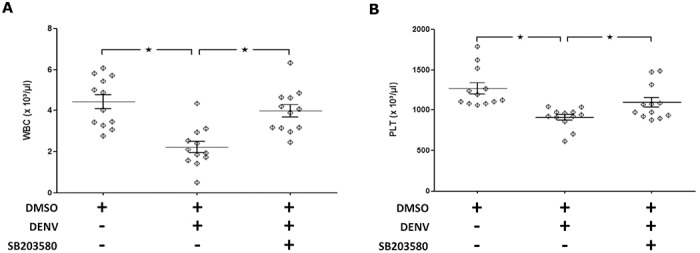
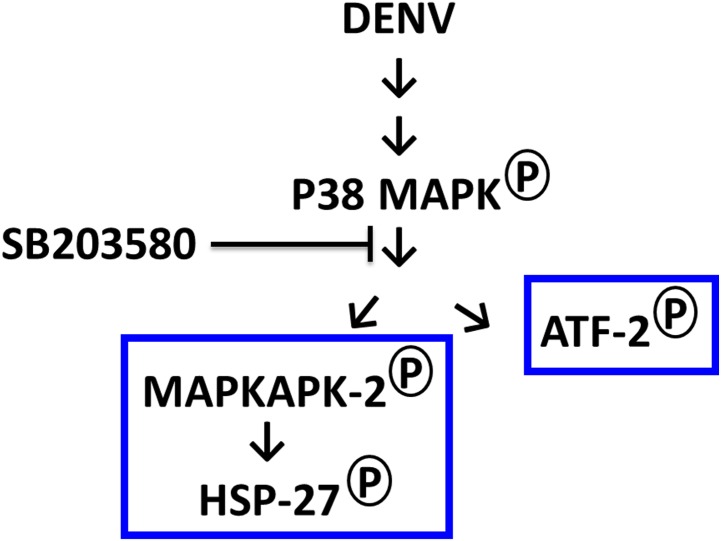
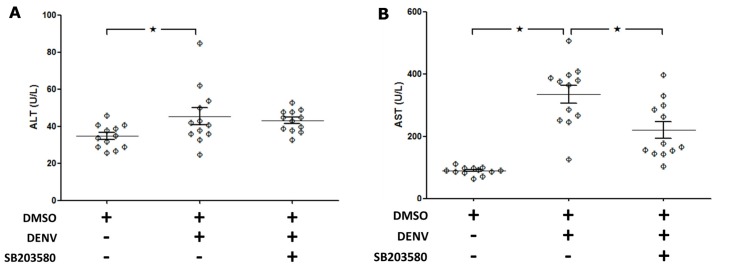
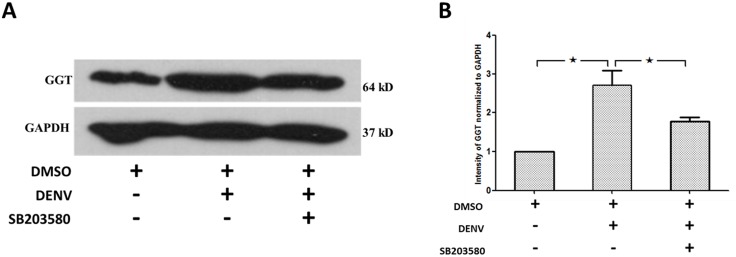
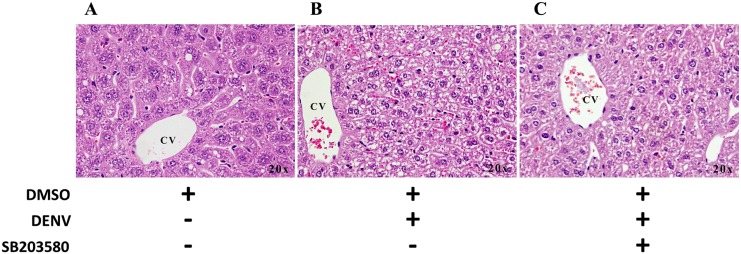
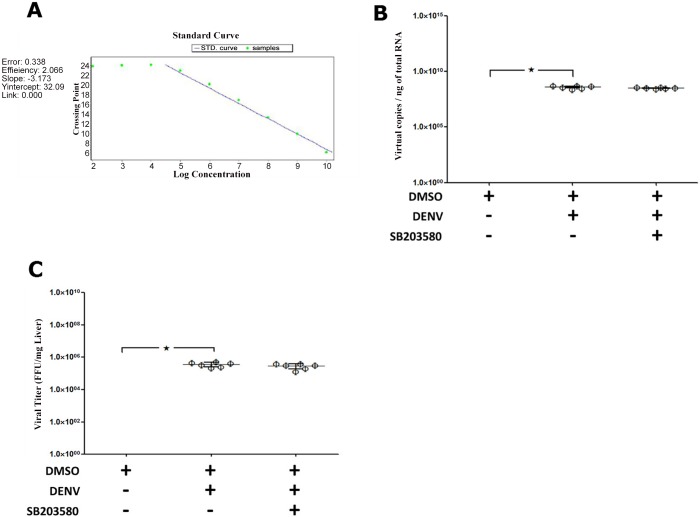
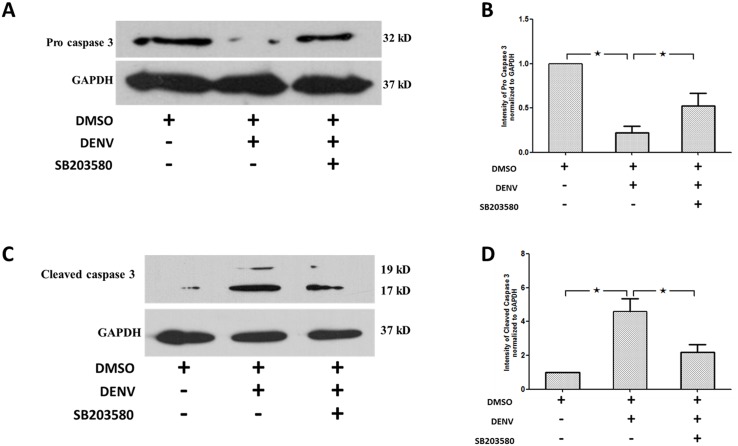
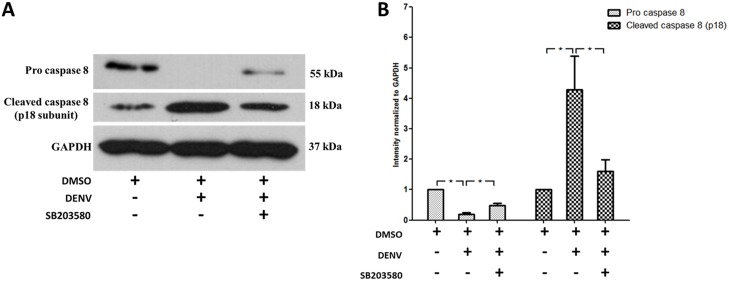
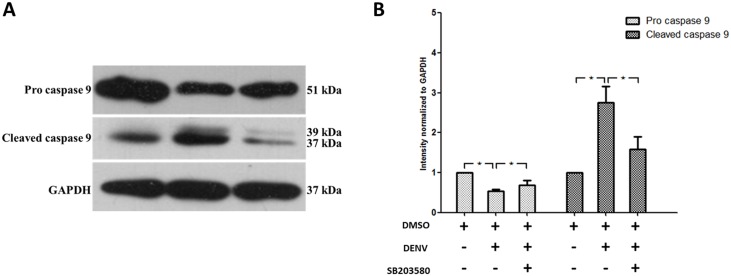
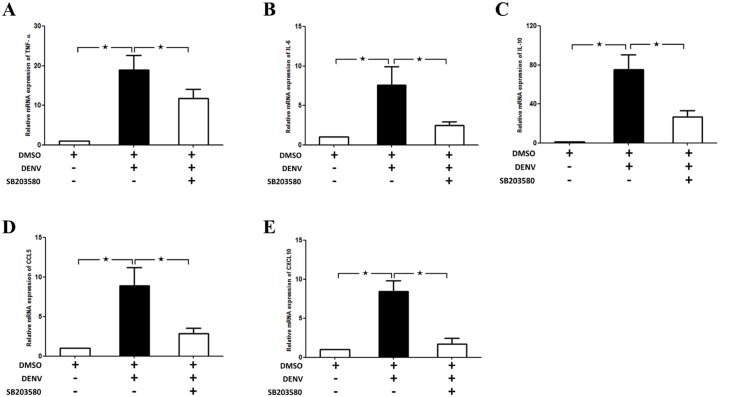
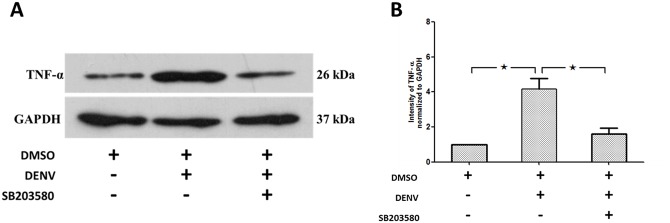
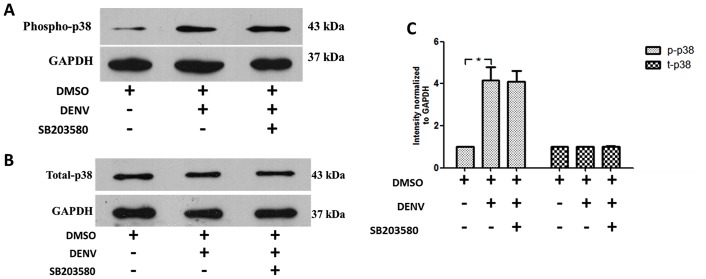
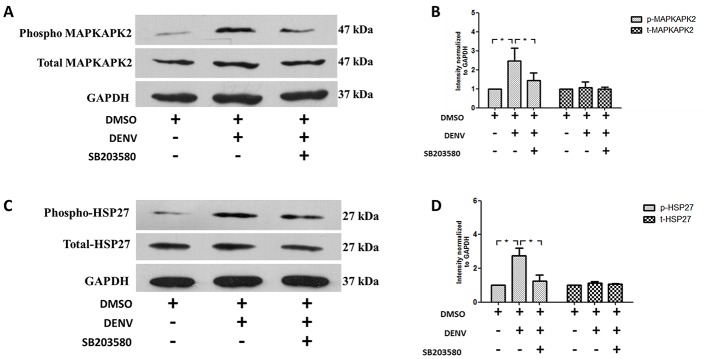
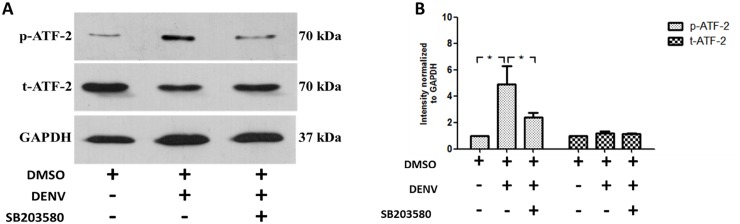
Dengue virus (DENV) infection causes organ injuries, and the liver is one of the most important sites of DENV infection, where viral replication generates a high viral load. The molecular mechanism of DENV-induced liver injury is still under investigation. The mitogen activated protein kinases (MAPKs), including p38 MAPK, have roles in the hepatic cell apoptosis induced by DENV. However, the in vivo role of p38 MAPK in DENV-induced liver injury is not fully understood. In this study, we investigated the role of SB203580, a p38 MAPK inhibitor, in a mouse model of DENV infection. Both the hematological parameters, leucopenia and thrombocytopenia, were improved by SB203580 treatment and liver transaminases and histopathology were also improved. We used a real-time PCR microarray to profile the expression of apoptosis-related genes. Tumor necrosis factor α, caspase 9, caspase 8, and caspase 3 proteins were significantly lower in the SB203580-treated DENV-infected mice than that in the infected control mice. Increased expressions of cytokines including TNF-α, IL-6 and IL-10, and chemokines including RANTES and IP-10 in DENV infection were reduced by SB203580 treatment. DENV infection induced the phosphorylation of p38MAPK, and its downstream signals including MAPKAPK2, HSP27 and ATF-2. SB203580 treatment did not decrease the phosphorylation of p38 MAPK, but it significantly reduced the phosphorylation of MAPKAPK2, HSP27, and ATF2. Therefore, SB203580 modulates the downstream signals to p38 MAPK and reduces DENV-induced liver injury.
登革病毒(DENV)感染会导致器官损伤,肝脏是DENV感染的最重要部位之一,病毒在肝脏中复制会产生高病毒载量。DENV诱导肝损伤的分子机制仍在研究中。丝裂原活化蛋白激酶(MAPK),包括p38 MAPK,在DENV诱导的肝细胞凋亡中起作用。然而,p38 MAPK在DENV诱导的肝损伤中的体内作用尚未完全了解。在本研究中,我们研究了p38 MAPK抑制剂SB203580在DENV感染小鼠模型中的作用。SB203580治疗改善了血液学参数,即白细胞减少和血小板减少,同时肝转氨酶和组织病理学也得到了改善。我们使用实时PCR微阵列分析凋亡相关基因的表达。在经SB203580治疗的DENV感染小鼠中,肿瘤坏死因子α、半胱天冬酶9、半胱天冬酶8和半胱天冬酶3蛋白显著低于感染对照小鼠。SB203580治疗降低了DENV感染中包括TNF-α、IL-6和IL-10在内的细胞因子以及包括RANTES和IP-10在内的趋化因子的表达增加。DENV感染诱导了p38MAPK及其下游信号包括MAPKAPK2、HSP27和ATF-2的磷酸化。SB203580治疗并未降低p38 MAPK的磷酸化,但它显著降低了MAPKAPK2、HSP27和ATF2的磷酸化。因此,SB203580调节p38 MAPK的下游信号并减轻DENV诱导的肝损伤。