Cassani Corinne, Gobbini Elisa, Wang Weibin, Niu Hengyao, Clerici Michela, Sung Patrick, Longhese Maria Pia
Dipartimento di Biotecnologie e Bioscienze, Università di Milano-Bicocca, Milano, Italy.
Department of Molecular Biophysics and Biochemistry, Yale University School of Medicine, New Haven, Connecticut, United States of America.
PLoS Biol. 2016 Feb 22;14(2):e1002387. doi: 10.1371/journal.pbio.1002387. eCollection 2016 Feb.
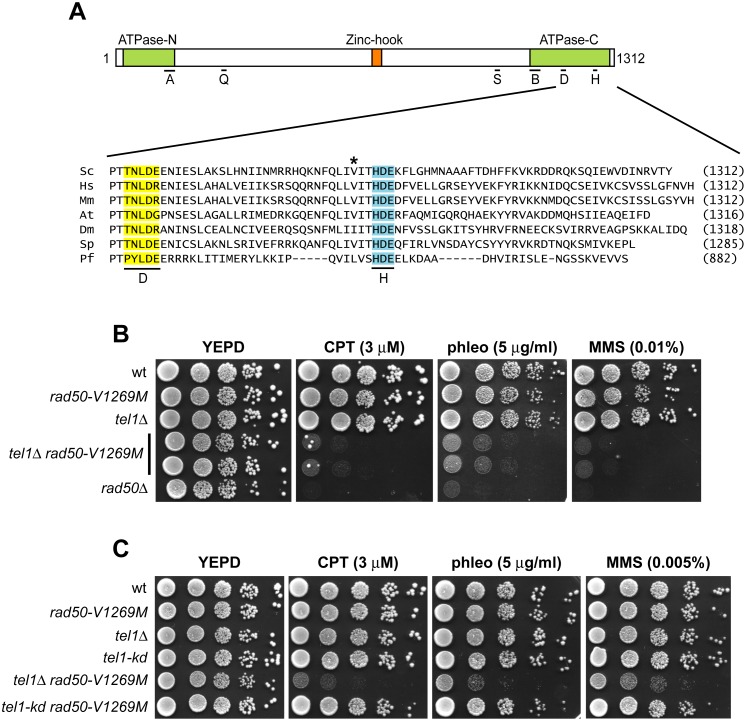
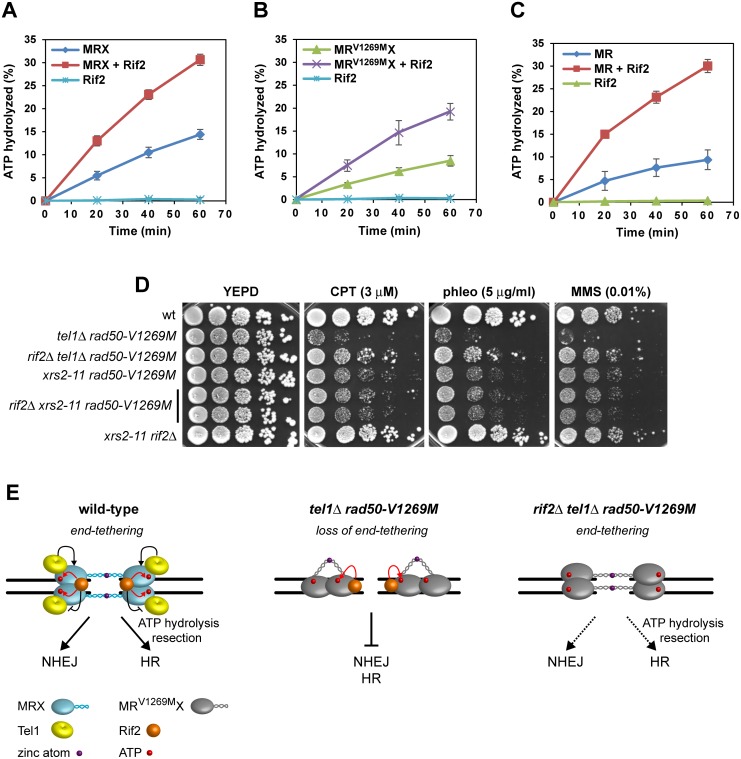
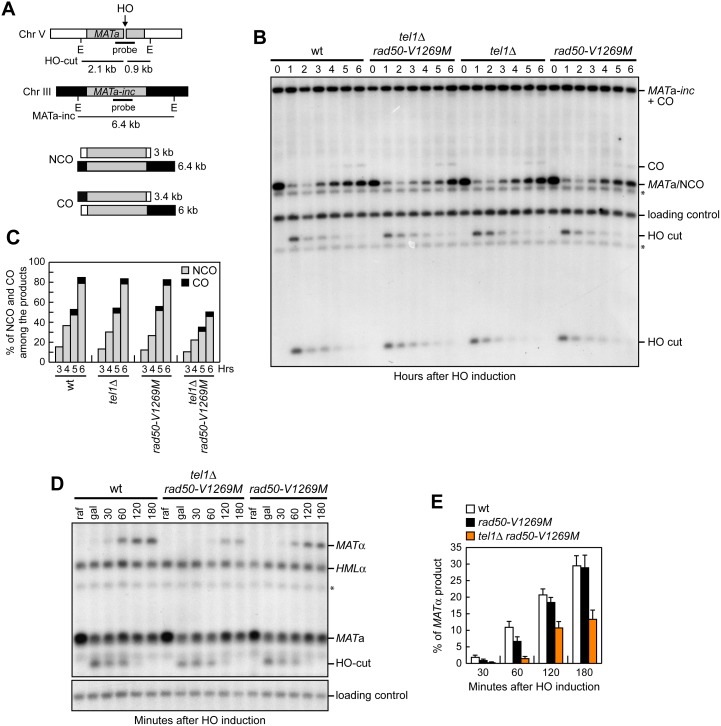
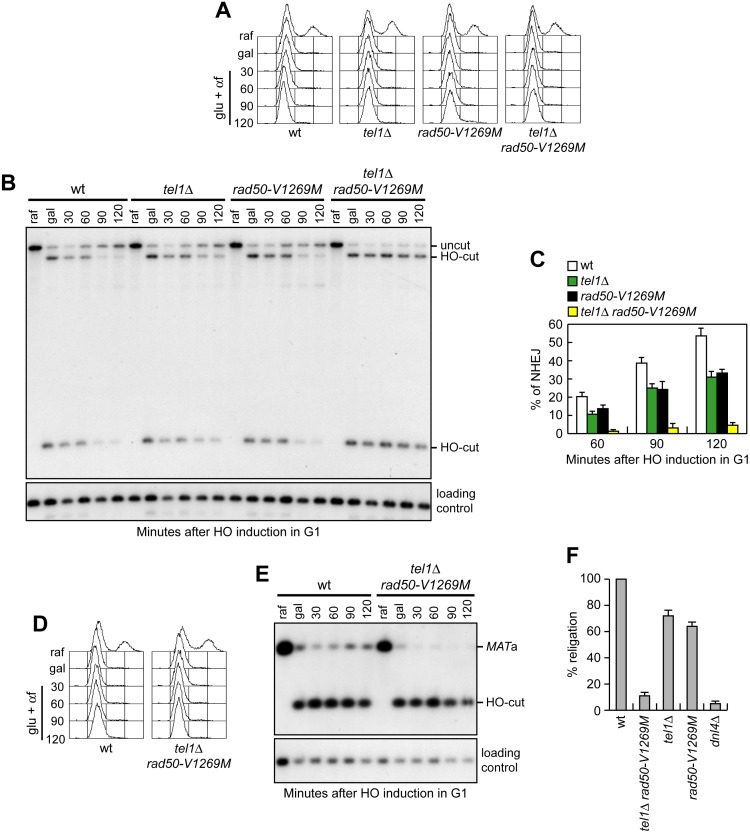
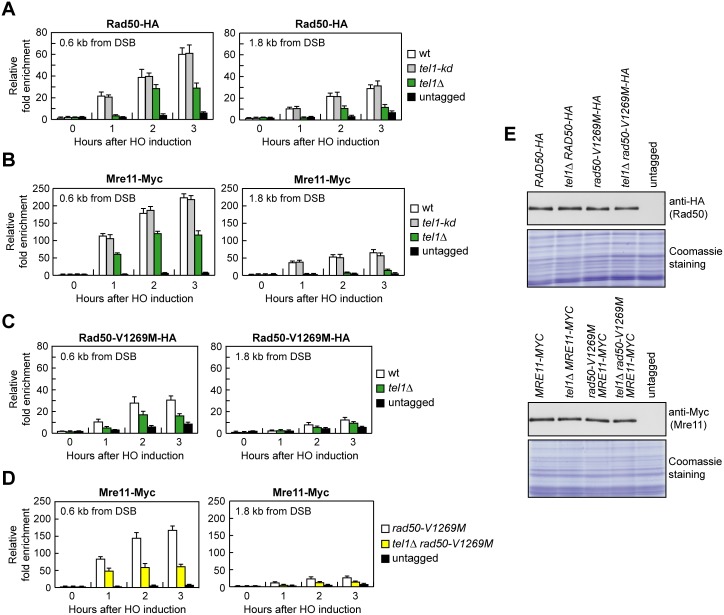
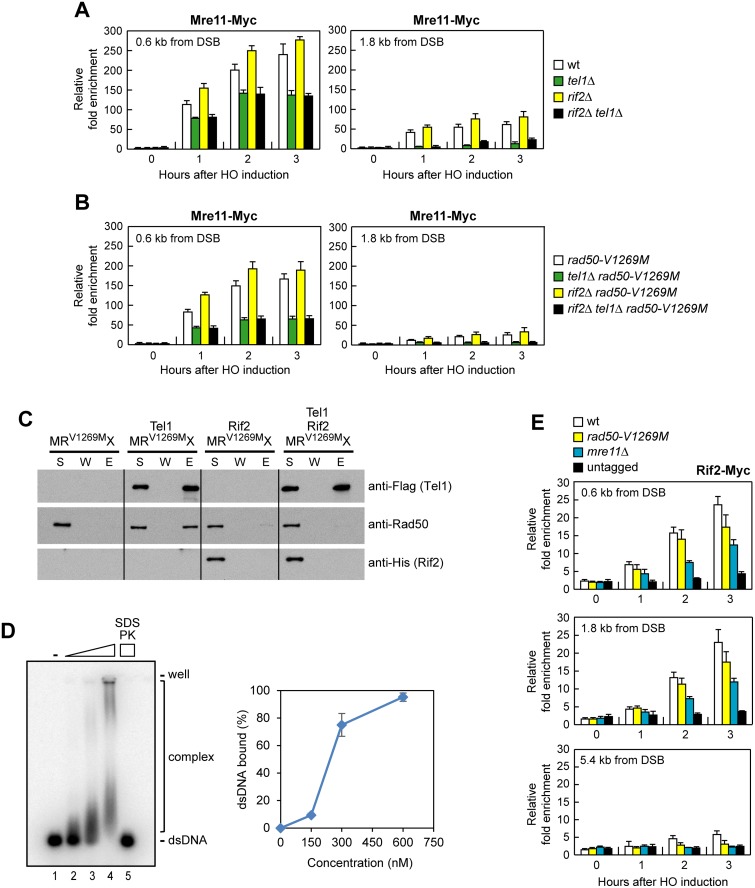
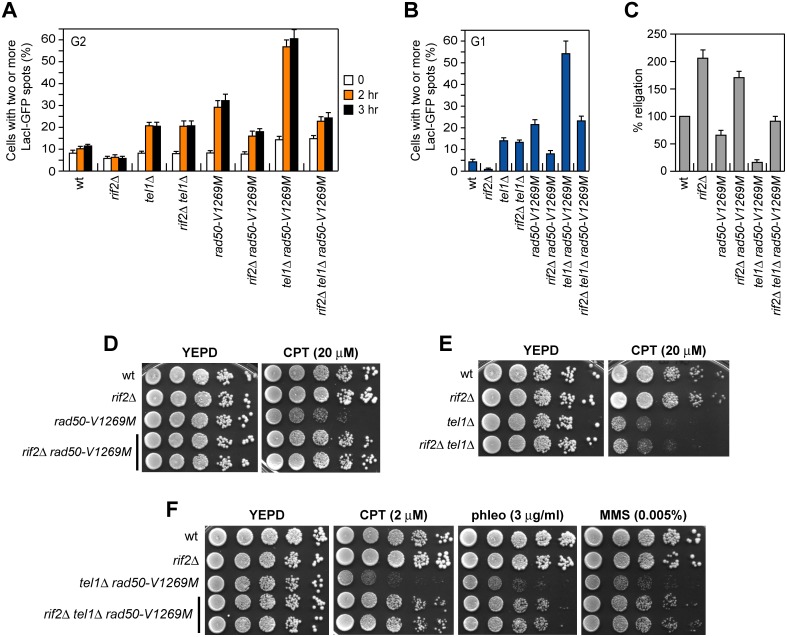
The cellular response to DNA double-strand breaks (DSBs) is initiated by the MRX/MRN complex (Mre11-Rad50-Xrs2 in yeast; Mre11-Rad50-Nbs1 in mammals), which recruits the checkpoint kinase Tel1/ATM to DSBs. In Saccharomyces cerevisiae, the role of Tel1 at DSBs remains enigmatic, as tel1Δ cells do not show obvious hypersensitivity to DSB-inducing agents. By performing a synthetic phenotype screen, we isolated a rad50-V1269M allele that sensitizes tel1Δ cells to genotoxic agents. The MRV1269MX complex associates poorly to DNA ends, and its retention at DSBs is further reduced by the lack of Tel1. As a consequence, tel1Δ rad50-V1269M cells are severely defective both in keeping the DSB ends tethered to each other and in repairing a DSB by either homologous recombination (HR) or nonhomologous end joining (NHEJ). These data indicate that Tel1 promotes MRX retention to DSBs and this function is important to allow proper MRX-DNA binding that is needed for end-tethering and DSB repair. The role of Tel1 in promoting MRX accumulation to DSBs is counteracted by Rif2, which is recruited to DSBs. We also found that Rif2 enhances ATP hydrolysis by MRX and attenuates MRX function in end-tethering, suggesting that Rif2 can regulate MRX activity at DSBs by modulating ATP-dependent conformational changes of Rad50.
细胞对DNA双链断裂(DSB)的反应由MRX/MRN复合物启动(酵母中的Mre11-Rad50-Xrs2;哺乳动物中的Mre11-Rad50-Nbs1),该复合物将检查点激酶Tel1/ATM招募至DSB处。在酿酒酵母中,Tel1在DSB处的作用仍不明确,因为tel1Δ细胞对DSB诱导剂未表现出明显的超敏反应。通过进行合成表型筛选,我们分离出一个rad50-V1269M等位基因,该等位基因使tel1Δ细胞对基因毒性剂敏感。MRV1269MX复合物与DNA末端的结合较差,并且由于缺乏Tel1,其在DSB处的保留进一步减少。因此,tel1Δ rad50-V1269M细胞在使DSB末端相互连接以及通过同源重组(HR)或非同源末端连接(NHEJ)修复DSB方面均存在严重缺陷。这些数据表明,Tel1促进MRX在DSB处的保留,并且该功能对于实现末端连接和DSB修复所需的适当MRX-DNA结合很重要。Tel1在促进MRX在DSB处积累中的作用被招募至DSB处的Rif2抵消。我们还发现,Rif2增强MRX的ATP水解,并减弱MRX在末端连接中的功能,这表明Rif2可以通过调节Rad50的ATP依赖性构象变化来调节DSB处的MRX活性。