
法国维勒雷斯特一个富营养化淡水水库生态系统中病毒对原核生物碳代谢的调控
Viral Regulation of Prokaryotic Carbon Metabolism in a Hypereutrophic Freshwater Reservoir Ecosystem (Villerest, France).
作者信息
Pradeep Ram Angia Sriram, Colombet Jonathan, Perriere Fanny, Thouvenot Antoine, Sime-Ngando Télesphore
机构信息
UMR CNRS 6023, Laboratoire Microorganismes: Génome et Environnement, Clermont Université, Université Blaise Pascal Aubière, France.
Athos Environnement, Université Blaise Pascal Aubière, France.
出版信息
Front Microbiol. 2016 Feb 9;7:81. doi: 10.3389/fmicb.2016.00081. eCollection 2016.
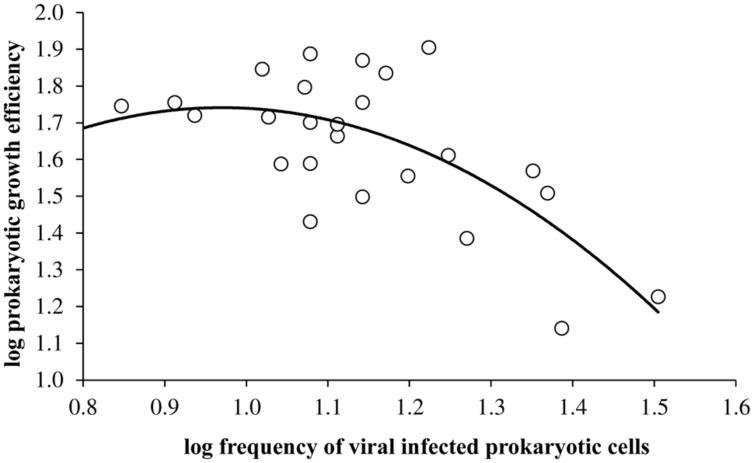
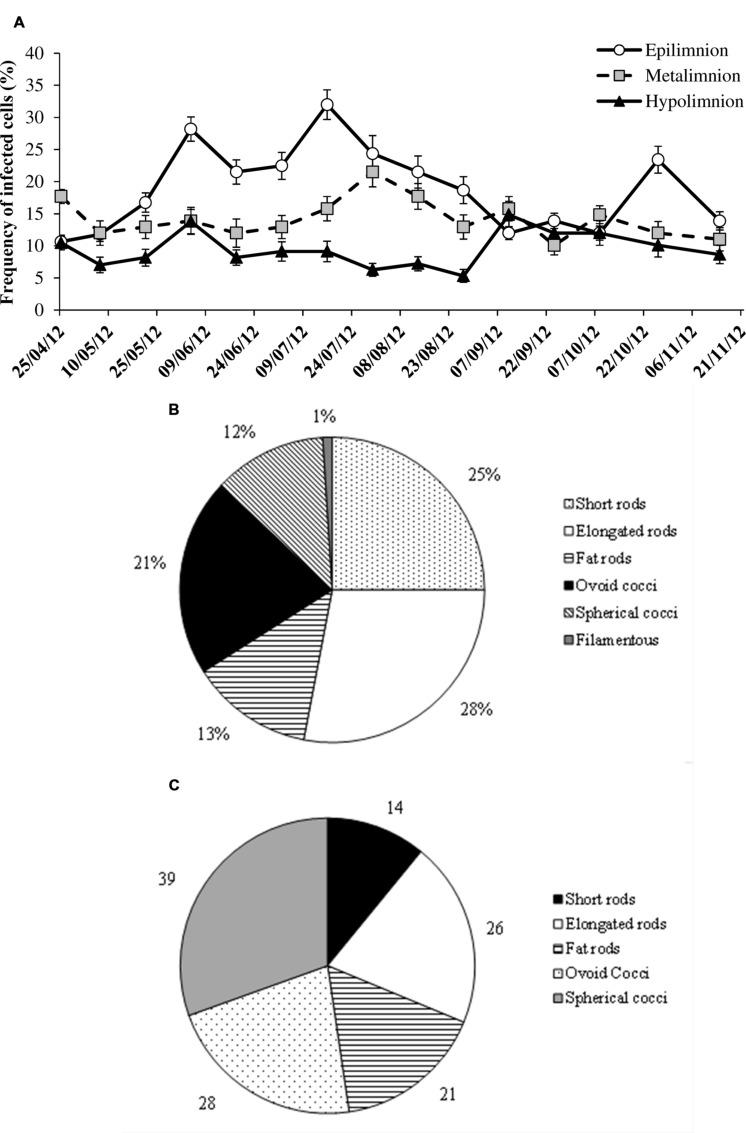
The current consensus concerning the viral regulation of prokaryotic carbon metabolism is less well-studied, compared to substrate availability. We explored the seasonal and vertical distribution of viruses and its relative influence on prokaryotic carbon metabolism in a hypereutrophic reservoir, Lake Villerest (France). Flow cytometry and transmission electron microscopy (TEM) analyses to determine viral abundance (VA; range = 6.1-63.5 × 10(7) ml(-1)) and viral infection rates of prokaryotes (range = 5.3-32%) respectively suggested that both the parameters varied more significantly with depths than with seasons. Prokaryotic growth efficiency (PGE, considered as a proxy of prokaryotic carbon metabolism) calculated from prokaryotic production and respiration measurements (PGE = prokaryotic production/[prokaryotic production + prokaryotic respiration] × 100) varied from 14 to 80% across seasons and depths. Viruses through selective lyses had antagonistic impacts on PGE by regulating key prokaryotic metabolic processes (i.e., production and respiration). Higher viral lysis accompanied by higher respiration rates and lower PGE in the summer (mean = 22.9 ± 10.3%) than other seasons (mean = 59.1 ± 18.6%), led to significant loss of carbon through bacterial-viral loop and shifted the reservoir system to net heterotrophy. Our data therefore suggests that the putative adverse impact of viruses on the growth efficiency of the prokaryotic community can have strong implications on nutrient flux patterns and on the overall ecosystem metabolism in anthropogenic dominated aquatic systems such as Lake Villerest.
与底物可用性相比,目前关于病毒对原核生物碳代谢调控的共识研究较少。我们在法国维勒雷斯特湖这个超富营养水库中,探索了病毒的季节和垂直分布及其对原核生物碳代谢的相对影响。分别通过流式细胞术和透射电子显微镜(TEM)分析来确定病毒丰度(VA;范围 = 6.1 - 63.5×10⁷ 毫升⁻¹)和原核生物的病毒感染率(范围 = 5.3 - 32%),结果表明这两个参数随深度的变化比随季节的变化更为显著。根据原核生物生产和呼吸测量值计算得出的原核生物生长效率(PGE,被视为原核生物碳代谢的指标;PGE = 原核生物生产/[原核生物生产 + 原核生物呼吸]×100)在不同季节和深度间的变化范围为14%至80%。病毒通过选择性裂解,通过调节关键的原核生物代谢过程(即生产和呼吸),对PGE产生拮抗作用。夏季较高的病毒裂解伴随着较高的呼吸速率和较低的PGE(平均值 = 22.9 ± 10.3%),高于其他季节(平均值 = 59.1 ± 18.6%),导致通过细菌 - 病毒循环造成大量碳损失,并使水库系统转向净异养状态。因此,我们的数据表明,病毒对原核生物群落生长效率的假定不利影响,可能对人为主导的水生系统(如维勒雷斯特湖)中的养分通量模式和整体生态系统代谢产生重大影响。


 Zotero 插件