Weitz Joshua S, Wilhelm Steven W
School of Biology, Georgia Institute of Technology Atlanta GA 30332-0230 USA ; School of Physics, Georgia Institute of Technology Atlanta GA 30332-0230 USA.
F1000 Biol Rep. 2012;4:17. doi: 10.3410/B4-17. Epub 2012 Sep 5.
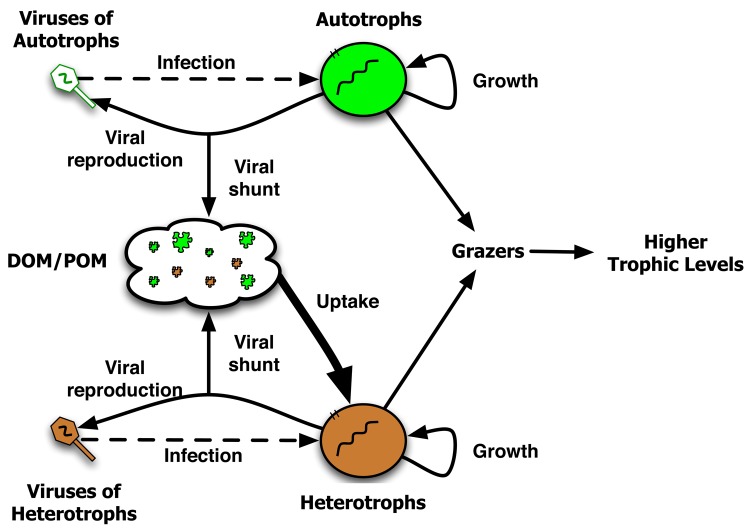
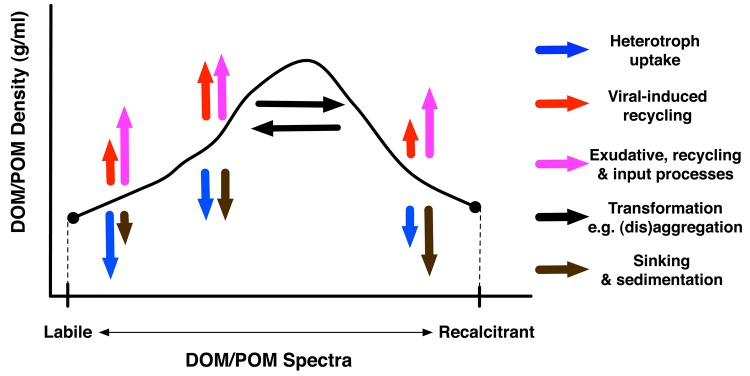
Viruses are the most abundant life forms on Earth, with an estimated 10(31) total viruses globally. The majority of these viruses infect microbes, whether bacteria, archaea or microeukaryotes. Given the importance of microbes in driving global biogeochemical cycles, it would seem, based on numerical abundances alone, that viruses also play an important role in the global cycling of carbon and nutrients. However, the importance of viruses in controlling host populations and ecosystem functions, such as the regeneration, storage and export of carbon and other nutrients, remains unresolved. Here, we report on advances in the study of ecological effects of viruses of microbes. In doing so, we focus on an area of increasing importance: the role that ocean viruses play in shaping microbial population sizes as well as in regenerating carbon and other nutrients.
病毒是地球上数量最多的生命形式,全球估计共有10的31次方个病毒。这些病毒中的大多数感染微生物,包括细菌、古菌或微型真核生物。鉴于微生物在推动全球生物地球化学循环中的重要性,仅从数量丰富度来看,病毒似乎也在全球碳和养分循环中发挥着重要作用。然而,病毒在控制宿主种群和生态系统功能(如碳和其他养分的再生、储存和输出)方面的重要性仍未得到解决。在这里,我们报告了微生物病毒生态效应研究的进展。在此过程中,我们关注一个日益重要的领域:海洋病毒在塑造微生物种群规模以及碳和其他养分再生方面所起的作用。