Segovia Bianca T, Domingues Carolina D, Meira Bianca R, Lansac-Toha Fernando M, Fermani Paulina, Unrein Fernando, Lobão Lúcia M, Roland Fabio, Velho Luiz F M, Sarmento Hugo
Núcleo de Pesquisas em Limnologia, Ictiologia e Aquicultura, Universidade Estadual de Maringá Maringá, Brazil.
Departamento de Botânica, Universidade Federal do Rio de Janeiro Rio de Janeiro, Brazil.
Front Microbiol. 2016 Feb 11;7:114. doi: 10.3389/fmicb.2016.00114. eCollection 2016.
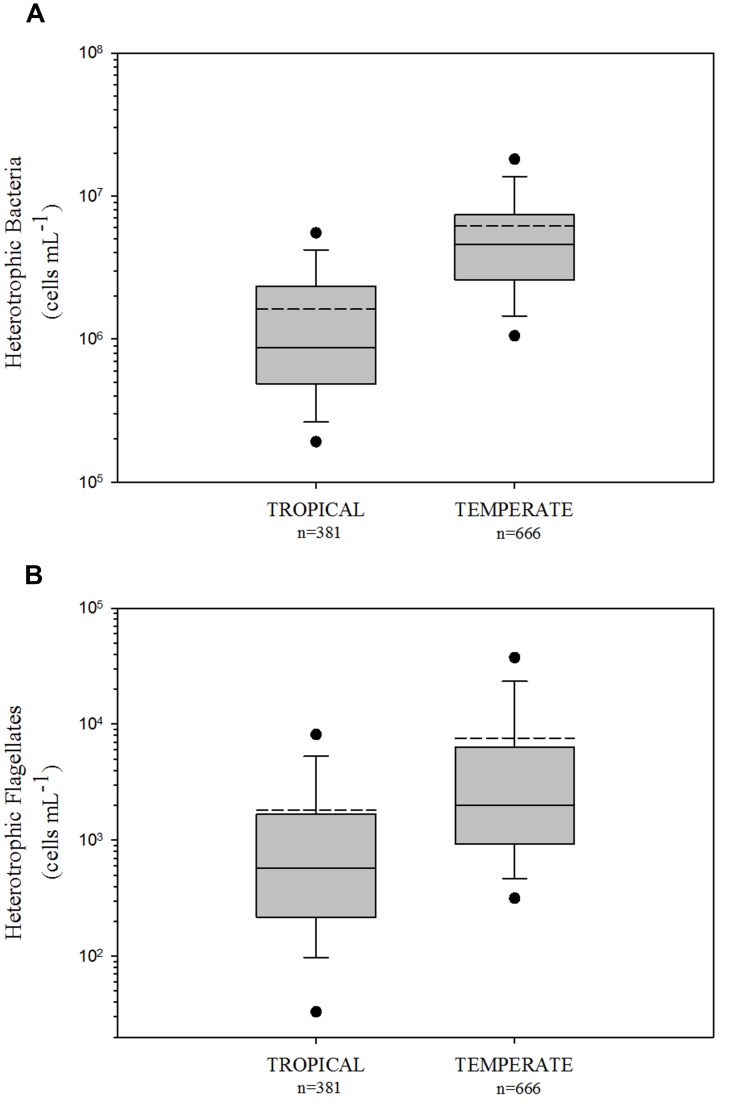
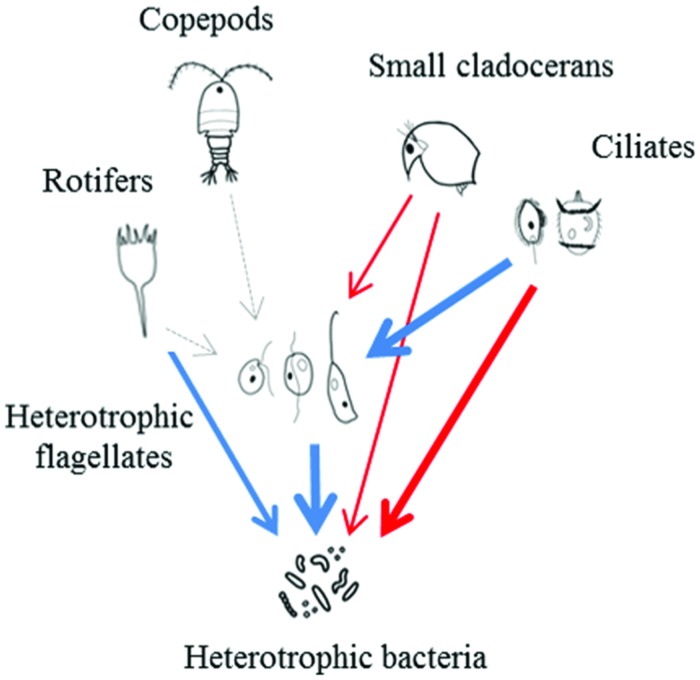
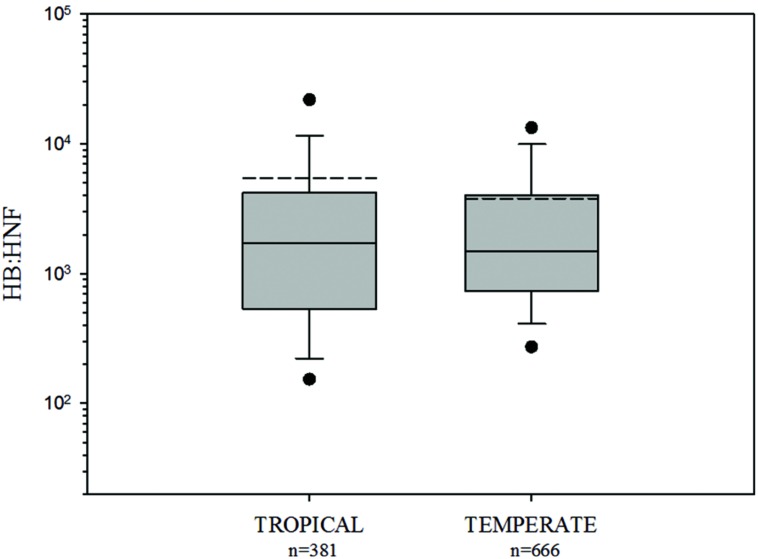
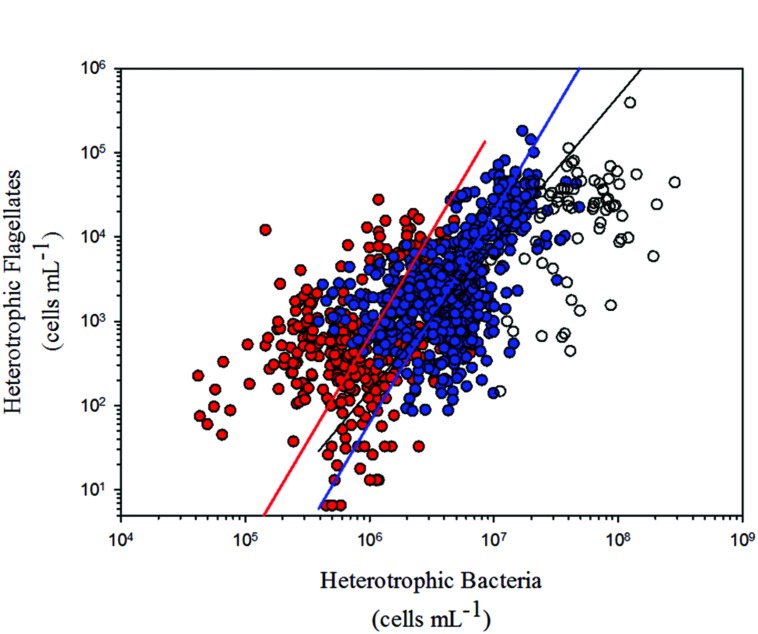
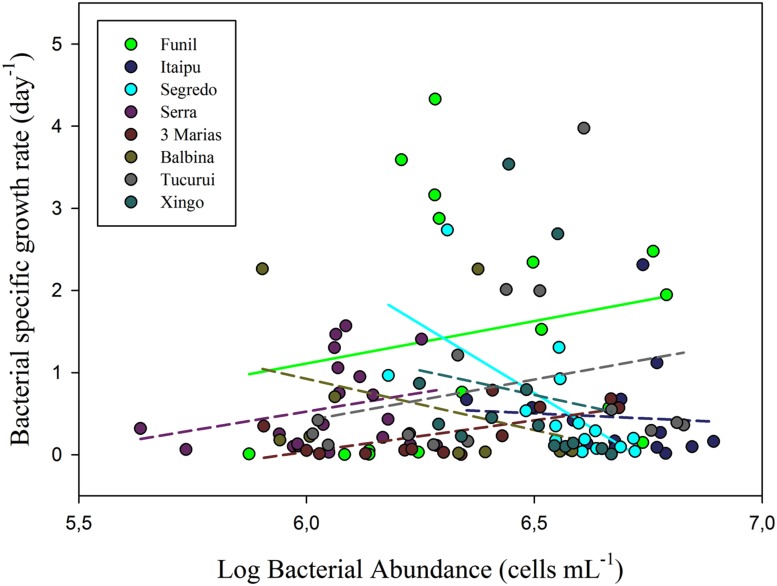
Recent studies reported comparatively lower heterotrophic bacteria (HB) abundances in tropical regions, indicating that factors involved in bacterial losses could be more relevant in the tropics. Heterotrophic nanoflagellates (HNF) are considered the main predators of HB in aquatic ecosystems, and one should expect higher abundances in the tropics because of differences in the food web configuration (absence of large daphnids). However, there are no comprehensive studies comparing HB and HNF abundances in a latitudinal gradient. We hypothesized that HB abundance would be lower in the tropics because HNF abundance would be higher, resulting in a tighter HNF-HB coupling. To test this hypothesis, we compiled a large dataset of HB and HNF abundances from tropical and temperate freshwater environments. We found that both HB and HNF abundances were lower in the tropical region, and that HNF-HB coupling does not differ between temperate and tropical regions. The lower HNF abundance and lack of coupling may be explained by a strong top-down control on HNF and/or their herbivory preference. Besides, no relationship was found between bacterial specific growth rate and either chlorophyll-a and HB abundance, indicating that bacterial losses may have an important role in tropical freshwaters. Thus, we found that HNF is likely not the main controllers of HB abundance, and that grazing by ciliates and cladocerans, together with the physiological effects of higher temperatures, may explain the high bacterial loss rates in the tropics.
近期研究报告称,热带地区的异养细菌(HB)丰度相对较低,这表明与细菌损失相关的因素在热带地区可能更为重要。异养纳米鞭毛虫(HNF)被认为是水生生态系统中HB的主要捕食者,由于食物网结构的差异(不存在大型水蚤),人们预计热带地区的HNF丰度会更高。然而,目前尚无全面研究比较不同纬度梯度下HB和HNF的丰度。我们假设,热带地区的HB丰度会较低,因为HNF丰度会较高,从而导致HNF与HB之间的耦合更紧密。为验证这一假设,我们收集了来自热带和温带淡水环境的大量HB和HNF丰度数据集。我们发现,热带地区的HB和HNF丰度均较低,且温带和热带地区的HNF与HB之间的耦合并无差异。HNF丰度较低以及缺乏耦合现象,可能是由于对HNF的强大自上而下控制和/或它们的食草偏好所致。此外,未发现细菌比生长速率与叶绿素a及HB丰度之间存在关联,这表明细菌损失在热带淡水环境中可能起着重要作用。因此,我们发现HNF可能并非HB丰度的主要控制者,纤毛虫和枝角类动物的捕食,以及较高温度的生理影响,可能解释了热带地区较高的细菌损失率。