Son Beomseok, Jun Se Young, Seo HyunJeong, Youn HyeSook, Yang Hee Jung, Kim Wanyeon, Kim Hyung Kook, Kang ChulHee, Youn BuHyun
Department of Integrated Biological Science, Pusan National University, Busan, Republic of Korea.
Department of Chemistry, Washington State University, Pullman, Washington, USA.
Sci Rep. 2016 Feb 24;6:21986. doi: 10.1038/srep21986.
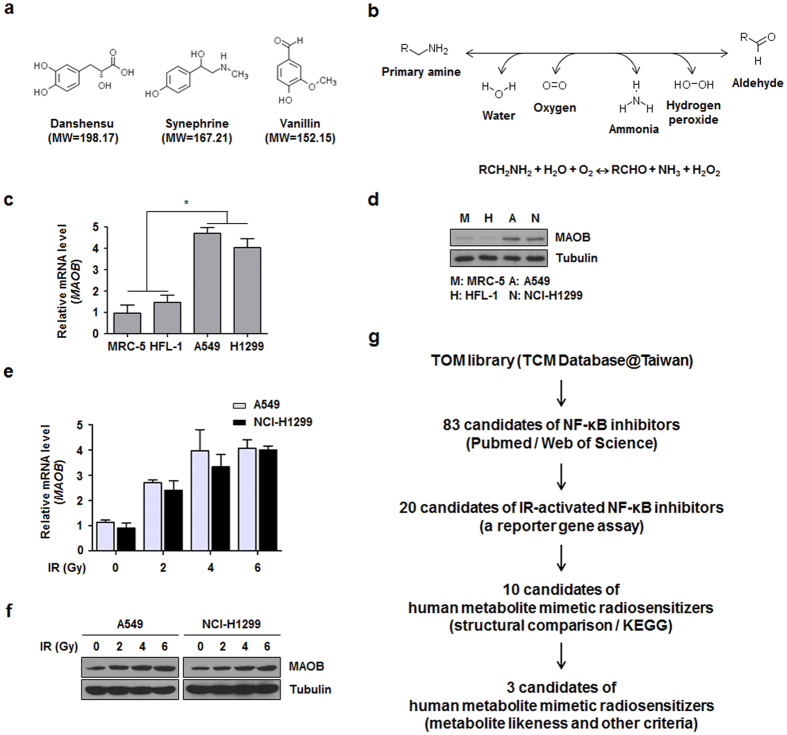
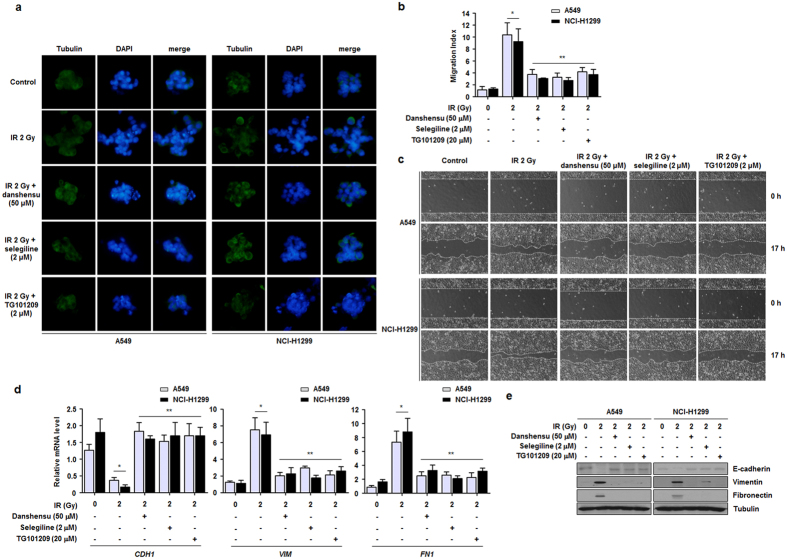
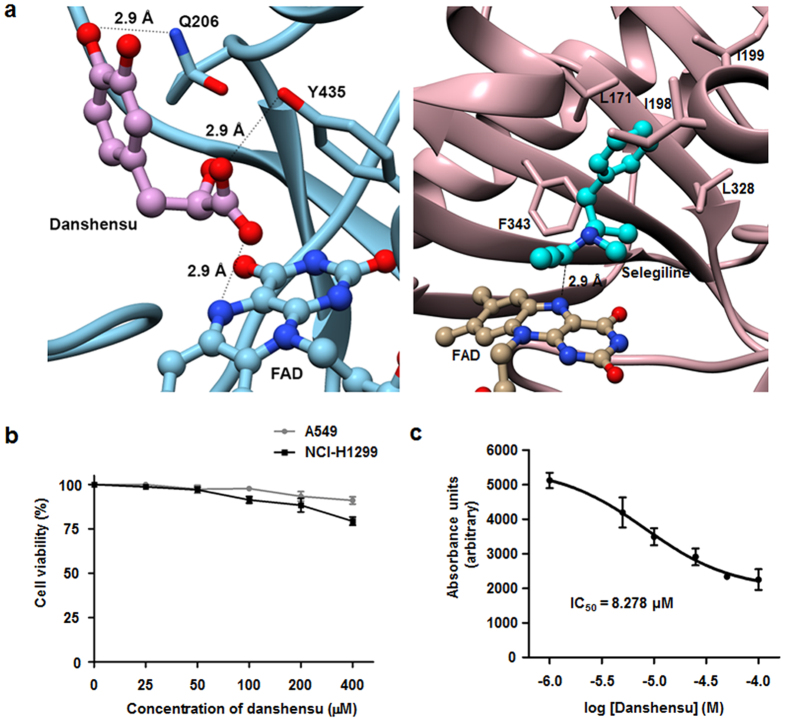
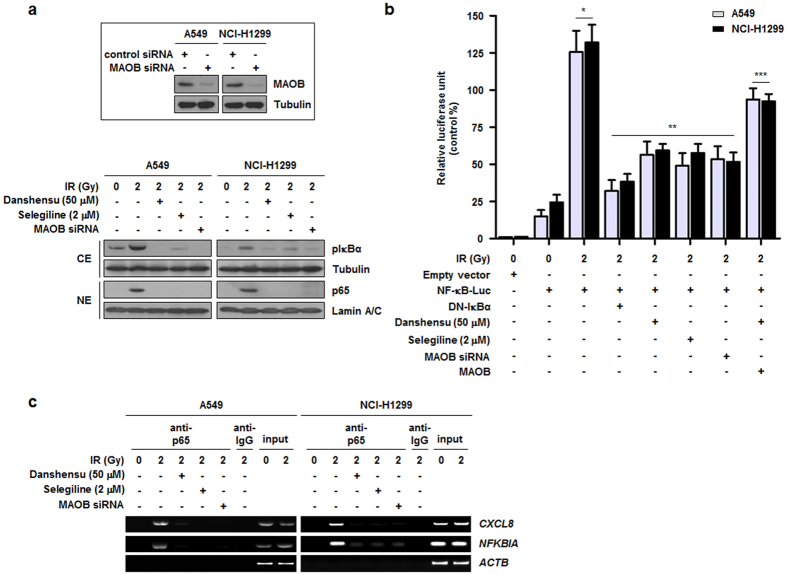
Increased survival of cancer cells mediated by high levels of ionizing radiation (IR) reduces the effectiveness of radiation therapy for non-small cell lung cancer (NSCLC). In the present study, danshensu which is a selected component of traditional oriental medicine (TOM) compound was found to reduce the radioresistance of NSCLC by inhibiting the nuclear factor-κB (NF-κB) pathway. Of the various TOM compounds reported to inhibit the IR activation of NF-κB, danshensu was chosen as a final candidate based on the results of structural comparisons with human metabolites and monoamine oxidase B (MAOB) was identified as the putative target enzyme. Danshensu decreased the activation of NF-κB by inhibiting MAOB activity in A549 and NCI-H1299 NSCLC cells. Moreover, it suppressed IR-induced epithelial-to-mesenchymal transition, expressions of NF-κB-regulated prosurvival and proinflammatory genes, and in vivo radioresistance of mouse xenograft models. Taken together, this study shows that danshensu significantly reduces MAOB activity and attenuates NF-κB signaling to elicit the radiosensitization of NSCLC.
高水平电离辐射(IR)介导的癌细胞存活率增加降低了非小细胞肺癌(NSCLC)放射治疗的有效性。在本研究中,发现作为传统东方医学(TOM)化合物所选成分的丹参素通过抑制核因子-κB(NF-κB)途径降低NSCLC的放射抗性。在据报道可抑制NF-κB的IR激活的各种TOM化合物中,基于与人类代谢物的结构比较结果选择丹参素作为最终候选物,并确定单胺氧化酶B(MAOB)为推定的靶酶。丹参素通过抑制A549和NCI-H1299 NSCLC细胞中的MAOB活性来降低NF-κB的激活。此外,它抑制IR诱导的上皮-间质转化、NF-κB调节的促生存和促炎基因的表达以及小鼠异种移植模型的体内放射抗性。综上所述,本研究表明丹参素显著降低MAOB活性并减弱NF-κB信号传导,从而引发NSCLC的放射增敏作用。