Liu Xiao, Li Zesong, Su Zheng, Zhang Junjie, Li Honggang, Xie Jun, Xu Hanshi, Jiang Tao, Luo Liya, Zhang Ruifang, Zeng Xiaojing, Xu Huaiqian, Huang Yi, Mou Lisha, Hu Jingchu, Qian Weiping, Zeng Yong, Zhang Xiuqing, Xiong Chengliang, Yang Huanming, Kristiansen Karsten, Cai Zhiming, Wang Jun, Gui Yaoting
BGI-Shenzhen, Shenzhen 518083, China.
Department of Biology, University of Copenhagen, Copenhagen 2200, Denmark.
Sci Rep. 2016 Feb 24;6:21831. doi: 10.1038/srep21831.
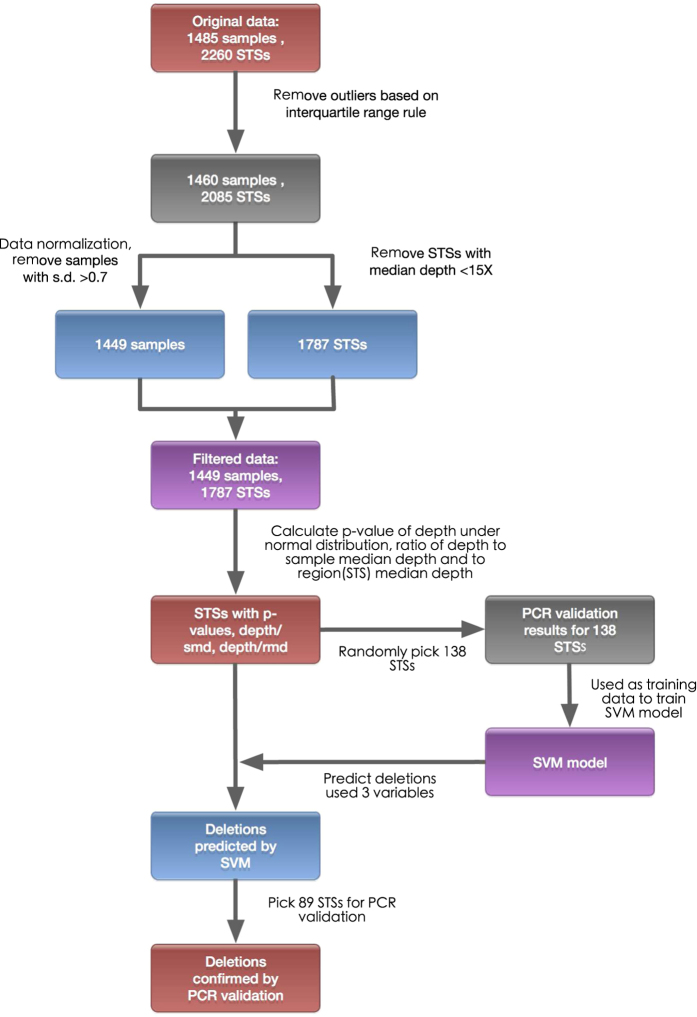
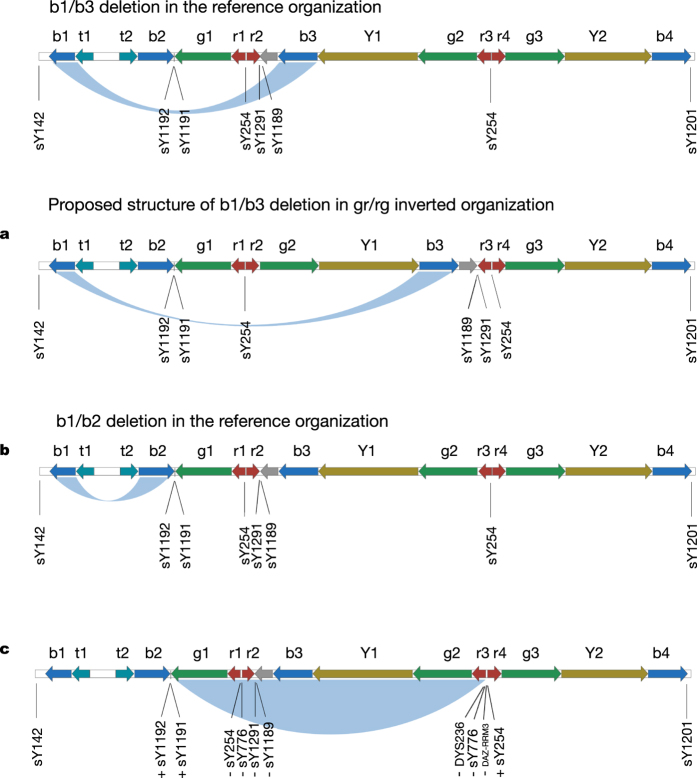
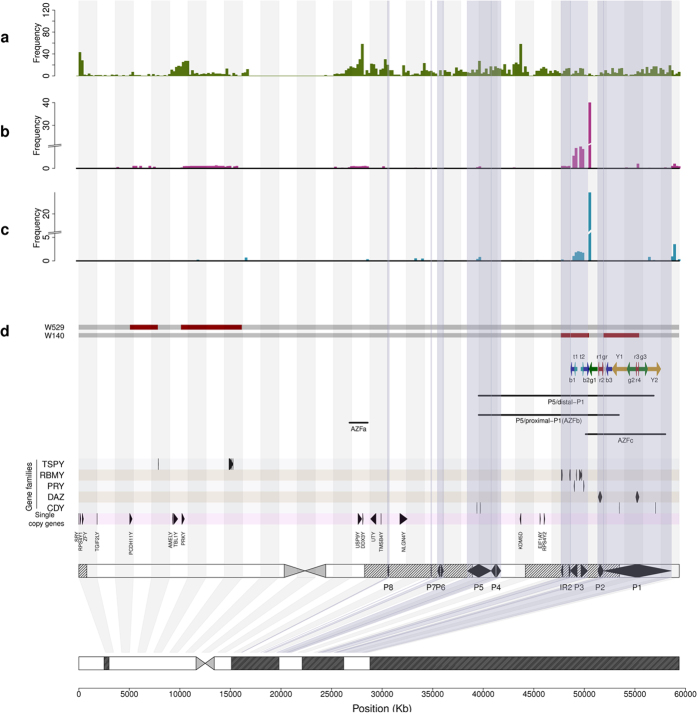
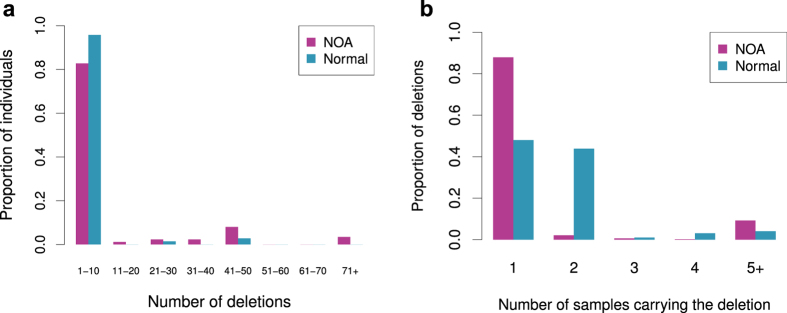
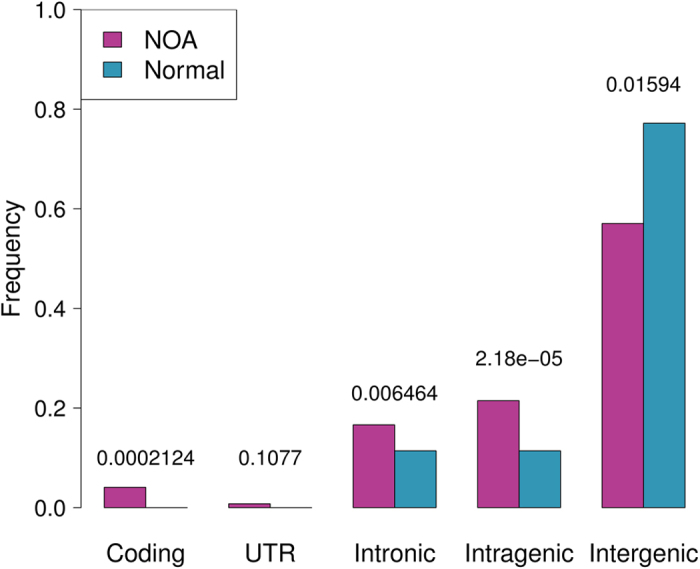
Y-chromosomal microdeletion (YCM) serves as an important genetic factor in non-obstructive azoospermia (NOA). Multiplex polymerase chain reaction (PCR) is routinely used to detect YCMs by tracing sequence-tagged sites (STSs) in the Y chromosome. Here we introduce a novel methodology in which we sequence 1,787 (post-filtering) STSs distributed across the entire male-specific Y chromosome (MSY) in parallel to uncover known and novel YCMs. We validated this approach with 766 Chinese men with NOA and 683 ethnically matched healthy individuals and detected 481 and 98 STSs that were deleted in the NOA and control group, representing a substantial portion of novel YCMs which significantly influenced the functions of spermatogenic genes. The NOA patients tended to carry more and rarer deletions that were enriched in nearby intragenic regions. Haplogroup O2* was revealed to be a protective lineage for NOA, in which the enrichment of b1/b3 deletion in haplogroup C was also observed. In summary, our work provides a new high-resolution portrait of deletions in the Y chromosome.
Y染色体微缺失(YCM)是非梗阻性无精子症(NOA)的一个重要遗传因素。多重聚合酶链反应(PCR)通常用于通过追踪Y染色体上的序列标签位点(STS)来检测YCM。在此,我们介绍一种新方法,即对分布在整个男性特异性Y染色体(MSY)上的1787个(过滤后)STS进行平行测序,以发现已知和新的YCM。我们用766名中国NOA男性和683名种族匹配的健康个体验证了这种方法,在NOA组和对照组中分别检测到481个和98个缺失的STS,代表了很大一部分显著影响生精基因功能的新YCM。NOA患者往往携带更多、更罕见的缺失,这些缺失在基因内区域附近富集。单倍群O2*被发现是NOA的一个保护性谱系,其中也观察到单倍群C中b1/b3缺失的富集。总之,我们的工作提供了Y染色体缺失的新的高分辨率图谱。