Zhang Kuo, Gao Yuan, Li Jingjing, Burgess Rebecca, Han Junhong, Liang Huanhuan, Zhang Zhiguo, Liu Yingfang
State Key Laboratory of Biomacromolecules, Institute of Biophysics, Chinese Academy of Sciences, 15 Datun Road, Chaoyang District, Beijing 100101, China University of the Chinese Academy of Sciences, Beijing 100049, China.
Department of Biochemistry and Molecular Biology, Mayo Clinic, Rochester, MN 55905, USA.
Nucleic Acids Res. 2016 Jun 20;44(11):5083-94. doi: 10.1093/nar/gkw106. Epub 2016 Feb 22.
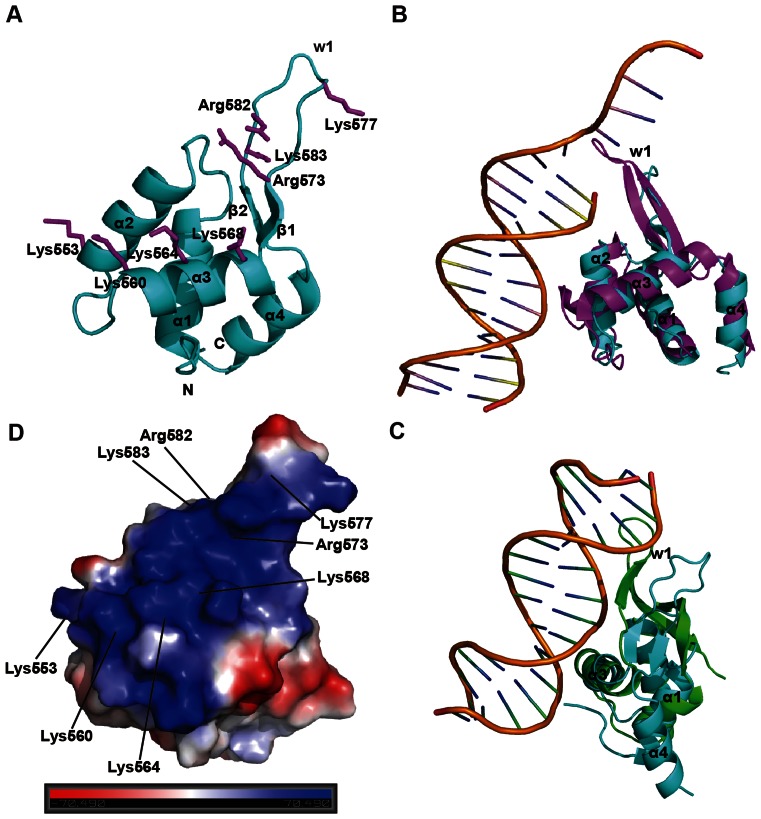
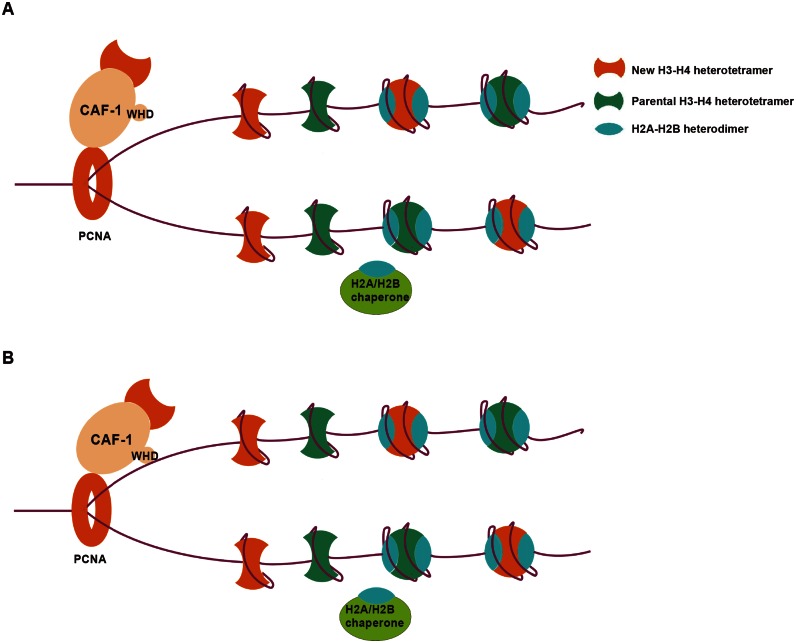
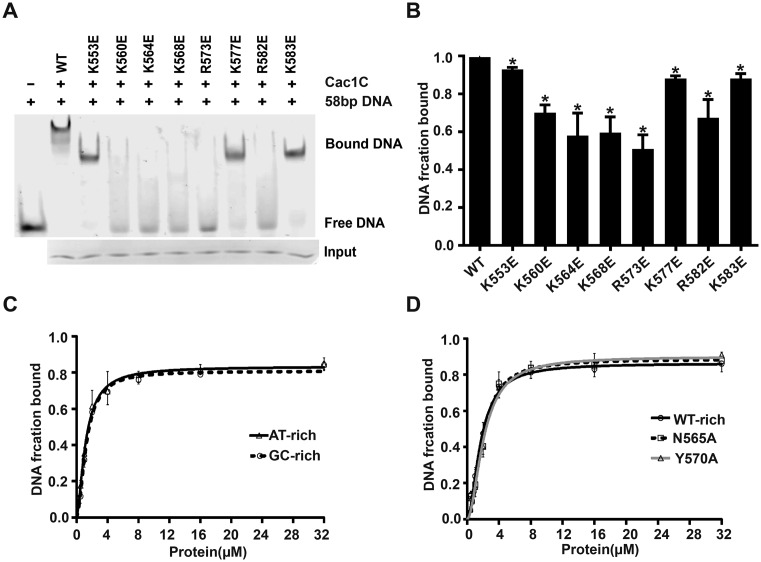
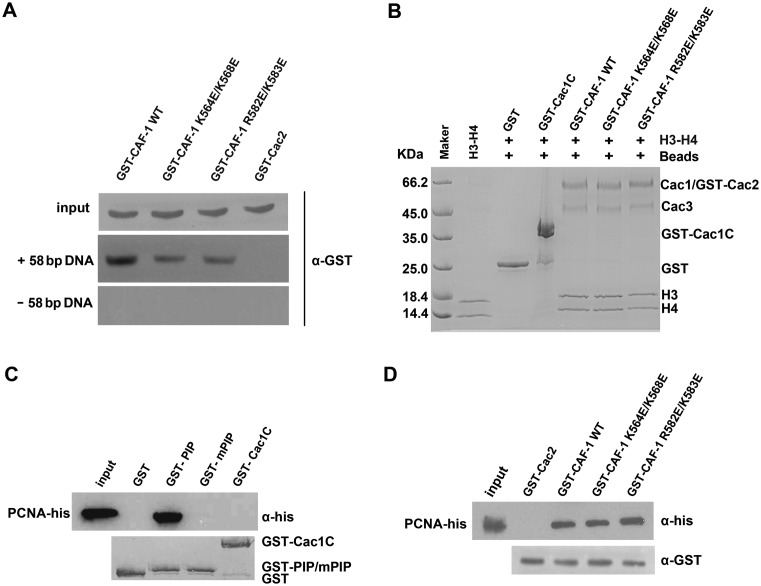
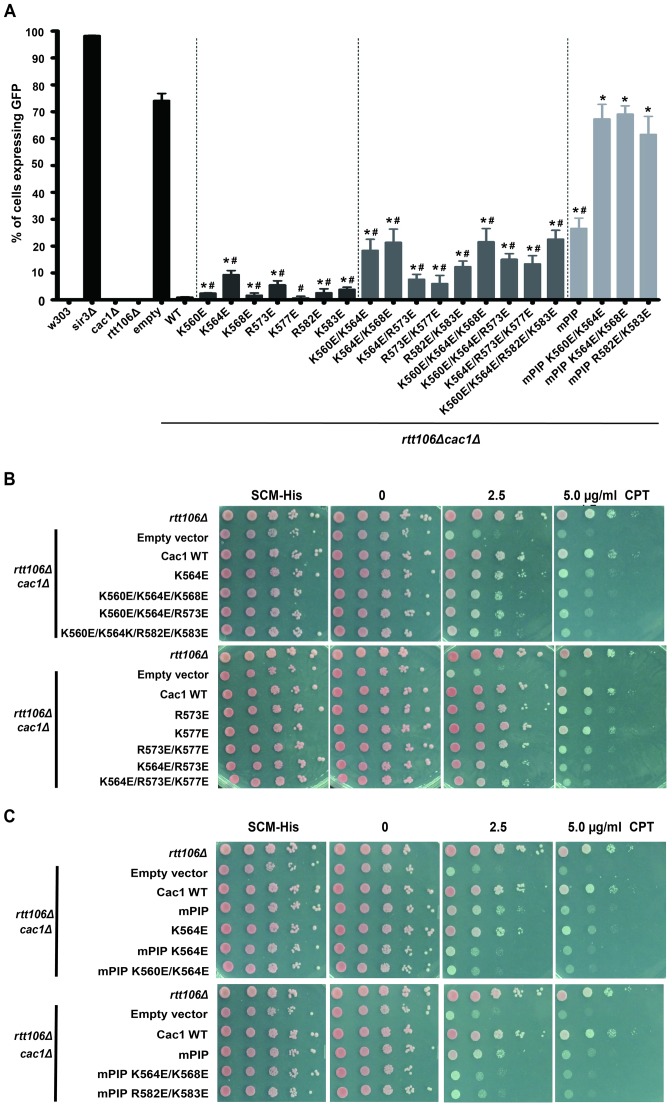
Chromatin assembly factor 1 (CAF-1) is a histone H3-H4 chaperone that deposits newly synthesized histone (H3-H4)2 tetramers during replication-coupled nucleosome assembly. However, how CAF-1 functions in this process is not yet well understood. Here, we report the crystal structure of C terminus of Cac1 (Cac1C), a subunit of yeast CAF-1, and the function of this domain in stabilizing CAF-1 at replication forks. We show that Cac1C forms a winged helix domain (WHD) and binds DNA in a sequence-independent manner. Mutations in Cac1C that abolish DNA binding result in defects in transcriptional silencing and increased sensitivity to DNA damaging agents, and these defects are exacerbated when combined with Cac1 mutations deficient in PCNA binding. Similar phenotypes are observed for corresponding mutations in mouse CAF-1. These results reveal a mechanism conserved in eukaryotic cells whereby the ability of CAF-1 to bind DNA is important for its association with the DNA replication forks and subsequent nucleosome assembly.
染色质组装因子1(CAF-1)是一种组蛋白H3-H4伴侣蛋白,在复制偶联的核小体组装过程中沉积新合成的组蛋白(H3-H4)2四聚体。然而,CAF-1在此过程中的作用机制尚未完全清楚。在这里,我们报告了酵母CAF-1的一个亚基Cac1的C末端(Cac1C)的晶体结构,以及该结构域在将CAF-1稳定在复制叉处的功能。我们发现Cac1C形成一个翼状螺旋结构域(WHD),并以序列非依赖的方式结合DNA。Cac1C中消除DNA结合的突变导致转录沉默缺陷和对DNA损伤剂的敏感性增加,当与缺乏PCNA结合的Cac1突变结合时,这些缺陷会加剧。在小鼠CAF-1的相应突变中也观察到类似的表型。这些结果揭示了真核细胞中一种保守的机制,即CAF-1结合DNA的能力对其与DNA复制叉的结合及随后的核小体组装很重要。