Rachner Tilman D, Göbel Andy, Junker Maria, Hötzel Josefa, Benad-Mehner Peggy, Hadji Peyman, Hofbauer Lorenz C
Division of Endocrinology and Metabolic Bone Diseases, Department of Medicine III, Technical University, Dresden, Germany.
Department of Gynecology, Gynecological Endocrinology and Oncology, Philipps-University of Marburg, Marburg, Germany.
J Bone Oncol. 2013 Jun 7;2(3):110-5. doi: 10.1016/j.jbo.2013.05.003. eCollection 2013 Sep.
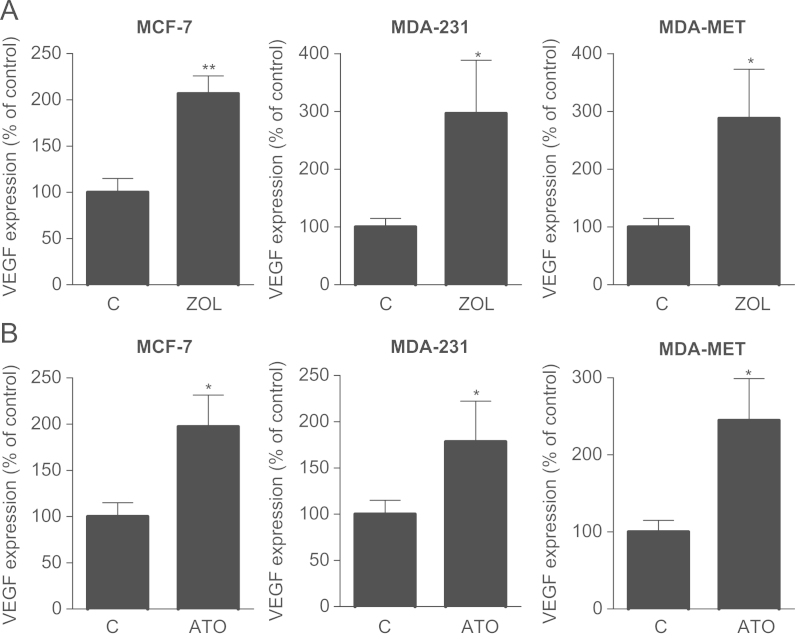
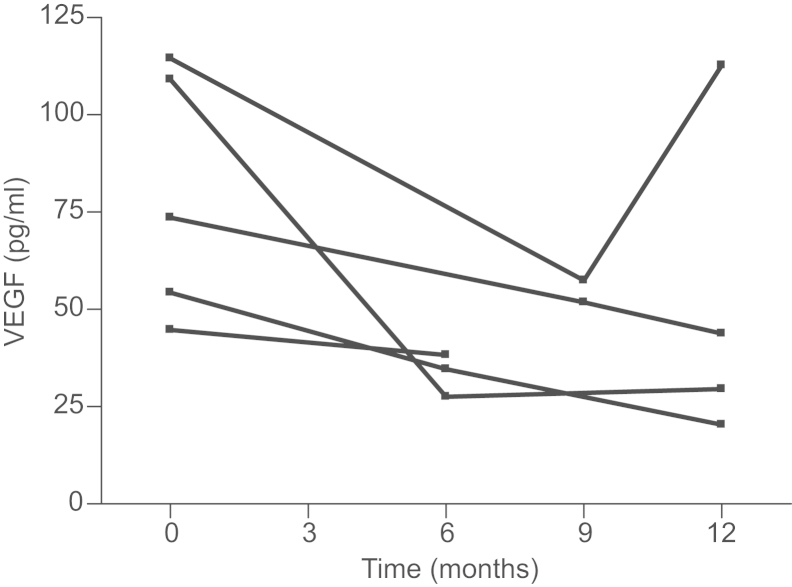
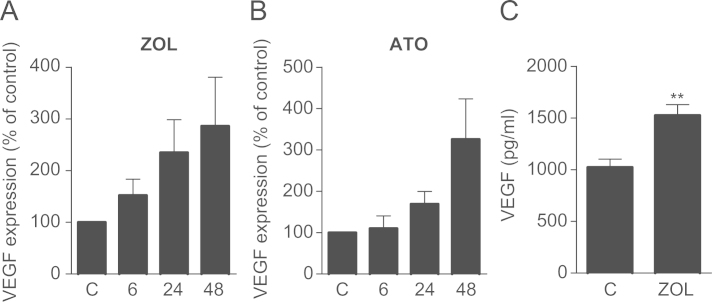
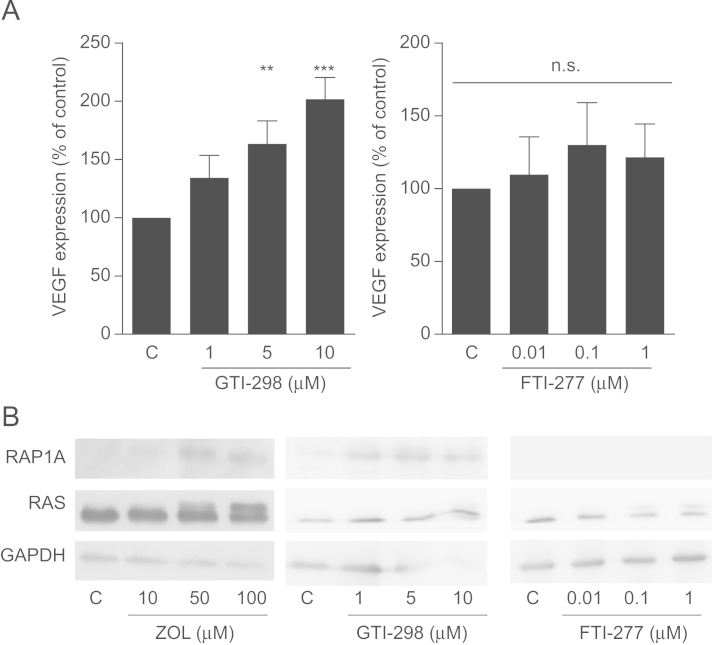
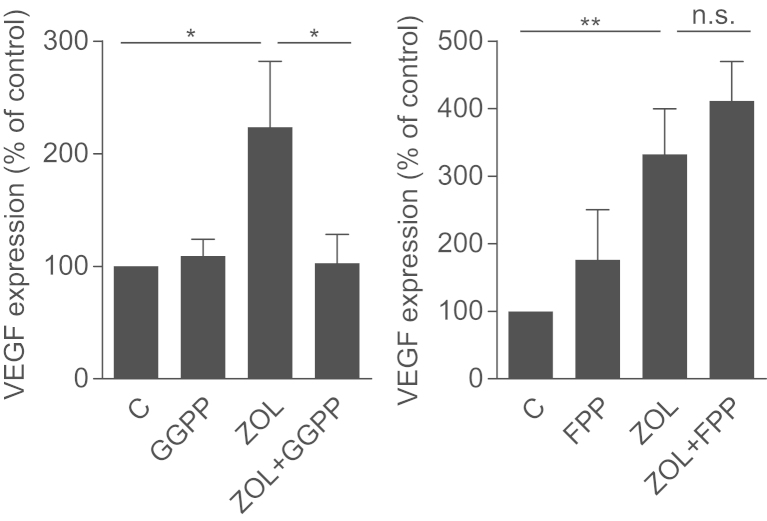
Aminobisphosphonates are used for the treatment of benign and malignant bone disorders. As inhibitors of the mevalonate pathway they exert direct anti-tumor effects in vitro and in preclinical models of bone metastases. Bisphosphonates are thought to have an anti-angiogenic activity as decreased levels of VEGF have been reported in some, although not all patients, following treatment with bisphosphonates. Direct effects of bisphosphonates on tumor derived VEGF have not been examined in detail. We therefore investigated VEGF expression in breast cancer cell lines following mevalonate pathway inhibition. Treatment of cell lines with increasing doses of zoledronic acid and atorvastatin resulted in increased levels of VEGF production. Similar results were seen with the geranylgeranyltransferase I inhibitor GGTI-298. The induction of VEGF was reversed by the supplementation of geranylgeranyl pyrophosphate but not by farnesyl pyrophosphate indicating that this effect is mediated by inhibited geranylgeranylation. Previous reports have reported decreased VEGF levels in patients following BP treatment in vivo. We assessed VEGF levels in patients with non-metastatic breast cancer following repeated treatment with zoledronic acid. In contrast to our in vitro findings, VEGF serum levels decreased in all patients after 6-9 months of treatment (by an average of 41%) as assessed in a small pilot trial. These results indicate that tissues other than breast tumors contribute to the serum pool of circulating VEGF and may be responsible for the observed VEGF decreases. The increases of VEGF in the cancer cells may provide a rationale for the combined treatment with VEGF inhibitors.
氨基双膦酸盐用于治疗良性和恶性骨疾病。作为甲羟戊酸途径的抑制剂,它们在体外和骨转移的临床前模型中发挥直接抗肿瘤作用。双膦酸盐被认为具有抗血管生成活性,因为在一些(并非所有)接受双膦酸盐治疗的患者中,已报告VEGF水平降低。双膦酸盐对肿瘤源性VEGF的直接作用尚未详细研究。因此,我们研究了甲羟戊酸途径抑制后乳腺癌细胞系中VEGF的表达。用递增剂量的唑来膦酸和阿托伐他汀处理细胞系导致VEGF产生水平增加。香叶基香叶基转移酶I抑制剂GGTI-298也观察到类似结果。补充香叶基香叶基焦磷酸可逆转VEGF的诱导,但法尼基焦磷酸则不能,这表明这种作用是由香叶基香叶基化抑制介导的。先前的报告报道了体内接受双膦酸盐治疗的患者VEGF水平降低。我们评估了唑来膦酸重复治疗后非转移性乳腺癌患者的VEGF水平。与我们的体外研究结果相反,在一项小型试点试验中评估,所有患者在治疗6-9个月后VEGF血清水平均下降(平均下降41%)。这些结果表明,除乳腺肿瘤外的其他组织对循环VEGF的血清池有贡献,可能是观察到的VEGF下降的原因。癌细胞中VEGF的增加可能为与VEGF抑制剂联合治疗提供理论依据。