Aman Urooj, Subhan Fazal, Shahid Muhammad, Akbar Shehla, Ahmad Nisar, Ali Gowhar, Fawad Khwaja, Sewell Robert D E
Department of Pharmacy, University of Peshawar, Peshawar, 25120, Khyber Pakhtunkhwa, Pakistan.
Cardiff School of Pharmacy and Pharmaceutical Sciences, Cardiff University, Cardiff, CF10 3NU, UK.
BMC Complement Altern Med. 2016 Feb 24;16:77. doi: 10.1186/s12906-016-1048-6.
Passiflora incarnata is widely used as an anxiolytic and sedative due to its putative GABAergic properties. Passiflora incarnata L. methanolic extract (PI-ME) was evaluated in an animal model of streptozotocin-induced diabetic neuropathic allodynia and vulvodynia in rats along with antinociceptive, anxiolytic and sedative activities in mice in order to examine possible underlying mechanisms.
PI-ME was tested preliminary for qualitative phytochemical analysis and then quantitatively by proximate and GC-MS analysis. The antinociceptive property was evaluated using the abdominal constriction assay and hot plate test. The anxiolytic activity was performed in a stair case model and sedative activity in an open field test. The antagonistic activities were evaluated using naloxone and/or pentylenetetrazole (PTZ). PI-ME was evaluated for prospective anti-allodynic and anti-vulvodynic properties in a rat model of streptozotocin induced neuropathic pain using the static and dynamic testing paradigms of mechanical allodynia and vulvodynia.
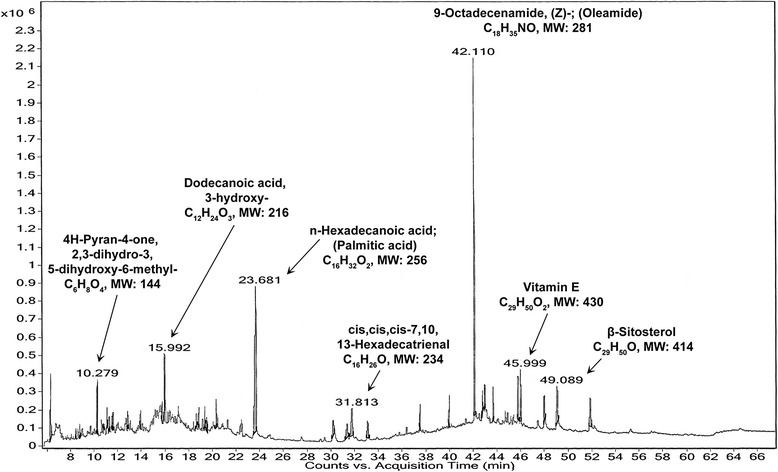
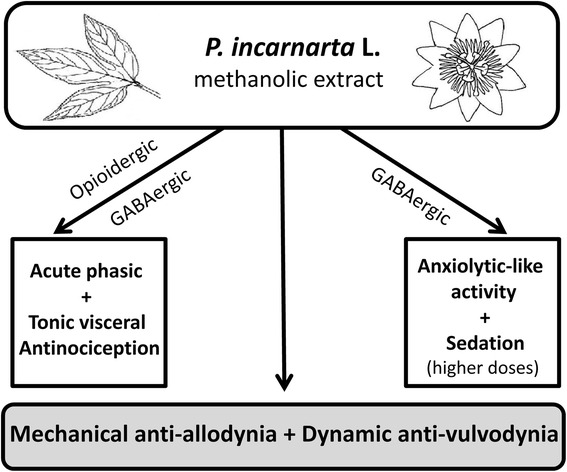
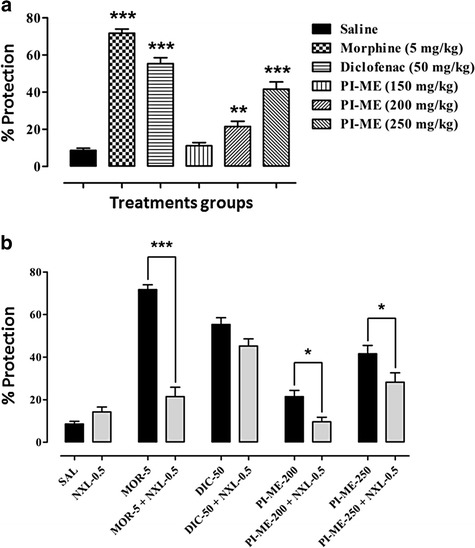
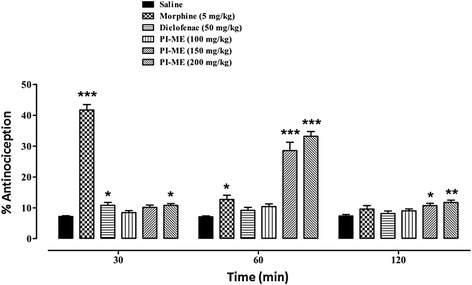
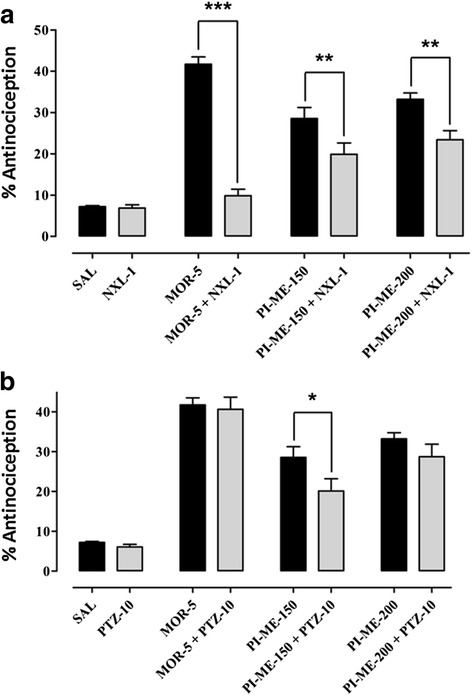
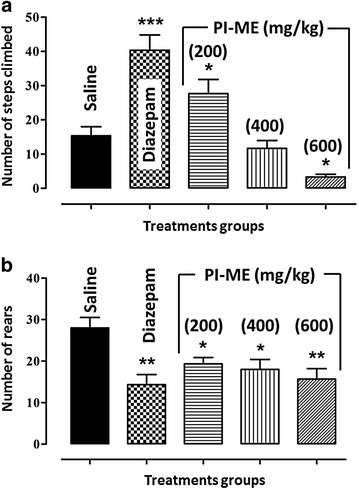
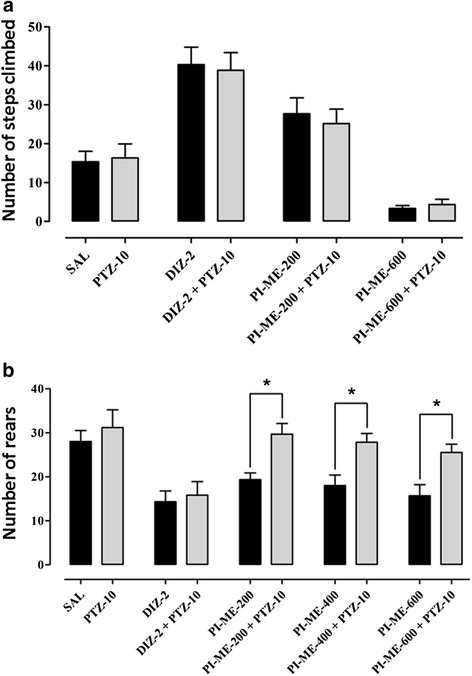
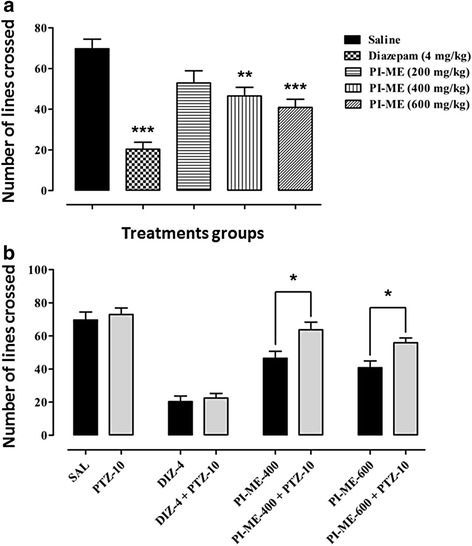
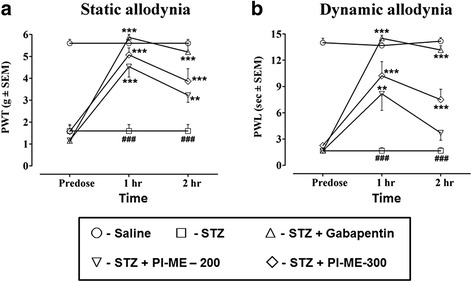
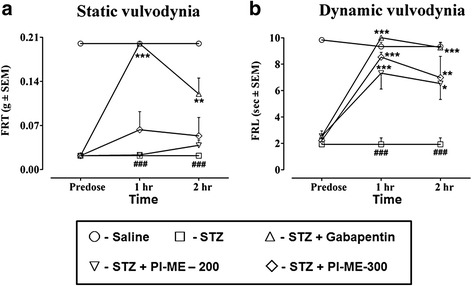
GC-MS analysis revealed that PI-ME contained predominant quantities of oleamide (9-octadecenamide), palmitic acid (hexadecanoic acid) and 3-hydroxy-dodecanoic acid, among other active constituents. In the abdominal constriction assay and hot plate test, PI-ME produced dose dependant, naloxone and pentylenetetrazole reversible antinociception suggesting an involvement of opioidergic and GABAergic mechanisms. In the stair case test, PI-ME at 200 mg/kg increased the number of steps climbed while at 600 mg/kg a significant decrease was observed. The rearing incidence was diminished by PI-ME at all tested doses and in the open field test, PI-ME decreased locomotor activity to an extent that was analagous to diazepam. The effects of PI-ME were antagonized by PTZ in both the staircase and open field tests implicating GABAergic mechanisms in its anxiolytic and sedative activities. In the streptozotocin-induced neuropathic nociceptive model, PI-ME (200 and 300 mg/kg) exhibited static and dynamic anti-allodynic effects exemplified by an increase in paw withdrawal threshold and paw withdrawal latency. PI-ME relieved only the dynamic component of vulvodynia by increasing flinching response latency.
These findings suggest that Passiflora incarnata might be useful for treating neuropathic pain. The antinociceptive and behavioural findings inferring that its activity may stem from underlying opioidergic and GABAergic mechanisms though a potential oleamide-sourced cannabimimetic involvement is also discussed.
西番莲因具有假定的γ-氨基丁酸能特性而被广泛用作抗焦虑和镇静剂。对西番莲甲醇提取物(PI-ME)在链脲佐菌素诱导的大鼠糖尿病性神经病理性疼痛和外阴痛动物模型中进行了评估,并在小鼠中检测了其抗伤害感受、抗焦虑和镇静活性,以探究可能的潜在机制。
对PI-ME进行初步定性植物化学分析,然后通过近似分析和气相色谱-质谱联用(GC-MS)分析进行定量。使用腹部收缩试验和热板试验评估抗伤害感受特性。在阶梯模型中进行抗焦虑活性评估,在旷场试验中进行镇静活性评估。使用纳洛酮和/或戊四氮(PTZ)评估拮抗活性。使用机械性疼痛过敏和外阴痛的静态和动态测试范式,在链脲佐菌素诱导的神经性疼痛大鼠模型中评估PI-ME的前瞻性抗疼痛过敏和抗外阴痛特性。
GC-MS分析显示,PI-ME含有大量的油酰胺(9-十八碳烯酰胺)、棕榈酸(十六烷酸)和3-羟基十二烷酸以及其他活性成分。在腹部收缩试验和热板试验中,PI-ME产生剂量依赖性、纳洛酮和戊四氮可逆的抗伤害感受作用,表明阿片样物质能和γ-氨基丁酸能机制参与其中。在阶梯试验中,200mg/kg的PI-ME增加了攀爬的步数,而在600mg/kg时观察到显著减少。在所有测试剂量下,PI-ME均降低了竖毛发生率,在旷场试验中,PI-ME降低运动活性的程度与地西泮相似。在阶梯试验和旷场试验中,PTZ均拮抗了PI-ME的作用,这表明γ-氨基丁酸能机制参与了其抗焦虑和镇静活性。在链脲佐菌素诱导的神经性伤害感受模型中,PI-ME(200和300mg/kg)表现出静态和动态抗疼痛过敏作用,表现为缩爪阈值和缩爪潜伏期增加。PI-ME仅通过增加退缩反应潜伏期缓解了外阴痛的动态成分。
这些发现表明西番莲可能对治疗神经性疼痛有用。抗伤害感受和行为学研究结果表明其活性可能源于潜在的阿片样物质能和γ-氨基丁酸能机制,不过也讨论了潜在的油酰胺来源的大麻素模拟物的参与情况。