Lavoie Louis, Khoury Hanane, Welner Sharon, Briere Jean-Baptiste
LASER Analytica, Montreal, QC, Canada.
Bayer Pharma AG, Global Health Economics & Outcomes Research General Medicine, Berlin, Germany.
Cardiovasc Ther. 2016 Jun;34(3):152-60. doi: 10.1111/1755-5922.12180.
Chronic heart failure (HF) or coronary artery disease (CAD) confers risk for thromboembolism and secondary adverse cardiac events (ACEs) (e.g., mortality, myocardial infarction, and stroke). When HF and CAD occur concomitantly, ACE risk is reported to be elevated. We investigated ACEs, their epidemiology, and the resulting burden among patients with concomitant HF and CAD through a structured review of recent literature. Antithrombotic treatment for ACE prevention was assessed.
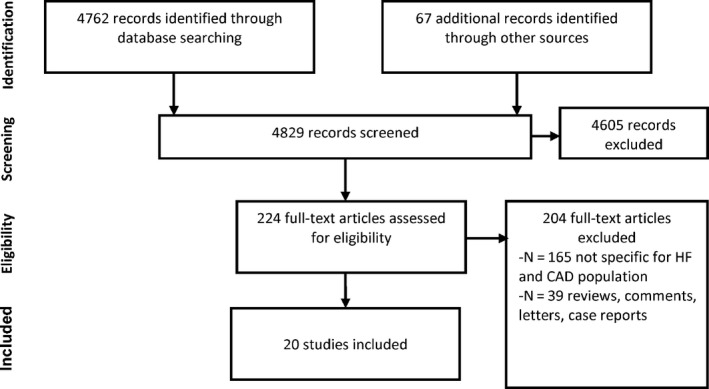
Pertinent databases (PubMed, other) were searched for relevant articles published from January 2004 to March 2015. Data collected included ACE incidence, healthcare resource use, costs, change in quality of life attributed to ACEs, and treatment practice for prevention of ACEs in patients with concomitant HF and CAD.
Mortality rates for patients with both HF and CAD ranged from 4.9-12.3% at 30 days to 13.7-86% for periods between 9.9 months and 10 years. Incidence of ACEs among HF patients with CAD is, respectively, at least 82% and 15% higher than for patients without HF or without CAD, except for stroke investigated in two studies. All-cause and HF-related hospitalization is the main driver of the economic burden in patients with HF, the majority of whom had CAD origin. Despite high prevalence of ischemic complications, there is limited evidence to support the use of warfarin-type antithrombotics among HF patients.
This study confirms that patients with concomitant HF and CAD are at elevated risk for ACEs and suggests the need for effective new antithrombotic treatments to further decrease ischemic complication rates in this population.
慢性心力衰竭(HF)或冠状动脉疾病(CAD)会增加血栓栓塞和继发性不良心脏事件(ACEs)(如死亡、心肌梗死和中风)的风险。当HF和CAD同时发生时,据报道ACE风险会升高。我们通过对近期文献的结构化综述,研究了同时患有HF和CAD的患者中ACEs、其流行病学情况以及由此产生的负担。评估了预防ACEs的抗栓治疗。
检索相关数据库(PubMed及其他),查找2004年1月至2015年3月发表的相关文章。收集的数据包括ACE的发生率、医疗资源使用情况、成本、ACEs导致的生活质量变化以及同时患有HF和CAD的患者预防ACEs的治疗实践。
同时患有HF和CAD的患者30天死亡率在4.9% - 12.3%之间,9.9个月至10年期间的死亡率在13.7% - 86%之间。除两项研究中调查的中风外,患有CAD的HF患者中ACEs的发生率分别比无HF或无CAD的患者至少高82%和15%。全因住院和HF相关住院是HF患者经济负担的主要驱动因素,其中大多数患者起源于CAD。尽管缺血性并发症的患病率很高,但支持在HF患者中使用华法林类抗栓药物的证据有限。
本研究证实,同时患有HF和CAD的患者发生ACEs的风险升高,并表明需要有效的新型抗栓治疗来进一步降低该人群的缺血性并发症发生率。