Jeng Wilson, Lee Sukyeong, Sung Nuri, Lee Jungsoon, Tsai Francis T F
Verna and Marrs McLean Department of Biochemistry and Molecular Biology, Baylor College of Medicine, Houston, TX, USA.
Verna and Marrs McLean Department of Biochemistry and Molecular Biology, Baylor College of Medicine, Houston, TX, USA; Department of Molecular and Cellular Biology, Baylor College of Medicine, Houston, TX, USA; Department of Molecular Virology and Microbiology, Baylor College of Medicine, Houston, TX, USA.
F1000Res. 2015 Dec 15;4. doi: 10.12688/f1000research.7214.1. eCollection 2015.
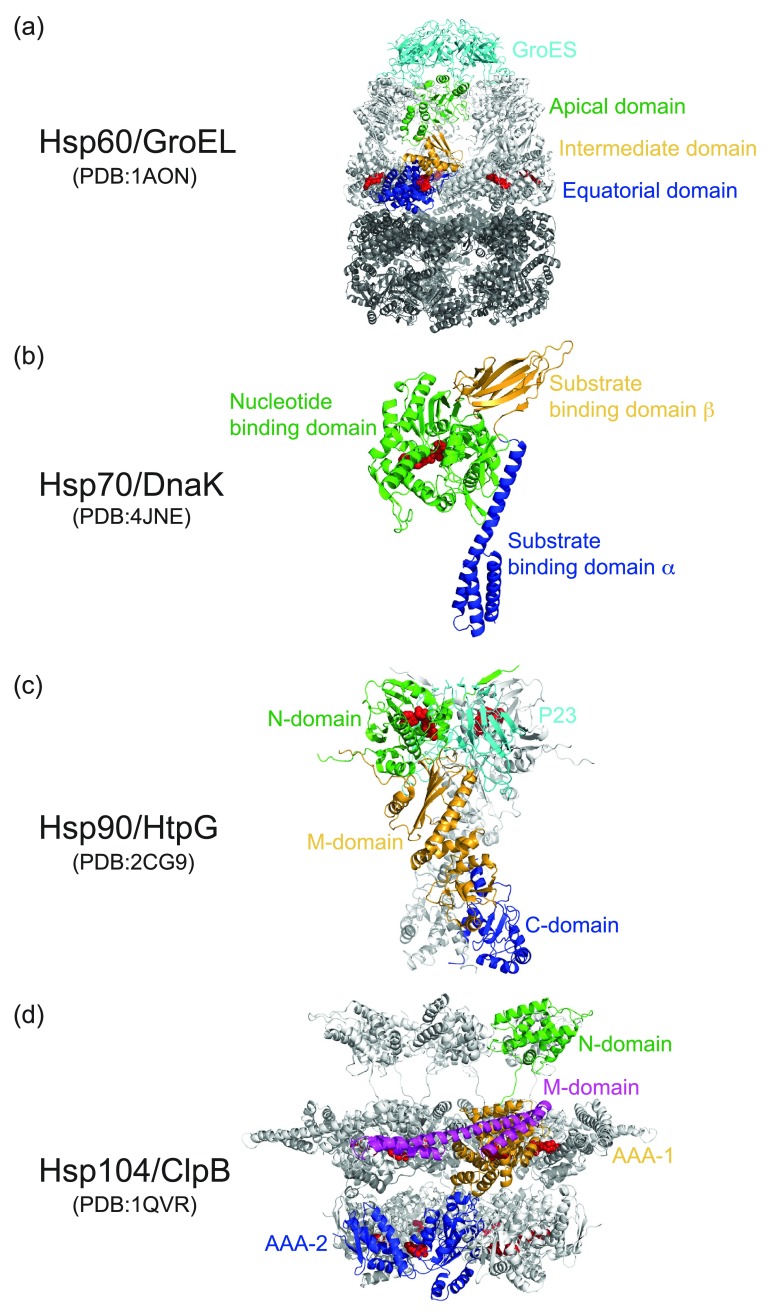
Proteins must adopt a defined three-dimensional structure in order to gain functional activity, or must they? An ever-increasing number of intrinsically disordered proteins and amyloid-forming polypeptides challenge this dogma. While molecular chaperones and proteases are traditionally associated with protein quality control inside the cell, it is now apparent that molecular chaperones not only promote protein folding in the "forward" direction by facilitating folding and preventing misfolding and aggregation, but also facilitate protein unfolding and even disaggregation resulting in the recovery of functional protein from aggregates. Here, we review our current understanding of ATP-dependent molecular chaperones that harness the energy of ATP binding and hydrolysis to fuel their chaperone functions. An emerging theme is that most of these chaperones do not work alone, but instead function together with other chaperone systems to maintain the proteome. Hence, molecular chaperones are the major component of the proteostasis network that guards and protects the proteome from damage. Furthermore, while a decline of this network is detrimental to cell and organismal health, a controlled perturbation of the proteostasis network may offer new therapeutic avenues against human diseases.
蛋白质必须具备特定的三维结构才能获得功能活性,果真如此吗?越来越多的内在无序蛋白质和形成淀粉样蛋白的多肽对这一教条提出了挑战。虽然分子伴侣和蛋白酶传统上与细胞内的蛋白质质量控制相关,但现在很明显,分子伴侣不仅通过促进折叠、防止错误折叠和聚集来推动蛋白质在“正向”方向上的折叠,还能促进蛋白质解折叠甚至解聚,从而使功能性蛋白质从聚集体中恢复。在此,我们综述了我们目前对依赖ATP的分子伴侣的理解,这些分子伴侣利用ATP结合和水解的能量来推动其伴侣功能。一个新出现的观点是,这些伴侣中的大多数并非单独发挥作用,而是与其他伴侣系统协同作用以维持蛋白质组。因此,分子伴侣是蛋白质稳态网络的主要组成部分,该网络保护蛋白质组免受损伤。此外,虽然该网络的衰退对细胞和机体健康有害,但对蛋白质稳态网络进行可控的扰动可能会为治疗人类疾病提供新途径。