Shiboski Caroline H, Lee Anthony, Chen Huichao, Webster-Cyriaque Jennifer, Seaman Todd, Landovitz Raphael J, John Malcolm, Reilly Nancy, Naini Linda, Palefsky Joel, Jacobson Mark A
aDepartment of Orofacial Sciences, School of Dentistry, University of California San Francisco, San Francisco, CaliforniabCenter for Biostatistics in AIDS Research, Harvard School of Public Health, Boston, MassachusettscDepartment of Dental Ecology, School of Dentistry, and Department of Microbiology and Immunology, School of Medicine University of North Carolina at Chapel Hill, Chapel Hill, North CarolinadCenter for Clinical AIDS Research & Education, Division of Infectious Diseases, University of California Los Angeles, Los AngeleseDepartment of Medicine, School of Medicine, University of California San Francisco, San Francisco, CaliforniafClinical Research Unit, New Jersey Medical School, Newark, New JerseygSocial and Scientific Systems, Inc., Silver Spring, Maryland, USA.
AIDS. 2016 Jun 19;30(10):1573-82. doi: 10.1097/QAD.0000000000001072.
The incidence of human papillomavirus (HPV)-related oral malignancies is increasing among HIV-infected populations, and the prevalence of oral warts has reportedly increased among HIV patients receiving antiretroviral therapy (ART). We explored whether ART initiation among treatment-naive HIV-positive adults is followed by a change in oral HPV infection or the occurrence of oral warts.
Prospective, observational study.
HIV-1 infected, ART-naive adults initiating ART in a clinical trial were enrolled. End points included detection of HPV DNA in throat-washes, changes in CD4 T-cell count and HIV RNA, and oral wart diagnosis.
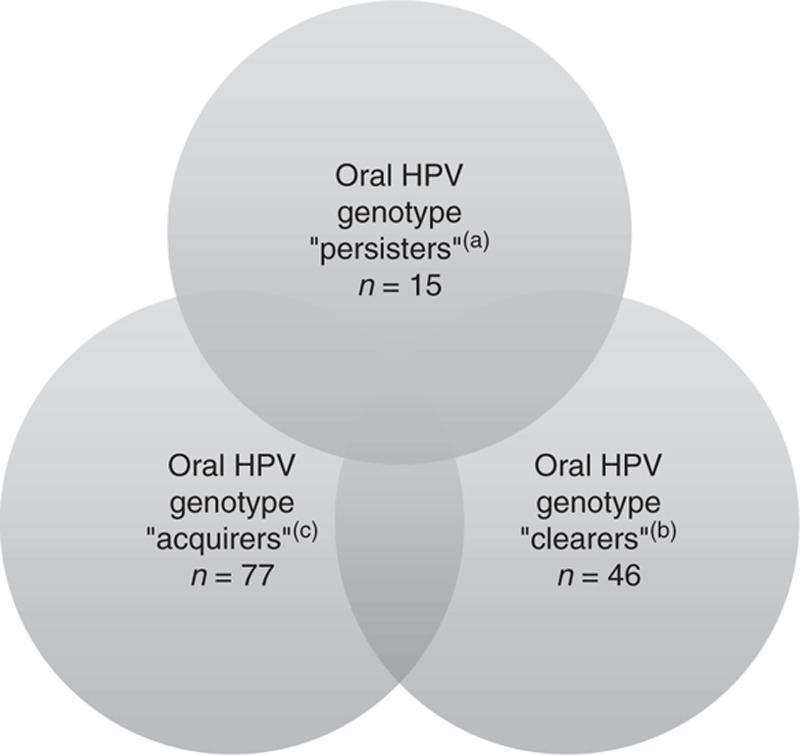
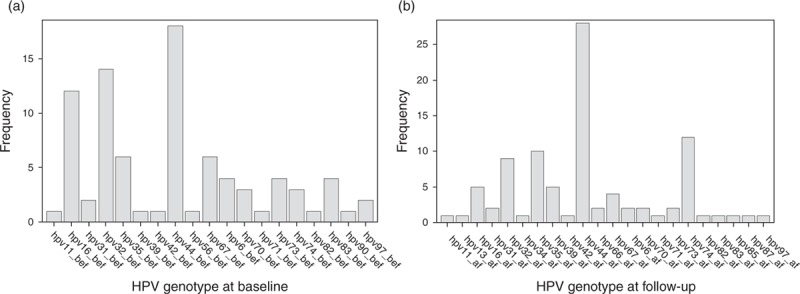
Among 388 participants, 18% had at least one HPV genotype present before initiating ART, and 24% had at least one genotype present after 12-24 weeks of ART. Among those with undetectable oral HPV DNA before ART, median change in CD4 count from study entry to 4 weeks after ART initiation was larger for those with detectable HPV DNA during follow-up than those without (P = 0.003). Both prevalence and incidence of oral warts were low (3% of participants having oral warts at study entry; 2.5% acquiring oral warts during 48 weeks of follow-up).
These results suggest: effective immune control of HPV in the oral cavity of HIV-infected patients is not reconstituted by 24 weeks of ART; whereas ART initiation was not followed by an increase in oral warts, we observed an increase in oral HPV DNA detection after 12-24 weeks. The prevalence of HPV-associated oral malignancies may continue to increase in the modern ART era.
在感染人类免疫缺陷病毒(HIV)的人群中,人乳头瘤病毒(HPV)相关口腔恶性肿瘤的发病率正在上升,据报道,接受抗逆转录病毒疗法(ART)的HIV患者口腔疣的患病率也有所增加。我们探讨了初治HIV阳性成人开始ART后口腔HPV感染是否发生变化或口腔疣是否出现。
前瞻性观察性研究。
纳入在一项临床试验中开始接受ART的HIV-1感染、初治成人。终点包括检测咽漱液中的HPV DNA、CD4 T细胞计数和HIV RNA的变化以及口腔疣诊断。
在388名参与者中,18%在开始ART前至少存在一种HPV基因型,24%在ART治疗12 - 24周后至少存在一种基因型。在ART前口腔HPV DNA检测不到的参与者中,随访期间口腔HPV DNA可检测到的参与者从研究入组到ART开始后4周的CD4计数中位数变化大于检测不到的参与者(P = 0.003)。口腔疣的患病率和发病率均较低(3%的参与者在研究入组时患有口腔疣;2.5%在48周随访期间出现口腔疣)。
这些结果表明:HIV感染患者口腔中HPV的有效免疫控制在24周的ART治疗后未得到重建;虽然开始ART后口腔疣没有增加,但我们观察到12 - 24周后口腔HPV DNA检测增加。在现代ART时代,HPV相关口腔恶性肿瘤的患病率可能会继续上升。