Stone Research Center Viollier, Biel, Switzerland.
Urolithiasis. 2016 Aug;44(4):311-7. doi: 10.1007/s00240-016-0863-z. Epub 2016 Feb 26.
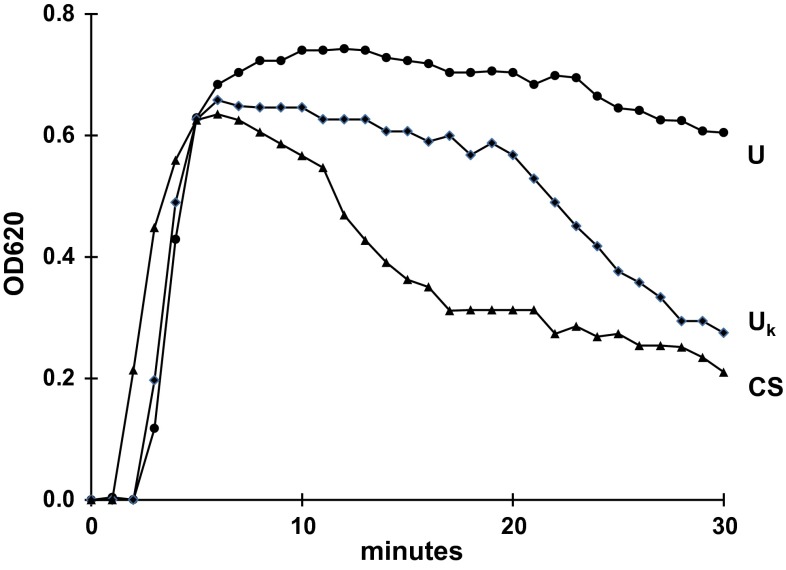
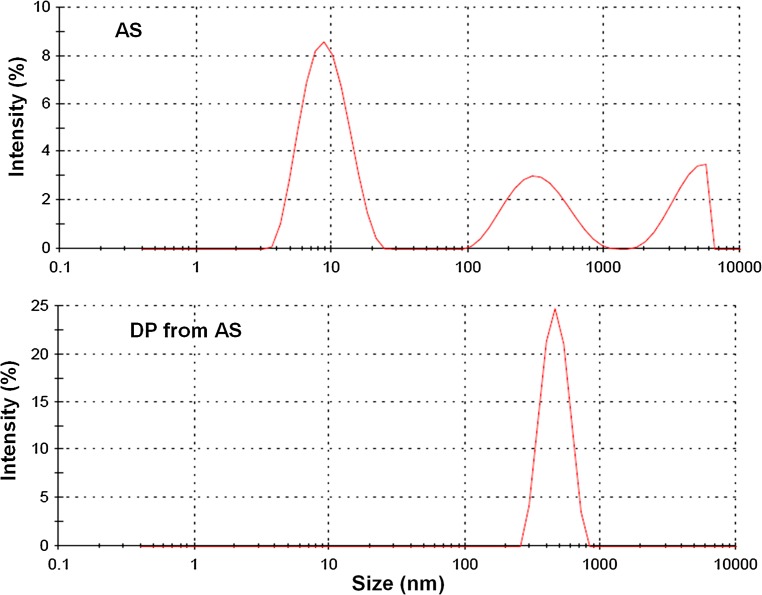
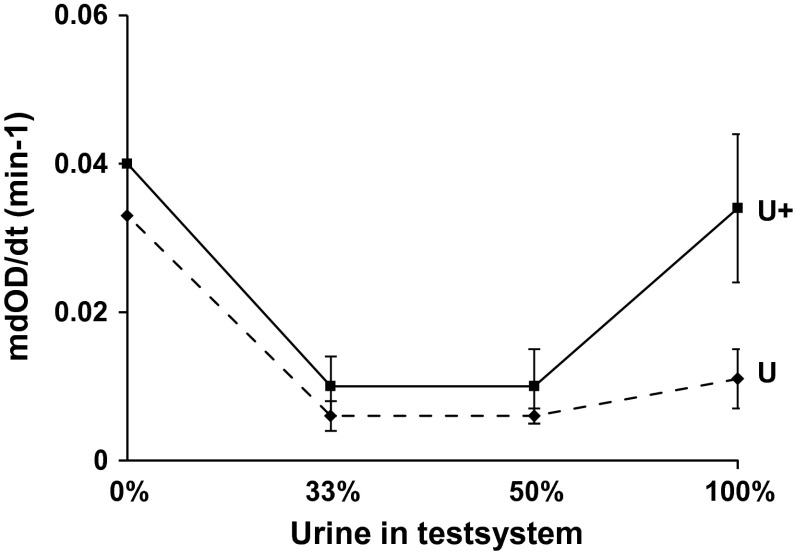
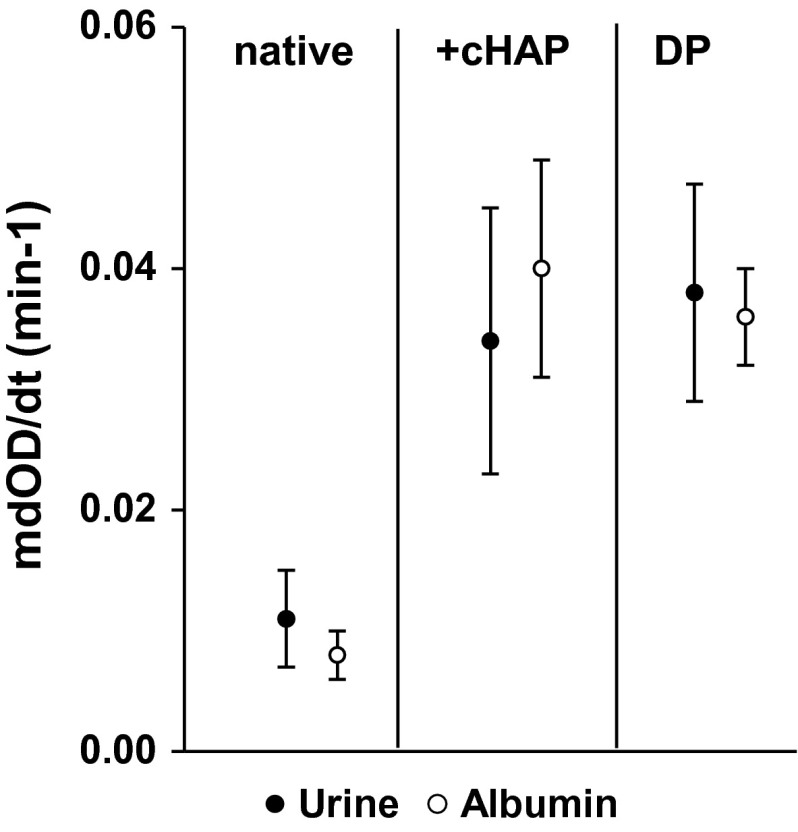
This study was designed to get information on aggregation (AGN) of urinary calcium oxalate crystals (CaOx) which seems to occur in stone formation despite a protecting coat of urinary macromolecules (UMs). CaOx crystallization was directly produced in urine, control and albumin solution by Ox titration and was spectrophotometrically followed. A rapid decrease of optical density indicating AGN was absent in 14 of 15 freshly voided urines of 5 healthy controls. However, in the presence of UM-coated hydroxyapatite all urines with relative high sodium concentration, being an indicator of concentrated urine, showed a pronounced AGN which was abolished when these urines were diluted. Albumin relatively found to be an inhibitor of AGN showed after temporary adsorption on Ca Phosphate (CaP) massive self-AGN and changed to a promoter of CaOx AGN. Self-AGN after adsorption on surfaces especially of CaP, being an important compound of Randall's plaques, can thus explain this paradoxical behavior of UMs. Aggregated UMs probably bridge zones of electrostatic repulsion between UM-coated crystals with identical electrical surface charge. These zones extend by urine dilution which decreases ionic strength. Diminution of urinary concentration by increasing diuresis seems, therefore, to be important in stone metaphylaxis.
本研究旨在获取关于尿草酸钙晶体(CaOx)聚集(AGN)的信息,尽管有尿大分子(UM)的保护涂层,但似乎仍会在结石形成过程中发生 AGN。通过 Ox 滴定法直接在尿液、对照和白蛋白溶液中产生 CaOx 结晶,并通过分光光度法进行后续检测。在 5 名健康对照者的 15 份新鲜排空尿液中,有 14 份没有出现表明 AGN 的吸光度快速下降。然而,在有 UM 涂层的羟磷灰石存在的情况下,所有相对钠离子浓度较高(表明尿液浓缩)的尿液都表现出明显的 AGN,当这些尿液被稀释时,AGN 就会消失。白蛋白相对而言是 AGN 的抑制剂,在暂时吸附在磷酸钙(CaP)上后,会发生大量的自身 AGN,并转变为 CaOx AGN 的促进剂。在 CaP 等表面上吸附后的自身 AGN,作为 Randall 斑块的重要化合物,因此可以解释 UMs 的这种矛盾行为。聚集的 UMs 可能会桥接 UM 涂层晶体之间带有相同表面电荷的静电排斥区域。这些区域通过尿液稀释而扩展,尿液稀释会降低离子强度。因此,通过增加利尿来减少尿液浓缩似乎在结石预防中非常重要。