Blagodatskaya Еvgenia, Blagodatsky Sergey, Khomyakov Nikita, Myachina Olga, Kuzyakov Yakov
Dept. of Soil Science of Temperate Ecosystems, University of Göttingen, 37077 Göttingen, Germany.
Institute of Physicochemical and Biological Problems in Soil Science, Russian Academy of Sciences, 142290 Pushchino, Russia.
Sci Rep. 2016 Feb 29;6:22240. doi: 10.1038/srep22240.
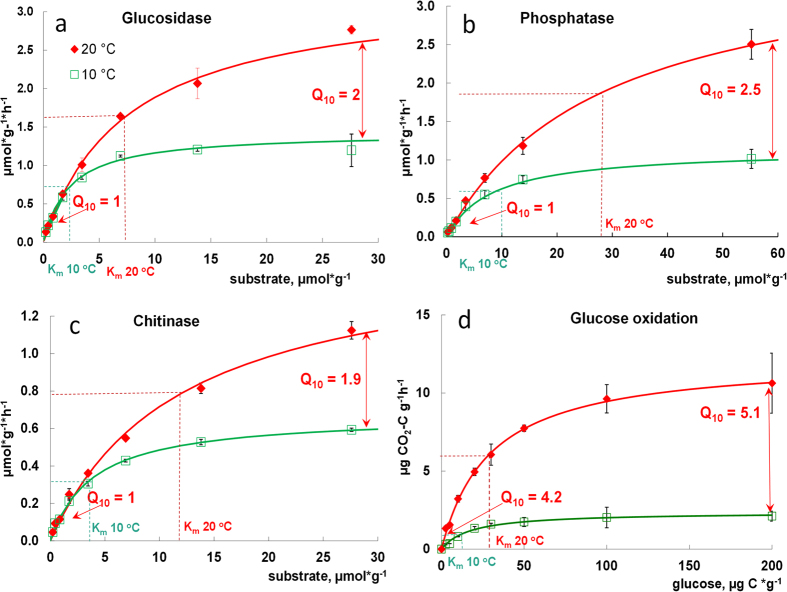
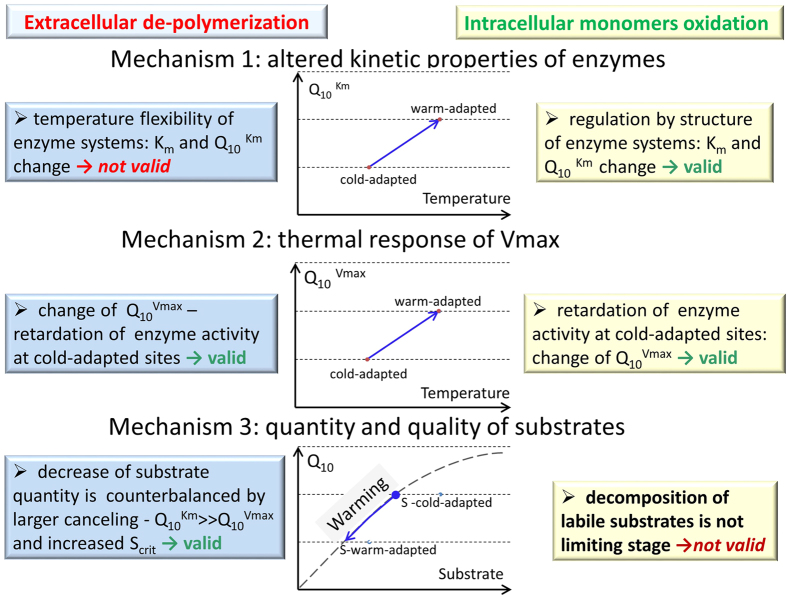
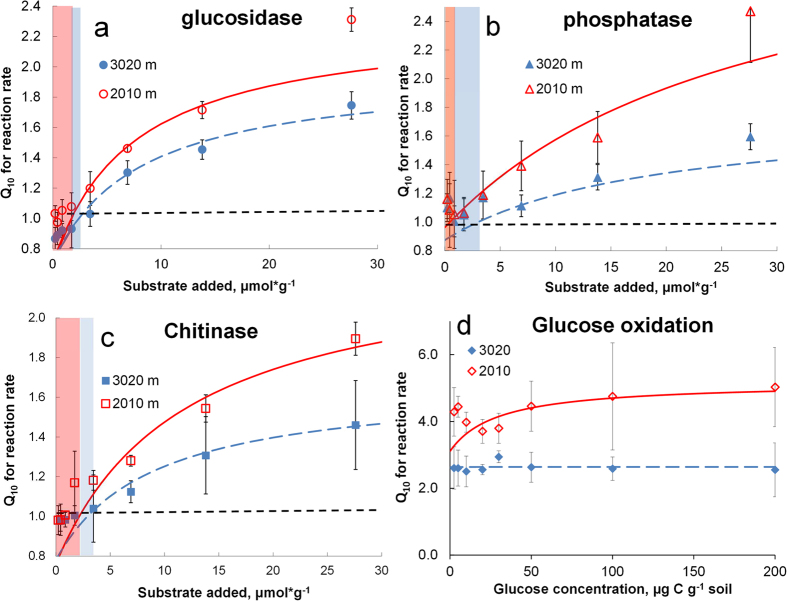
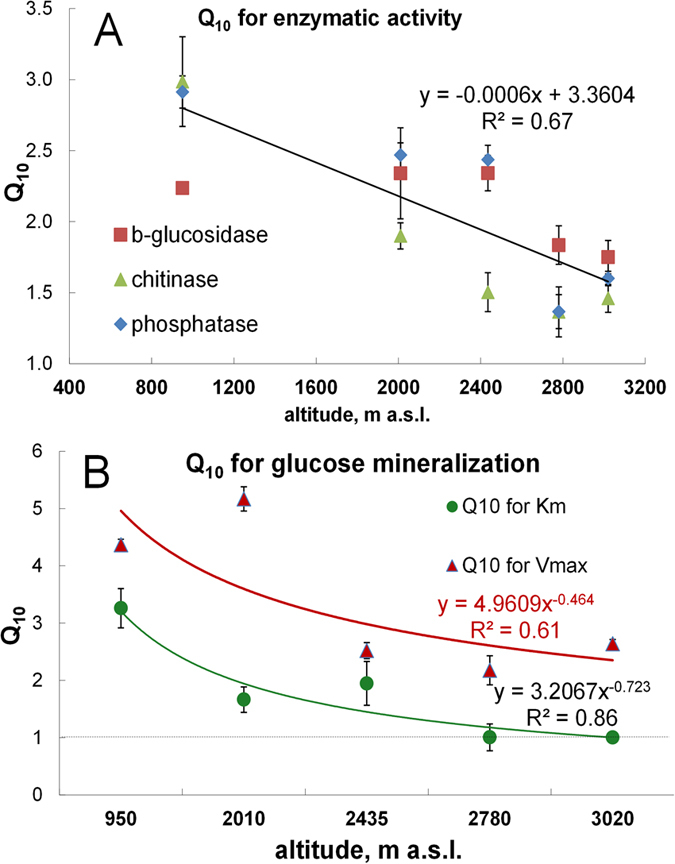
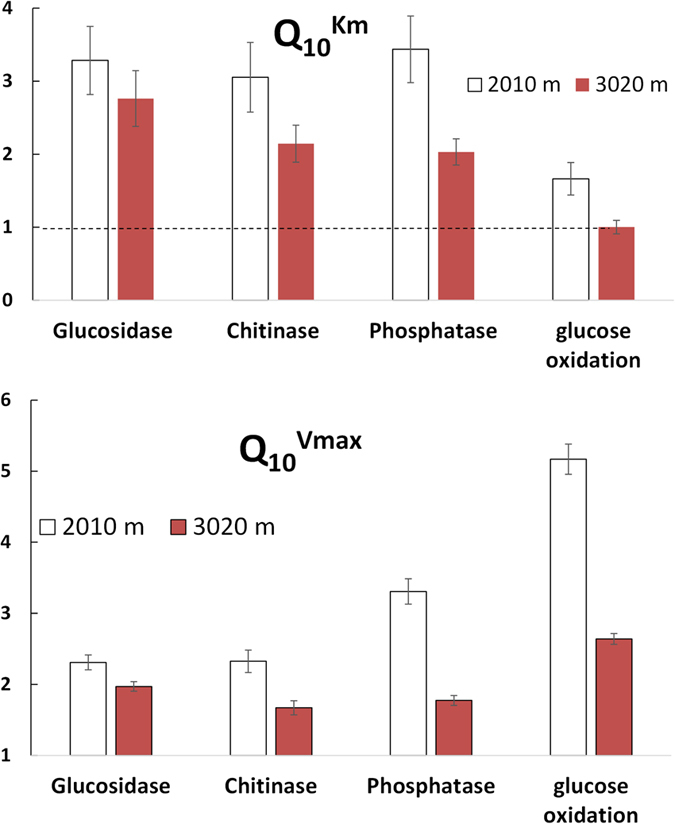
Short-term acceleration of soil organic matter decomposition by increasing temperature conflicts with the thermal adaptation observed in long-term studies. Here we used the altitudinal gradient on Mt. Kilimanjaro to demonstrate the mechanisms of thermal adaptation of extra- and intracellular enzymes that hydrolyze cellulose, chitin and phytate and oxidize monomers ((14)C-glucose) in warm- and cold-climate soils. We revealed that no response of decomposition rate to temperature occurs because of a cancelling effect consisting in an increase in half-saturation constants (Km), which counteracts the increase in maximal reaction rates (Vmax with temperature). We used the parameters of enzyme kinetics to predict thresholds of substrate concentration (Scrit) below which decomposition rates will be insensitive to global warming. Increasing values of Scrit, and hence stronger canceling effects with increasing altitude on Mt. Kilimanjaro, explained the thermal adaptation of polymer decomposition. The reduction of the temperature sensitivity of Vmax along the altitudinal gradient contributed to thermal adaptation of both polymer and monomer degradation. Extrapolating the altitudinal gradient to the large-scale latitudinal gradient, these results show that the soils of cold climates with stronger and more frequent temperature variation are less sensitive to global warming than soils adapted to high temperatures.
温度升高导致土壤有机质分解的短期加速,这与长期研究中观察到的热适应性相矛盾。在这里,我们利用乞力马扎罗山的海拔梯度来证明,在温暖和寒冷气候的土壤中,水解纤维素、几丁质和植酸盐并氧化单体((14)C-葡萄糖)的细胞外和细胞内酶的热适应机制。我们发现,由于存在一种抵消效应,即半饱和常数(Km)增加,抵消了最大反应速率(Vmax随温度升高)的增加,分解速率对温度没有响应。我们利用酶动力学参数预测底物浓度阈值(Scrit),低于该阈值分解速率对全球变暖不敏感。Scrit值增加,因此在乞力马扎罗山随着海拔升高抵消效应更强,这解释了聚合物分解的热适应性。沿着海拔梯度Vmax温度敏感性的降低促成了聚合物和单体降解的热适应。将海拔梯度外推到大规模的纬度梯度,这些结果表明,温度变化更强且更频繁的寒冷气候土壤比适应高温的土壤对全球变暖更不敏感。