McNaughton Melissa, Pitman Melissa, Pitson Stuart M, Pyne Nigel J, Pyne Susan
Strathclyde Institute of Pharmacy and Biomedical Science, University of Strathclyde, Glasgow G4 0RE, UK.
Centre for Cancer Biology, University of South Australia and SA Pathology, Adelaide SA 5000, Australia.
Oncotarget. 2016 Mar 29;7(13):16663-75. doi: 10.18632/oncotarget.7693.
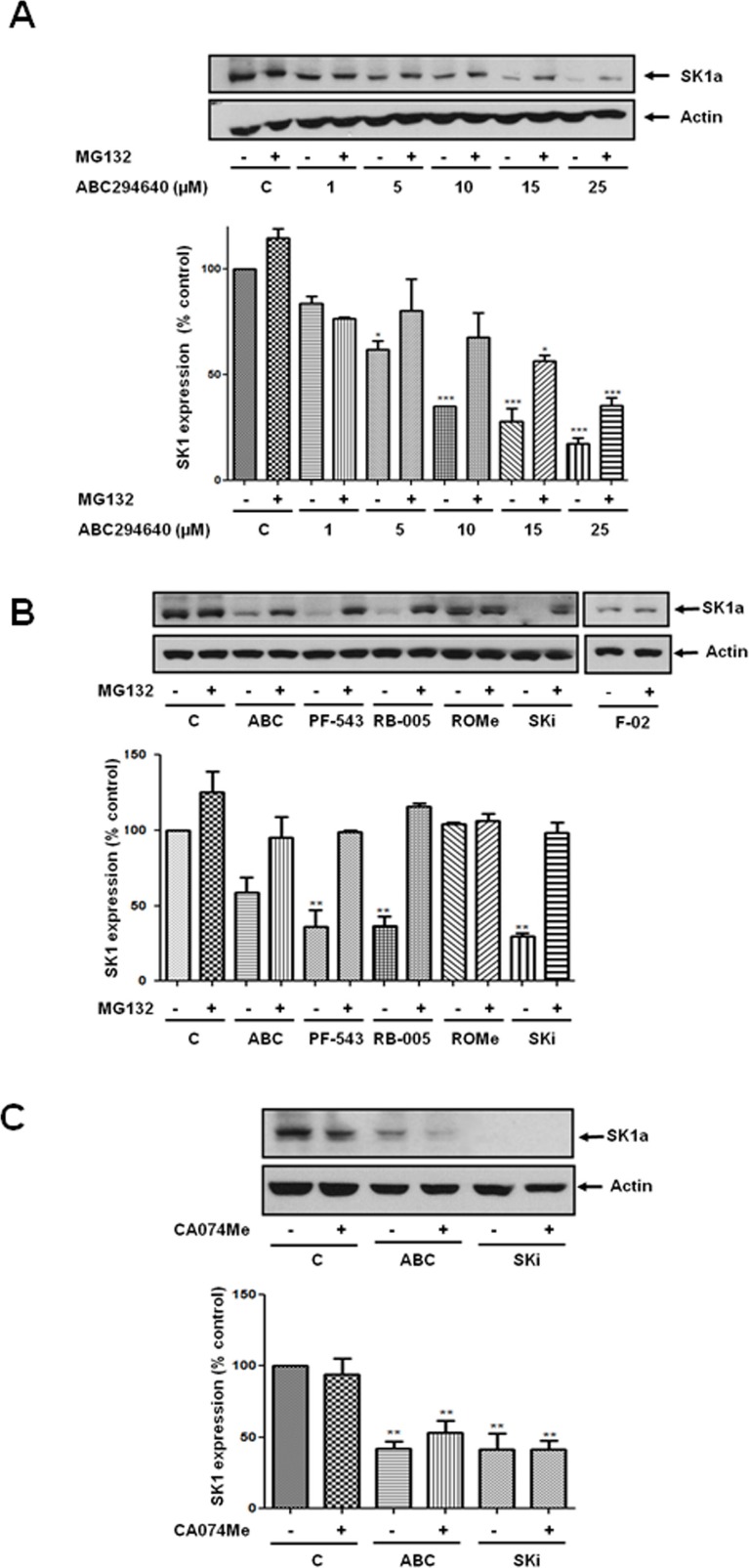
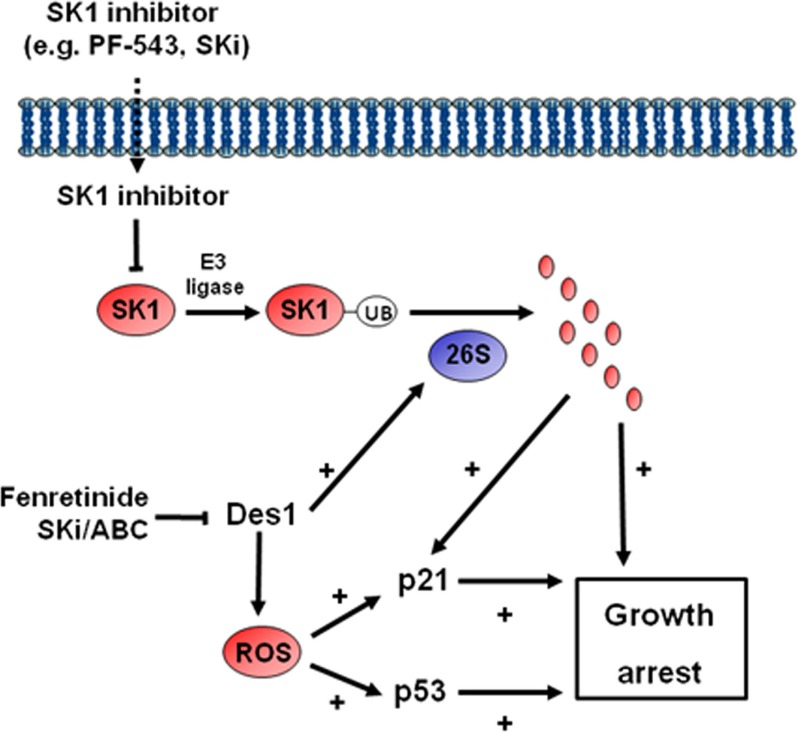
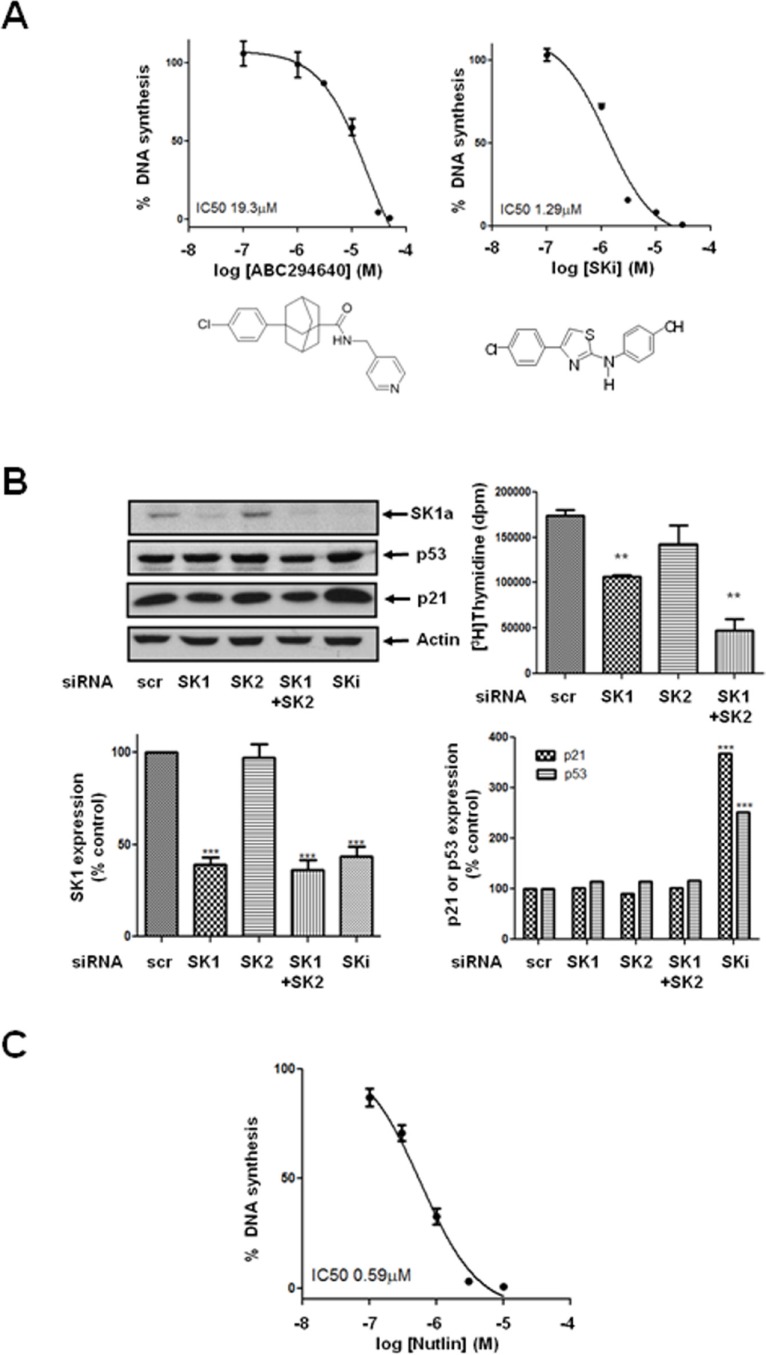
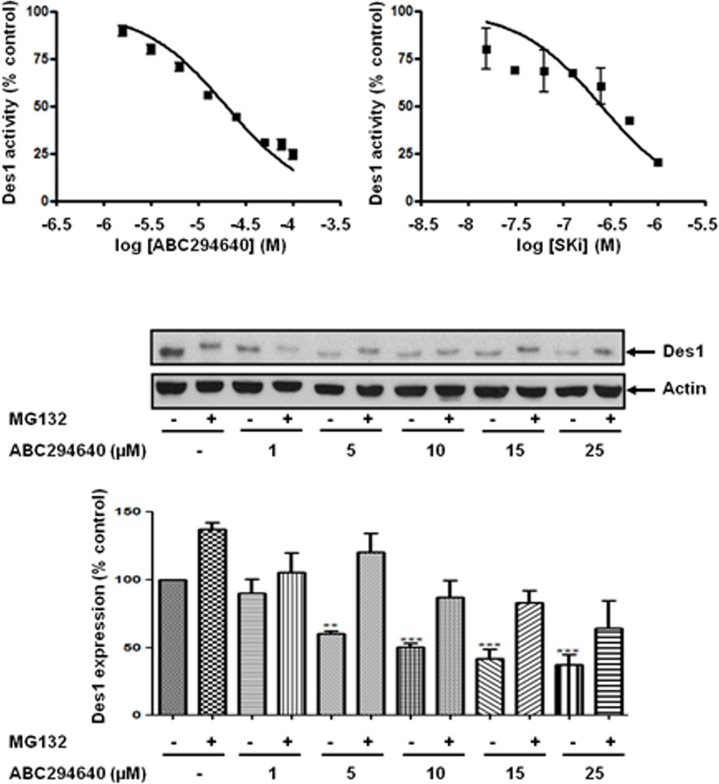
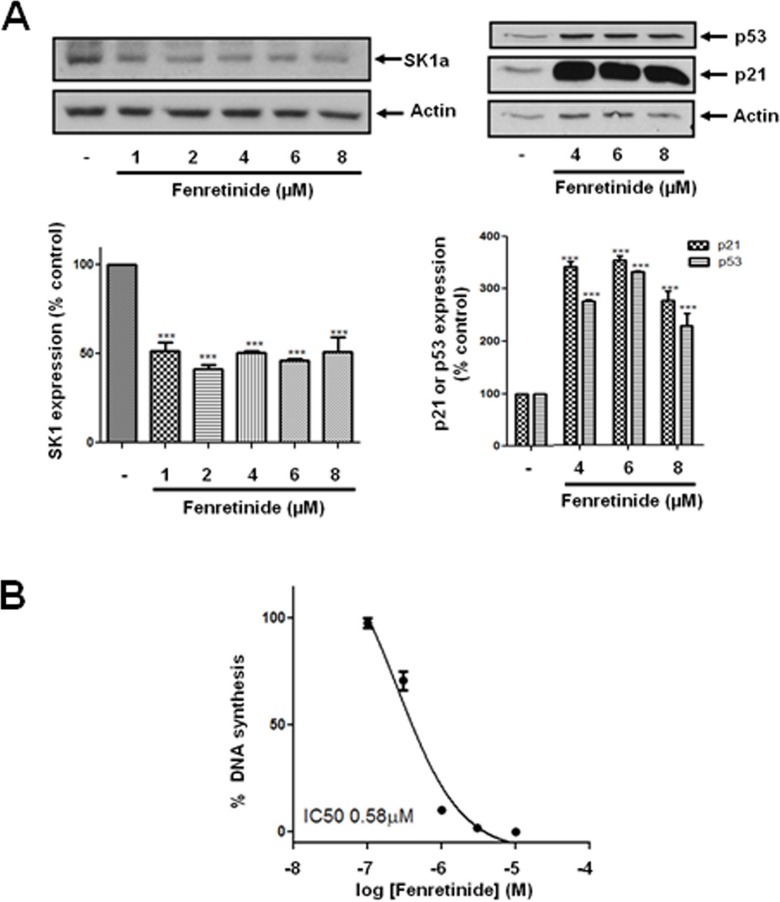
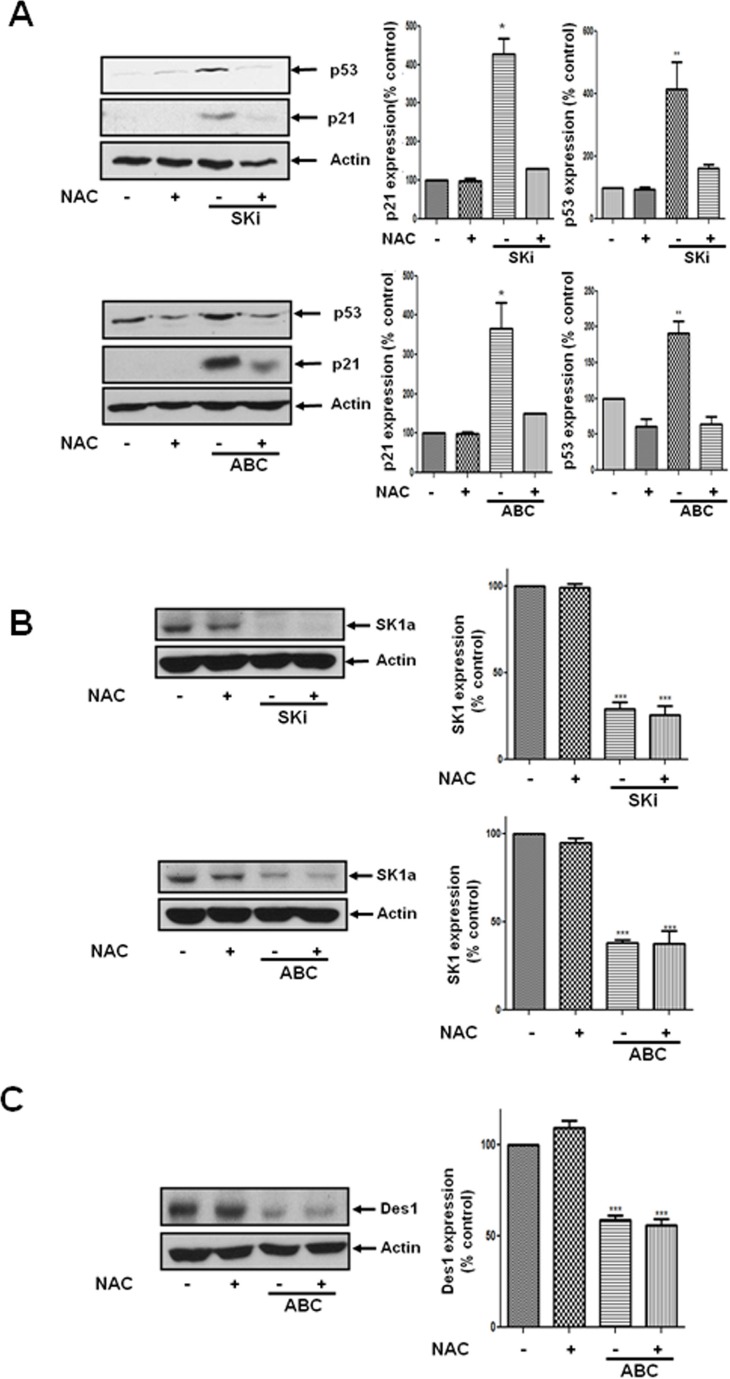
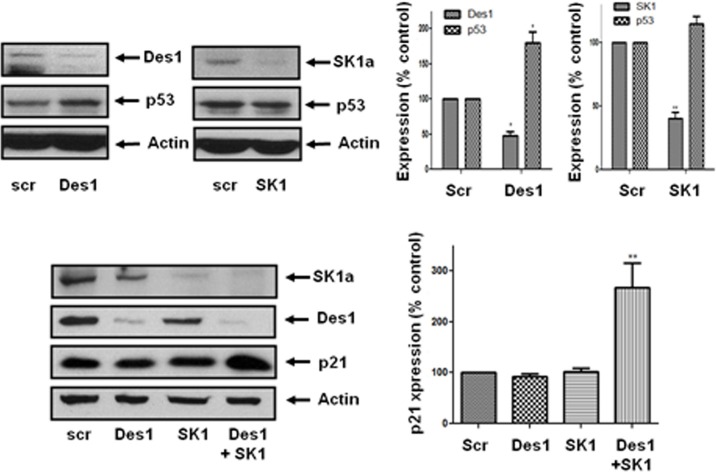
Sphingosine kinases (two isoforms termed SK1 and SK2) catalyse the formation of the bioactive lipid sphingosine 1-phosphate. We demonstrate here that the SK2 inhibitor, ABC294640 (3-(4-chlorophenyl)-adamantane-1-carboxylic acid (pyridin-4-ylmethyl)amide) or the SK1/SK2 inhibitor, SKi (2-(p-hydroxyanilino)-4-(p-chlorophenyl)thiazole)) induce the proteasomal degradation of SK1a (Mr = 42 kDa) and inhibit DNA synthesis in androgen-independent LNCaP-AI prostate cancer cells. These effects are recapitulated by the dihydroceramide desaturase (Des1) inhibitor, fenretinide. Moreover, SKi or ABC294640 reduce Des1 activity in Jurkat cells and ABC294640 induces the proteasomal degradation of Des1 (Mr = 38 kDa) in LNCaP-AI prostate cancer cells. Furthermore, SKi or ABC294640 or fenretinide increase the expression of the senescence markers, p53 and p21 in LNCaP-AI prostate cancer cells. The siRNA knockdown of SK1 or SK2 failed to increase p53 and p21 expression, but the former did reduce DNA synthesis in LNCaP-AI prostate cancer cells. Moreover, N-acetylcysteine (reactive oxygen species scavenger) blocked the SK inhibitor-induced increase in p21 and p53 expression but had no effect on the proteasomal degradation of SK1a. In addition, siRNA knockdown of Des1 increased p53 expression while a combination of Des1/SK1 siRNA increased the expression of p21. Therefore, Des1 and SK1 participate in regulating LNCaP-AI prostate cancer cell growth and this involves p53/p21-dependent and -independent pathways. Therefore, we propose targeting androgen-independent prostate cancer cells with compounds that affect Des1/SK1 to modulate both de novo and sphingolipid rheostat pathways in order to induce growth arrest.
鞘氨醇激酶(两种亚型分别称为SK1和SK2)催化生物活性脂质鞘氨醇-1-磷酸的形成。我们在此证明,SK2抑制剂ABC294640(3-(4-氯苯基)-金刚烷-1-羧酸(吡啶-4-基甲基)酰胺)或SK1/SK2抑制剂SKi(2-(对羟基苯胺基)-4-(对氯苯基)噻唑)可诱导雄激素非依赖性LNCaP-AI前列腺癌细胞中SK1a(分子量 = 42 kDa)的蛋白酶体降解,并抑制DNA合成。二氢神经酰胺去饱和酶(Des1)抑制剂芬维A胺也能重现这些效应。此外,SKi或ABC294640可降低Jurkat细胞中的Des1活性,而ABC294640可诱导LNCaP-AI前列腺癌细胞中Des1(分子量 = 38 kDa)的蛋白酶体降解。此外,SKi、ABC294640或芬维A胺可增加LNCaP-AI前列腺癌细胞中衰老标志物p53和p21的表达。SK1或SK2的siRNA敲低未能增加p53和p21的表达,但前者确实降低了LNCaP-AI前列腺癌细胞中的DNA合成。此外,N-乙酰半胱氨酸(活性氧清除剂)可阻断SK抑制剂诱导的p21和p53表达增加,但对SK1a的蛋白酶体降解无影响。此外,Des1的siRNA敲低增加了p53的表达,而Des1/SK1 siRNA联合使用则增加了p21的表达。因此,Des1和SK1参与调节LNCaP-AI前列腺癌细胞的生长,这涉及p53/p21依赖性和非依赖性途径。因此,我们建议用影响Des1/SK1的化合物靶向雄激素非依赖性前列腺癌细胞,以调节从头合成和鞘脂变阻器途径,从而诱导生长停滞。