Warfield Kelly L, Plummer Emily M, Sayce Andrew C, Alonzi Dominic S, Tang William, Tyrrell Beatrice E, Hill Michelle L, Caputo Alessandro T, Killingbeck Sarah S, Beatty P Robert, Harris Eva, Iwaki Ren, Kinami Kyoko, Ide Daisuke, Kiappes J L, Kato Atsushi, Buck Michael D, King Kevin, Eddy William, Khaliq Mansoora, Sampath Aruna, Treston Anthony M, Dwek Raymond A, Enterlein Sven G, Miller Joanna L, Zitzmann Nicole, Ramstedt Urban, Shresta Sujan
Emergent Virology LLC, Gaithersburg, MD 20879, USA.
La Jolla Institute for Allergy and Immunology, La Jolla, CA 92037, USA.
Antiviral Res. 2016 May;129:93-98. doi: 10.1016/j.antiviral.2016.03.001. Epub 2016 Mar 3.
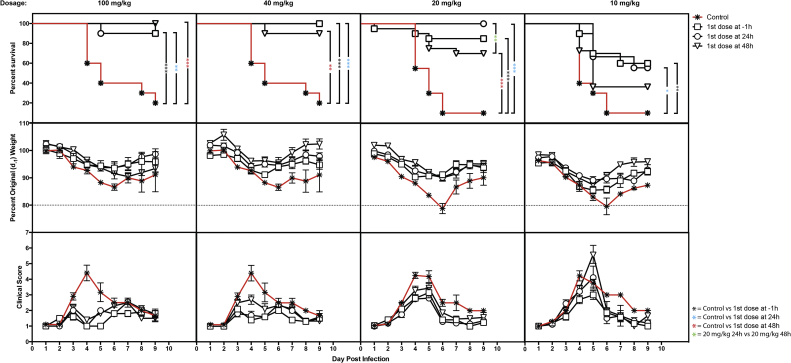
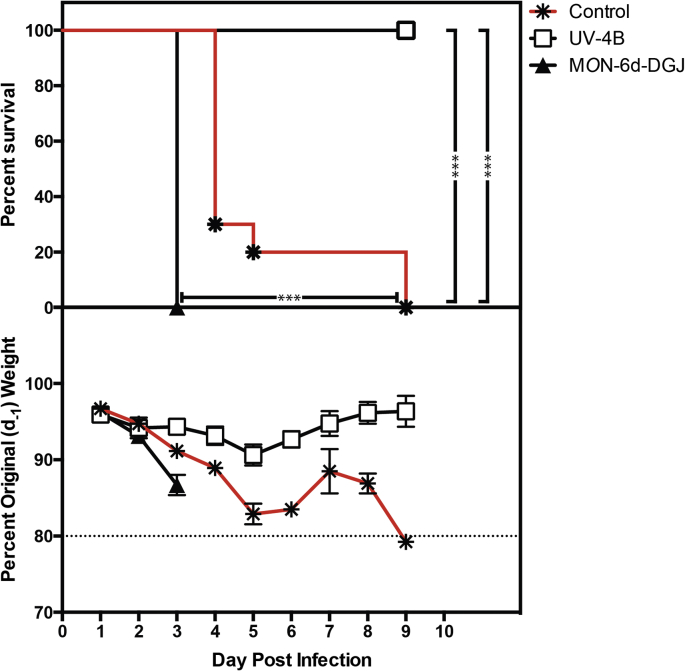
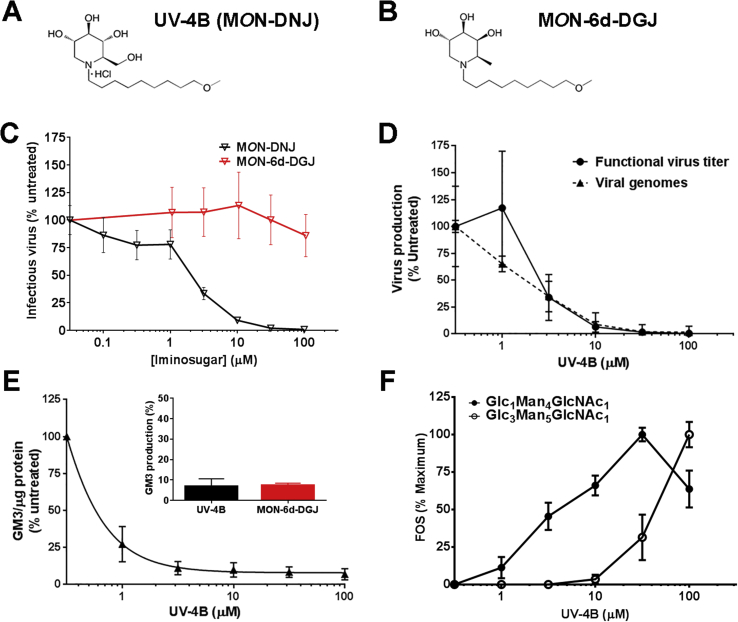
The antiviral activity of UV-4 was previously demonstrated against dengue virus serotype 2 (DENV2) in multiple mouse models. Herein, step-wise minimal effective dose and therapeutic window of efficacy studies of UV-4B (UV-4 hydrochloride salt) were conducted in an antibody-dependent enhancement (ADE) mouse model of severe DENV2 infection in AG129 mice lacking types I and II interferon receptors. Significant survival benefit was demonstrated with 10-20 mg/kg of UV-4B administered thrice daily (TID) for seven days with initiation of treatment up to 48 h after infection. UV-4B also reduced infectious virus production in in vitro antiviral activity assays against all four DENV serotypes, including clinical isolates. A set of purified enzyme, in vitro, and in vivo studies demonstrated that inhibition of endoplasmic reticulum (ER) α-glucosidases and not the glycosphingolipid pathway appears to be responsible for the antiviral activity of UV-4B against DENV. Along with a comprehensive safety package, these and previously published data provided support for an Investigational New Drug (IND) filing and Phases 1 and 2 clinical trials for UV-4B with an indication of acute dengue disease.
UV-4的抗病毒活性先前已在多个小鼠模型中针对登革热病毒2型(DENV2)得到证实。在此,在缺乏I型和II型干扰素受体的AG129小鼠的严重DENV2感染的抗体依赖性增强(ADE)小鼠模型中,进行了UV-4B(UV-4盐酸盐)疗效研究的逐步最小有效剂量和治疗窗口研究。在感染后长达48小时开始治疗,每天三次(TID)给予10-20mg/kg的UV-4B,持续7天,显示出显著的生存益处。在针对包括临床分离株在内的所有四种登革热病毒血清型的体外抗病毒活性试验中,UV-4B也降低了传染性病毒的产生。一组纯化酶、体外和体内研究表明,内质网(ER)α-葡萄糖苷酶的抑制而非糖鞘脂途径似乎是UV-4B对DENV抗病毒活性的原因。连同全面的安全性资料,这些数据以及先前发表的数据为UV-4B的新药临床试验申请(IND)以及1期和2期临床试验提供了支持,其适应症为急性登革热疾病。