Fujiwara Yoko, Tsuchiya Hiroyoshi, Sakai Nobuya, Shibata Katsushi, Fujimura Akio, Koshimizu Taka-Aki
Division of Molecular Pharmacology, Department of Pharmacology, Jichi Medical University, Tochigi, 329-0498 Japan.
Department of Functional Genomics, Graduate School of Pharmaceutical Sciences, Himeji Dokkyo University, Hyogo, 670-8524 Japan.
J Inflamm (Lond). 2016 Mar 5;13:7. doi: 10.1186/s12950-016-0116-5. eCollection 2016.
The amount of urinary glycoprotein lipocalin 2 (LCN2) has been known to increase after kidney injury because of failed reabsorption by the proximal tubules or direct secretion from injured tissues. However, the relationship between urinary tract obstruction and the isoform diversity of LCN2 has not been examined.
The urinary levels of LCN2 isoforms were examined in male mice after an intraperitoneal injection of lipopolysaccharide (LPS) or in a mouse model of unilateral ureter obstruction (UUO). The LCN2 levels in sera, bladder urine, renal pelvic urine, and tissue samples were also analyzed. Endo- and exoglycosidases were used to investigate the different N-glycan patterns of LCN2.
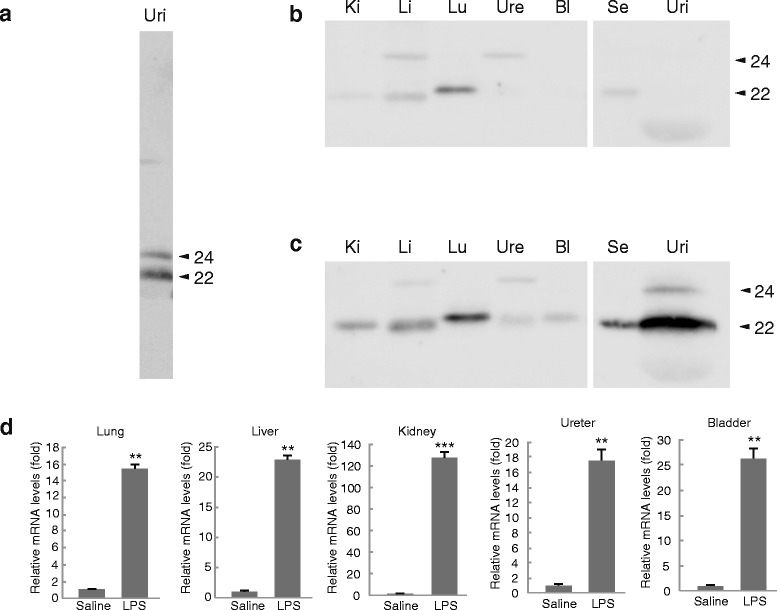
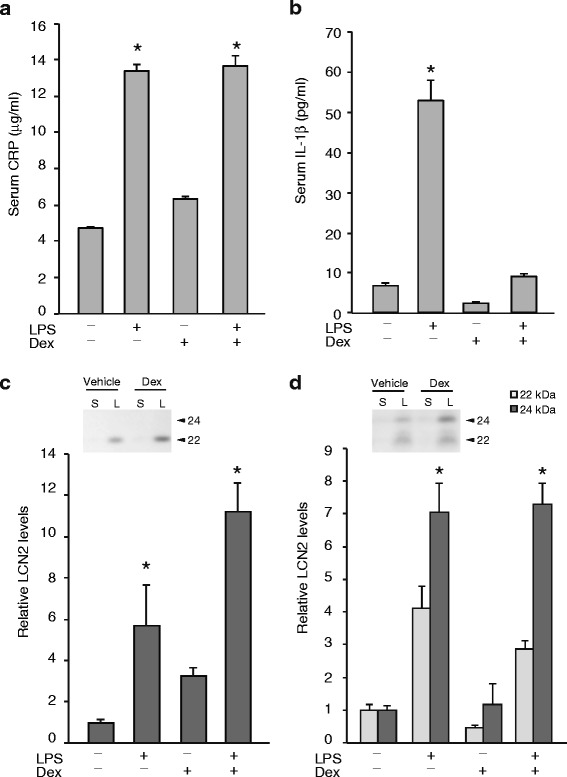
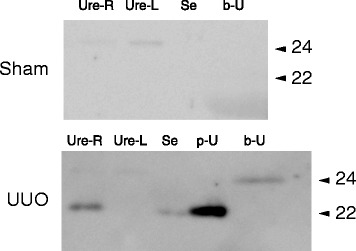
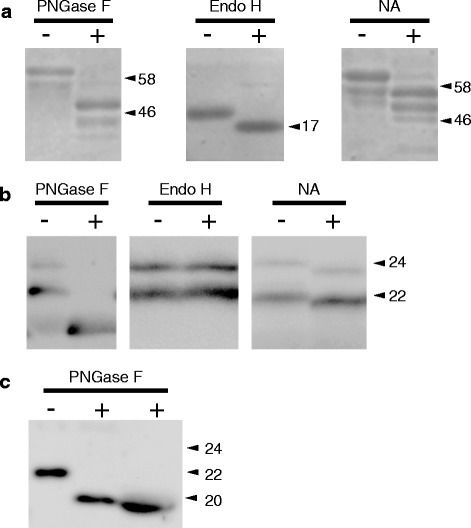
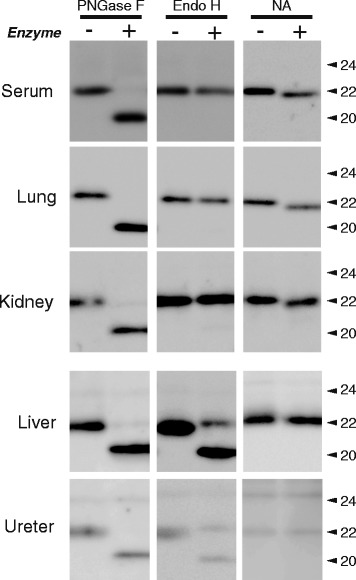
Two isoforms of urinary LCN2 with different molecular weights were identified in an immunoblotting analysis, and the levels of both isoforms were increased 6 h after LPS administration. The primary LCN2 isoform was the lower molecular weight 22-kDa isoform, which was detected in the serum, urine, liver and kidney. In contrast, the 24-kDa LCN2 isoform was detected only in urine. In the UUO experiments, the levels of the 24-kDa LCN2 were increased in the bladder urine but not in the urine accumulated in the renal pelvis due to UUO. The 22-kDa LCN2 was identified in the renal pelvic urine from UUO mice. The peptide-N glycosidase F digestion of the two urinary LCN2 isoforms generated a single protein. Moreover, the two urinary LCN2 proteins were sensitive to neuraminidase and resistant to endoglycosidase H (Endo H). The LCN2 in the serum, lung and kidney was resistant to Endo H, as observed in urine, whereas the LCN2 in the liver and the ureter were degraded by this enzyme.
These results suggest that the difference in the molecular weights of the LCN2 proteins was due to their N-glycan structure. The high molecular weight LCN2 in urine could be detected after the inflammatory response to LPS and UUO. Furthermore, the sensitivity to Endo H identified the presence of two types of carbohydrate moieties, depending on the tissue in which the LCN2 was produced. These findings are useful for widening the clinical applicability of urinary LCN2 analyses.
已知肾损伤后,由于近端肾小管重吸收功能障碍或受损组织直接分泌,尿中糖蛋白脂质运载蛋白2(LCN2)的含量会增加。然而,尿路梗阻与LCN2异构体多样性之间的关系尚未得到研究。
在雄性小鼠腹腔注射脂多糖(LPS)后或在单侧输尿管梗阻(UUO)小鼠模型中检测LCN2异构体的尿水平。还分析了血清、膀胱尿液、肾盂尿液和组织样本中的LCN2水平。使用内切糖苷酶和外切糖苷酶研究LCN2不同的N -聚糖模式。
免疫印迹分析鉴定出两种分子量不同的尿LCN2异构体,LPS给药6小时后两种异构体的水平均升高。主要的LCN2异构体是分子量较低的22 kDa异构体,在血清、尿液、肝脏和肾脏中均有检测到。相比之下,24 kDa的LCN2异构体仅在尿液中检测到。在UUO实验中,膀胱尿液中24 kDa LCN2的水平升高,但UUO导致肾盂中积聚的尿液中该水平未升高。在UUO小鼠的肾盂尿液中鉴定出22 kDa的LCN2。两种尿LCN2异构体经肽 - N -糖苷酶F消化后产生单一蛋白质。此外,两种尿LCN2蛋白对神经氨酸酶敏感,对内切糖苷酶H(Endo H)有抗性。血清、肺和肾脏中的LCN2与尿液中观察到的情况一样,对Endo H有抗性,而肝脏和输尿管中的LCN2被该酶降解。
这些结果表明,LCN2蛋白分子量的差异是由于其N -聚糖结构。对LPS和UUO的炎症反应后可检测到尿中高分子量的LCN2。此外,对Endo H的敏感性确定了两种碳水化合物部分的存在,这取决于产生LCN2的组织。这些发现有助于扩大尿LCN2分析的临床应用范围。