Yang Liming, Ji Jianhui, Harris-Shultz Karen R, Wang Hui, Wang Hongliang, Abd-Allah Elsayed F, Luo Yuming, Hu Xiangyang
Jiangsu Key Laboratory for Eco-Agriculture Biotechnology around Hongze Lake, Jiangsu Collaborative Innovation Center of Regional Modern Agriculture and Environment Protection, Huaiyin Normal UniversityHuaian, China; Department of Plant Pathology, University of GeorgiaTifton, GA, USA; Crop Protection and Management Research Unit, United States Department of Agriculture, Agricultural Research ServiceTifton, GA, USA.
Jiangsu Key Laboratory for Eco-Agriculture Biotechnology around Hongze Lake, Jiangsu Collaborative Innovation Center of Regional Modern Agriculture and Environment Protection, Huaiyin Normal University Huaian, China.
Front Plant Sci. 2016 Feb 26;7:190. doi: 10.3389/fpls.2016.00190. eCollection 2016.
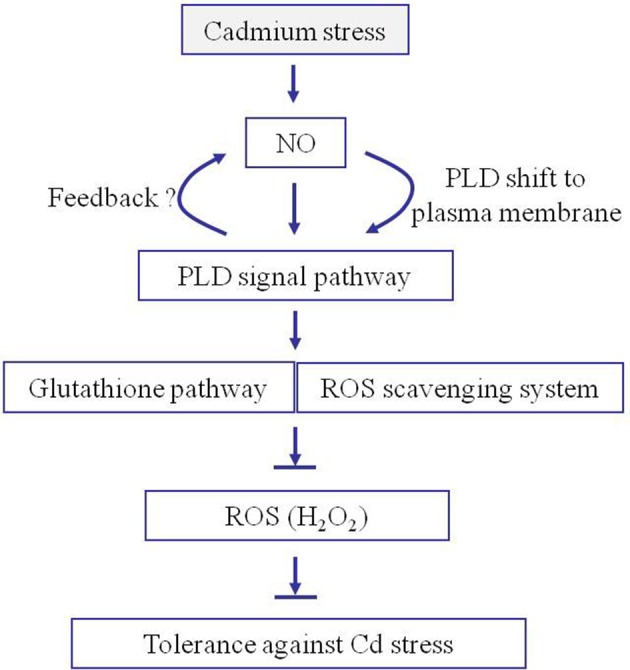
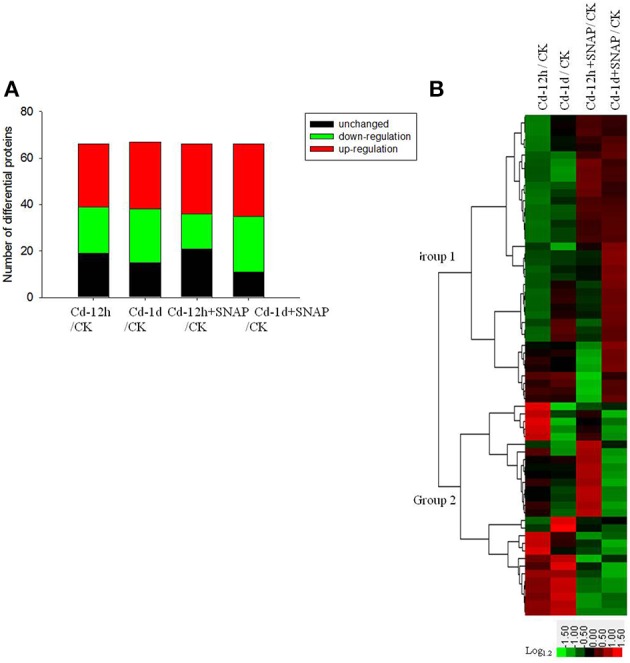
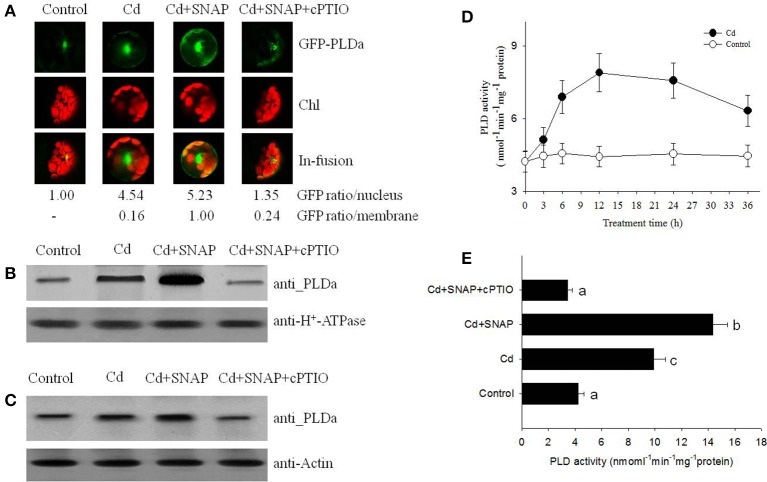
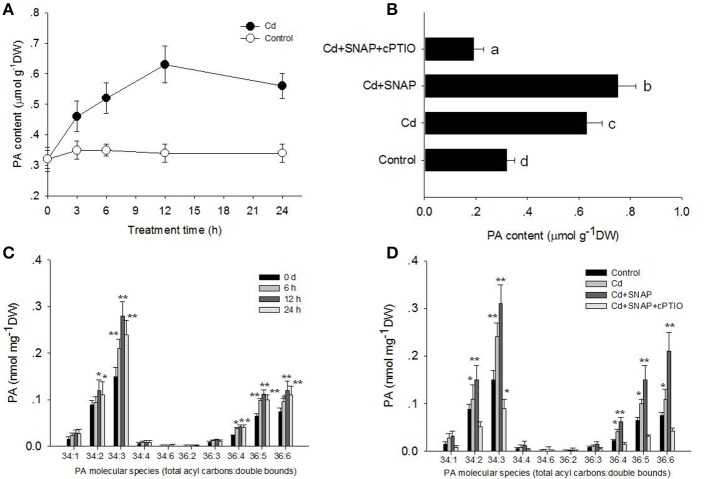
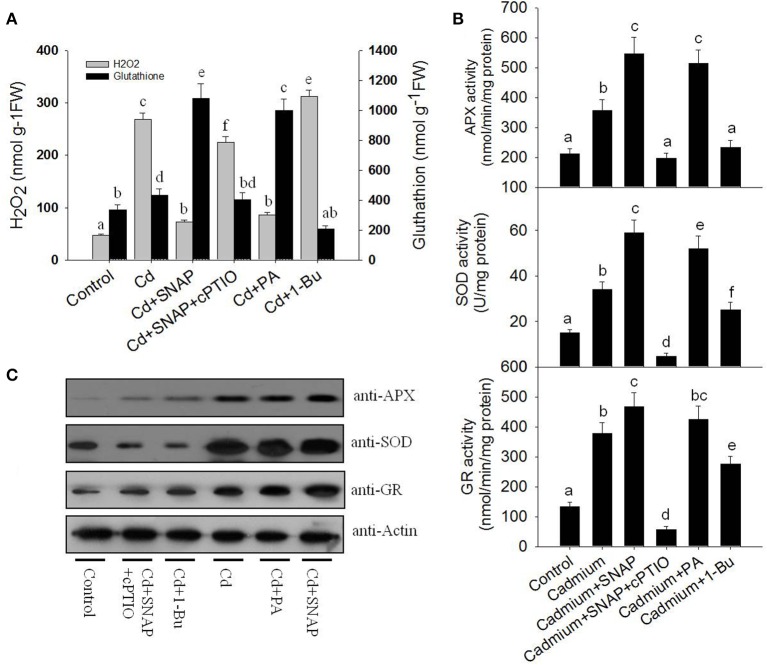
The heavy metal cadmium is a common environmental contaminant in soils and has adverse effects on crop growth and development. The signaling processes in plants that initiate cellular responses to environmental stress have been shown to be located in the plasma membrane (PM). A better understanding of the PM proteome in response to environmental stress might provide new insights for improving stress-tolerant crops. Nitric oxide (NO) is reported to be involved in the plant response to cadmium (Cd) stress. To further investigate how NO modulates protein changes in the plasma membrane during Cd stress, a quantitative proteomics approach based on isobaric tags for relative and absolute quantification (iTRAQ) was used to identify differentially regulated proteins from the rice plasma membrane after Cd or Cd and NO treatment. Sixty-six differentially expressed proteins were identified, of which, many function as transporters, ATPases, kinases, metabolic enzymes, phosphatases, and phospholipases. Among these, the abundance of phospholipase D (PLD) was altered substantially after the treatment of Cd or Cd and NO. Transient expression of the PLD fused with green fluorescent peptide (GFP) in rice protoplasts showed that the Cd and NO treatment promoted the accumulation of PLD in the plasma membrane. Addition of NO also enhanced Cd-induced PLD activity and the accumulation of phosphatidic acid (PA) produced through PLD activity. Meanwhile, NO elevated the activities of antioxidant enzymes and caused the accumulation of glutathione, both which function to reduce Cd-induced H2O2 accumulation. Taken together, we suggest that NO signaling is associated with the accumulation of antioxidant enzymes, glutathione and PA which increases cadmium tolerance in rice via the antioxidant defense system.
重金属镉是土壤中常见的环境污染物,对作物生长发育具有不利影响。已证明植物中引发细胞对环境胁迫作出反应的信号传导过程位于质膜(PM)中。更好地了解质膜蛋白质组对环境胁迫的响应可能为培育耐胁迫作物提供新的见解。据报道,一氧化氮(NO)参与植物对镉(Cd)胁迫的反应。为了进一步研究NO如何在Cd胁迫期间调节质膜中的蛋白质变化,基于相对和绝对定量等压标记(iTRAQ)的定量蛋白质组学方法被用于鉴定Cd或Cd与NO处理后水稻质膜中差异调节的蛋白质。共鉴定出66种差异表达蛋白,其中许多蛋白发挥转运蛋白、ATP酶、激酶、代谢酶、磷酸酶和磷脂酶的功能。其中,磷脂酶D(PLD)的丰度在Cd或Cd与NO处理后发生了显著变化。在水稻原生质体中瞬时表达与绿色荧光肽(GFP)融合的PLD表明,Cd和NO处理促进了PLD在质膜中的积累。添加NO还增强了Cd诱导的PLD活性以及通过PLD活性产生的磷脂酸(PA)的积累。同时,NO提高了抗氧化酶的活性并导致谷胱甘肽的积累,二者均起到减少Cd诱导的H2O2积累的作用。综上所述,我们认为NO信号传导与抗氧化酶、谷胱甘肽和PA的积累相关,它们通过抗氧化防御系统提高水稻对镉的耐受性。