Xu Jingshu, Begley Paul, Church Stephanie J, Patassini Stefano, Hollywood Katherine A, Jüllig Mia, Curtis Maurice A, Waldvogel Henry J, Faull Richard L M, Unwin Richard D, Cooper Garth J S
School of Biological Sciences, Faculty of Science and Maurice Wilkins Centre for Molecular Biodiscovery, University of Auckland, Auckland, New Zealand; Centre for Brain Research, Faculty of Medical and Health Sciences, University of Auckland, Auckland, New Zealand; Centre for Advanced Discovery and Experimental Therapeutics (CADET), Central Manchester University Hospitals NHS Foundation Trust, Manchester Academic Health Sciences Centre, Manchester, UK.
Institute of Human Development, Faculty of Medical and Human Sciences, University of Manchester, Manchester, UK; Centre for Advanced Discovery and Experimental Therapeutics (CADET), Central Manchester University Hospitals NHS Foundation Trust, Manchester Academic Health Sciences Centre, Manchester, UK.
Biochim Biophys Acta. 2016 Jun;1862(6):1084-92. doi: 10.1016/j.bbadis.2016.03.001. Epub 2016 Mar 5.
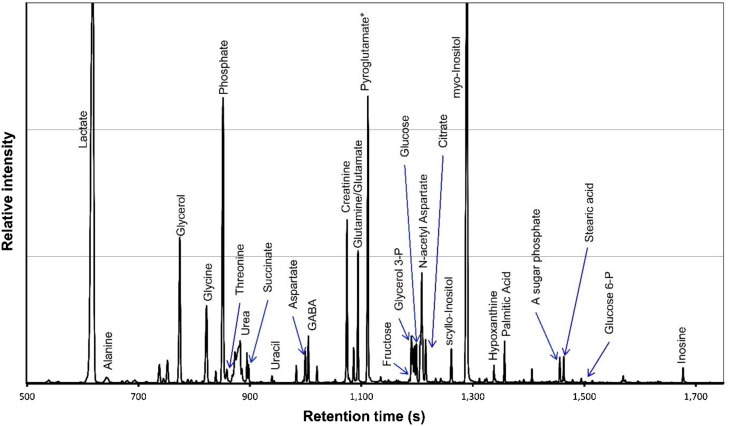
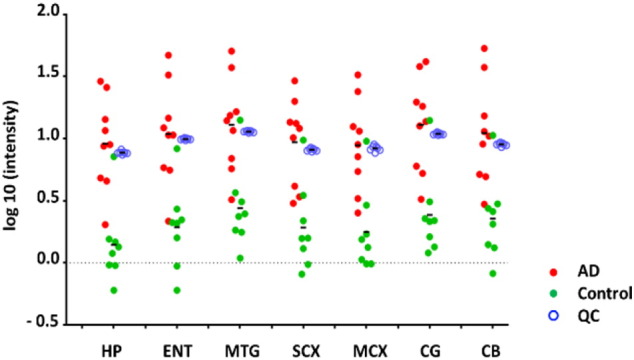
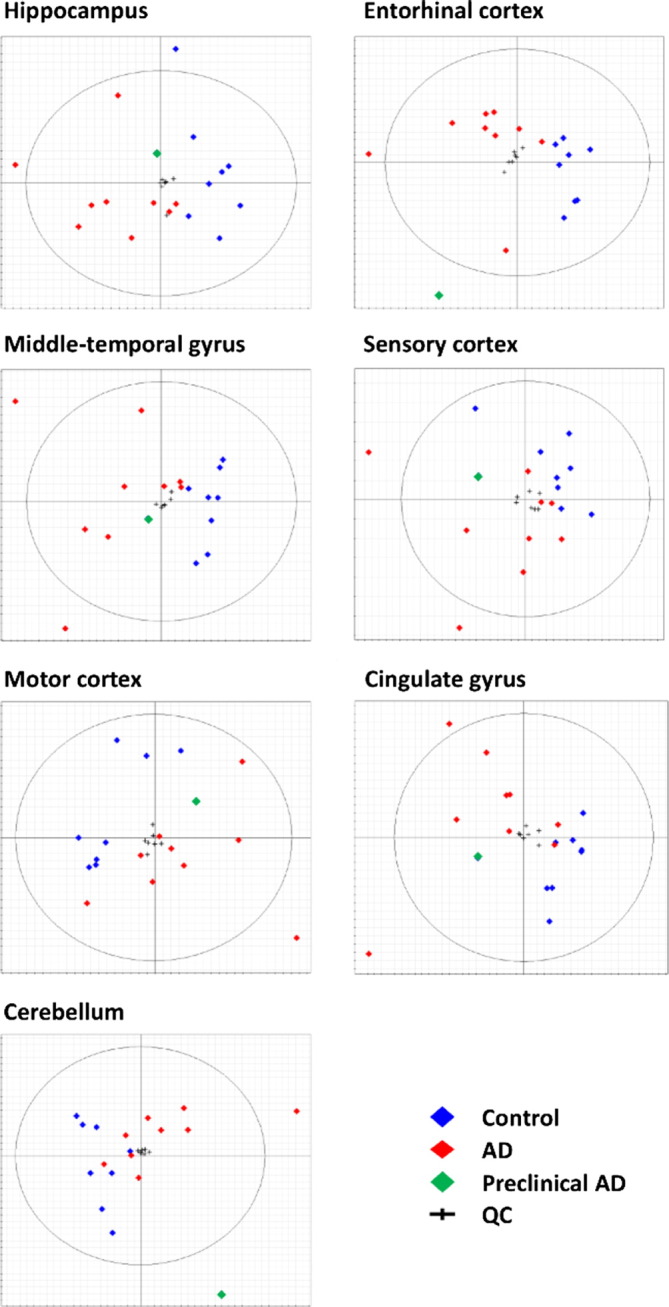
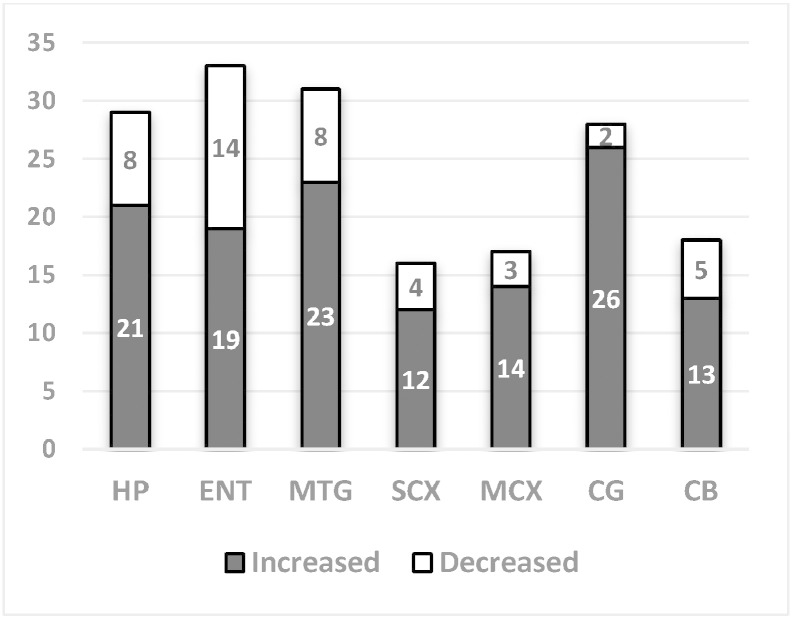
Alzheimer's disease (AD) is an age-related neurodegenerative disorder that displays pathological characteristics including senile plaques and neurofibrillary tangles. Metabolic defects are also present in AD-brain: for example, signs of deficient cerebral glucose uptake may occur decades before onset of cognitive dysfunction and tissue damage. There have been few systematic studies of the metabolite content of AD human brain, possibly due to scarcity of high-quality brain tissue and/or lack of reliable experimental methodologies. Here we sought to: 1) elucidate the molecular basis of metabolic defects in human AD-brain; and 2) identify endogenous metabolites that might guide new approaches for therapeutic intervention, diagnosis or monitoring of AD. Brains were obtained from nine cases with confirmed clinical/neuropathological AD and nine controls matched for age, sex and post-mortem delay. Metabolite levels were measured in post-mortem tissue from seven regions: three that undergo severe neuronal damage (hippocampus, entorhinal cortex and middle-temporal gyrus); three less severely affected (cingulate gyrus, sensory cortex and motor cortex); and one (cerebellum) that is relatively spared. We report a total of 55 metabolites that were altered in at least one AD-brain region, with different regions showing alterations in between 16 and 33 metabolites. Overall, we detected prominent global alterations in metabolites from several pathways involved in glucose clearance/utilization, the urea cycle, and amino-acid metabolism. The finding that potentially toxigenic molecular perturbations are widespread throughout all brain regions including the cerebellum is consistent with a global brain disease process rather than a localized effect of AD on regional brain metabolism.
阿尔茨海默病(AD)是一种与年龄相关的神经退行性疾病,具有包括老年斑和神经原纤维缠结在内的病理特征。AD大脑中也存在代谢缺陷:例如,大脑葡萄糖摄取不足的迹象可能在认知功能障碍和组织损伤出现前数十年就已出现。关于AD人脑代谢物含量的系统研究很少,这可能是由于高质量脑组织稀缺和/或缺乏可靠的实验方法。在此,我们旨在:1)阐明人类AD大脑中代谢缺陷的分子基础;2)鉴定可能为AD的治疗干预、诊断或监测指引新方法的内源性代谢物。我们获取了9例经临床/神经病理学确诊的AD患者的大脑以及9例年龄、性别和死后延迟时间相匹配的对照者的大脑。在七个脑区的死后组织中测量了代谢物水平:三个遭受严重神经元损伤的区域(海马体、内嗅皮质和颞中回);三个受影响较轻的区域(扣带回、感觉皮质和运动皮质);以及一个相对未受影响的区域(小脑)。我们报告了至少在一个AD脑区发生改变的总共55种代谢物,不同脑区显示有16至33种代谢物发生改变。总体而言,我们在参与葡萄糖清除/利用、尿素循环和氨基酸代谢的多个途径的代谢物中检测到了显著的整体变化。潜在产毒分子扰动在包括小脑在内的所有脑区广泛存在这一发现,与一种全身性脑部疾病过程一致,而非AD对区域脑代谢的局部影响。