Akutagawa J, Huang T Q, Epstein I, Chang T, Quirindongo-Crespo M, Cottonham C L, Dail M, Slusher B S, Friedman L S, Sampath D, Braun B S
UCSF Benioff Children's Hospital, Department of Pediatrics, University of California, San Francisco, and the Helen Diller Family Comprehensive Cancer Center, San Francisco, CA, USA.
Johns Hopkins Drug Discovery Program and Departments of Neurology, Psychiatry, and Neuroscience, Johns Hopkins School of Medicine, Baltimore, MD, USA.
Leukemia. 2016 Jun;30(6):1335-43. doi: 10.1038/leu.2016.14. Epub 2016 Feb 12.
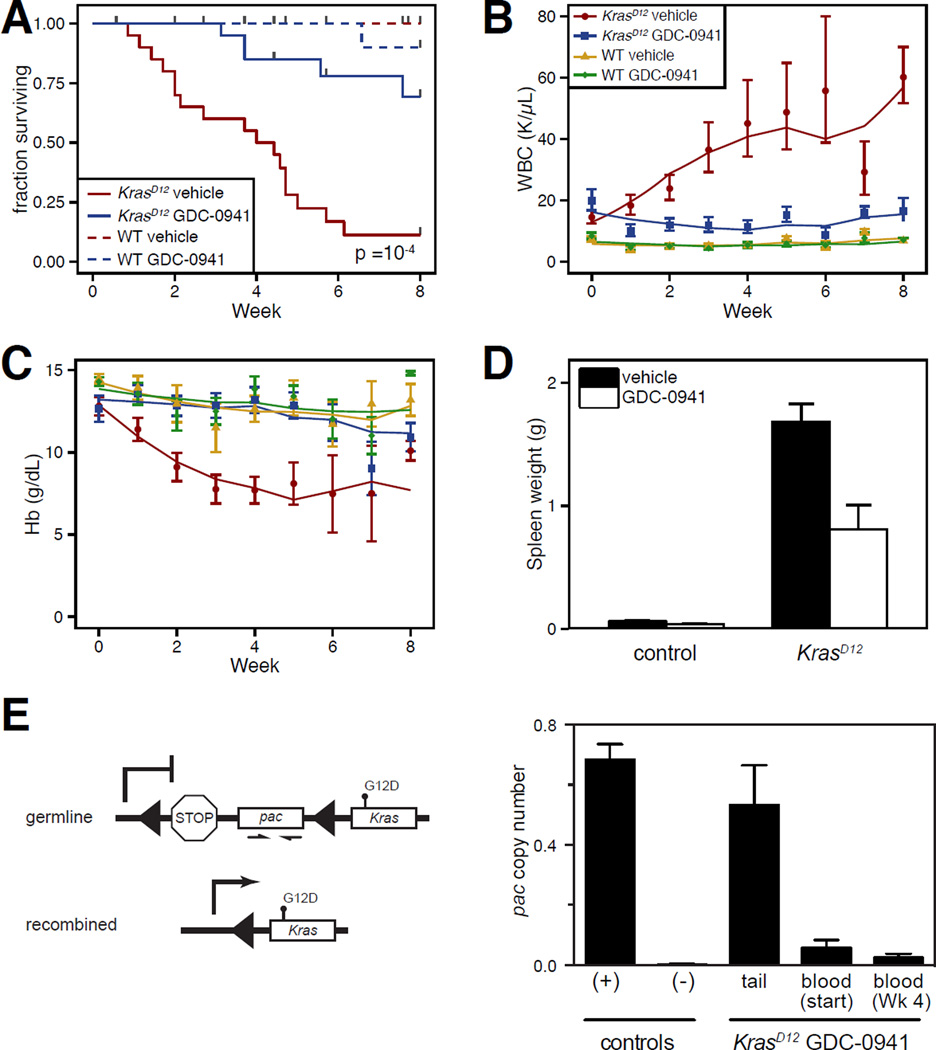
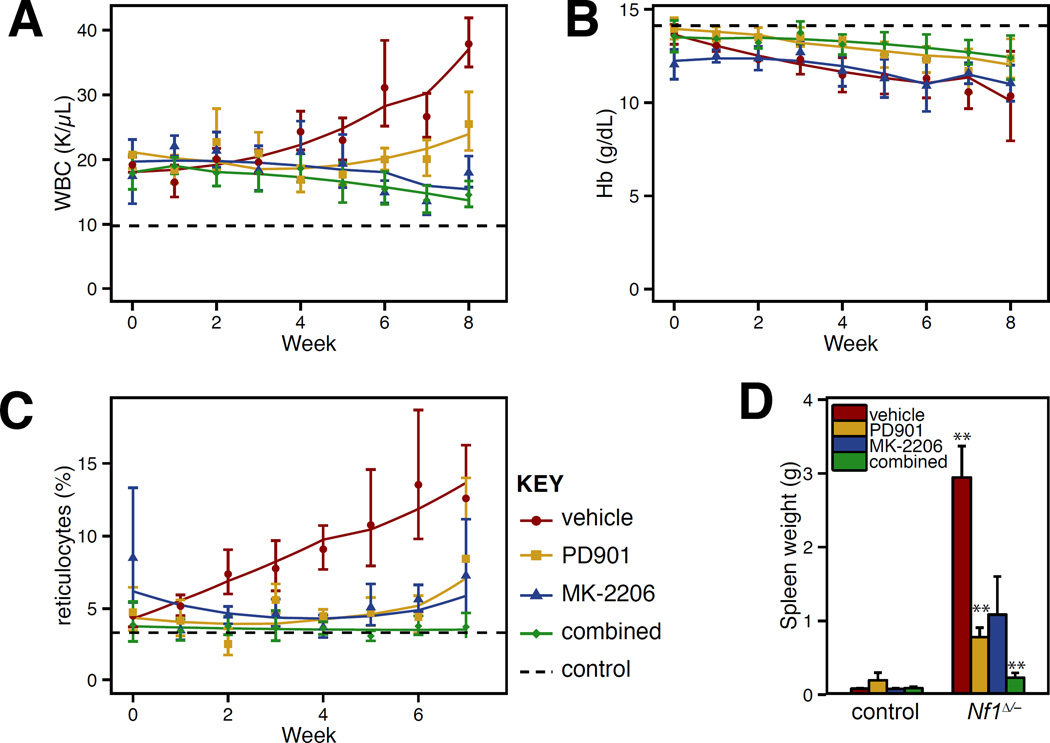
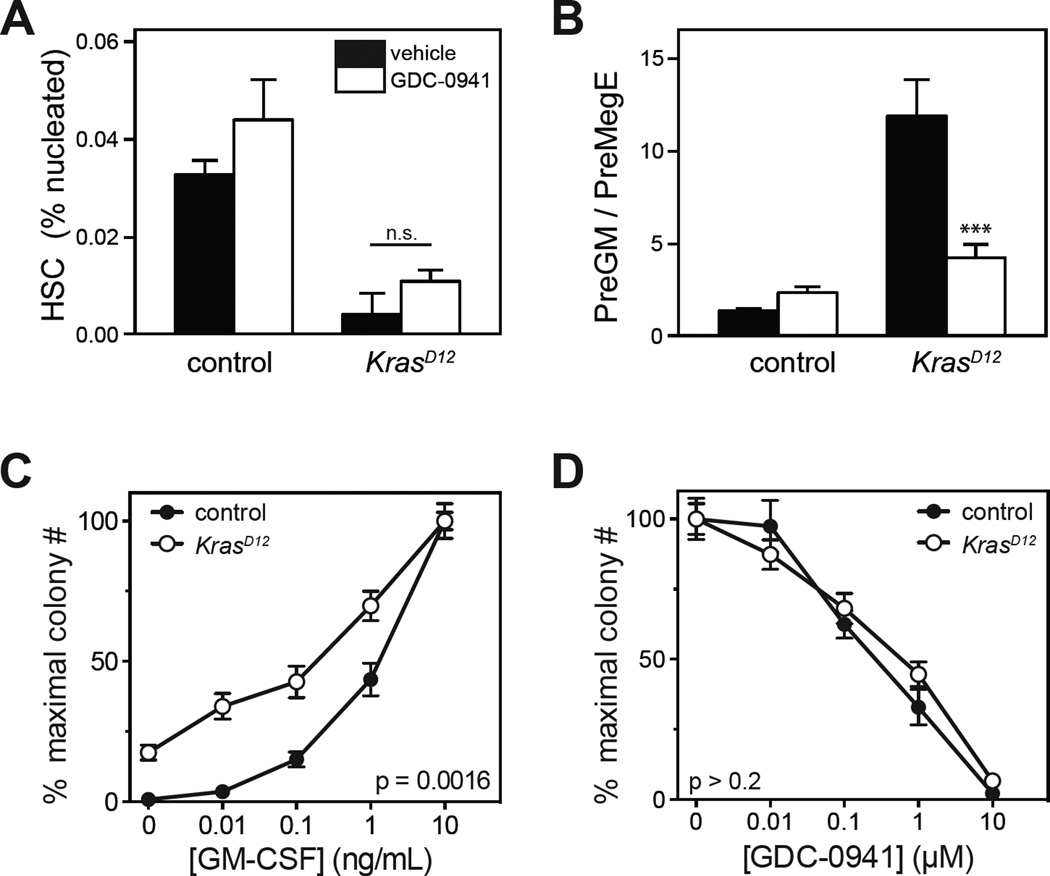
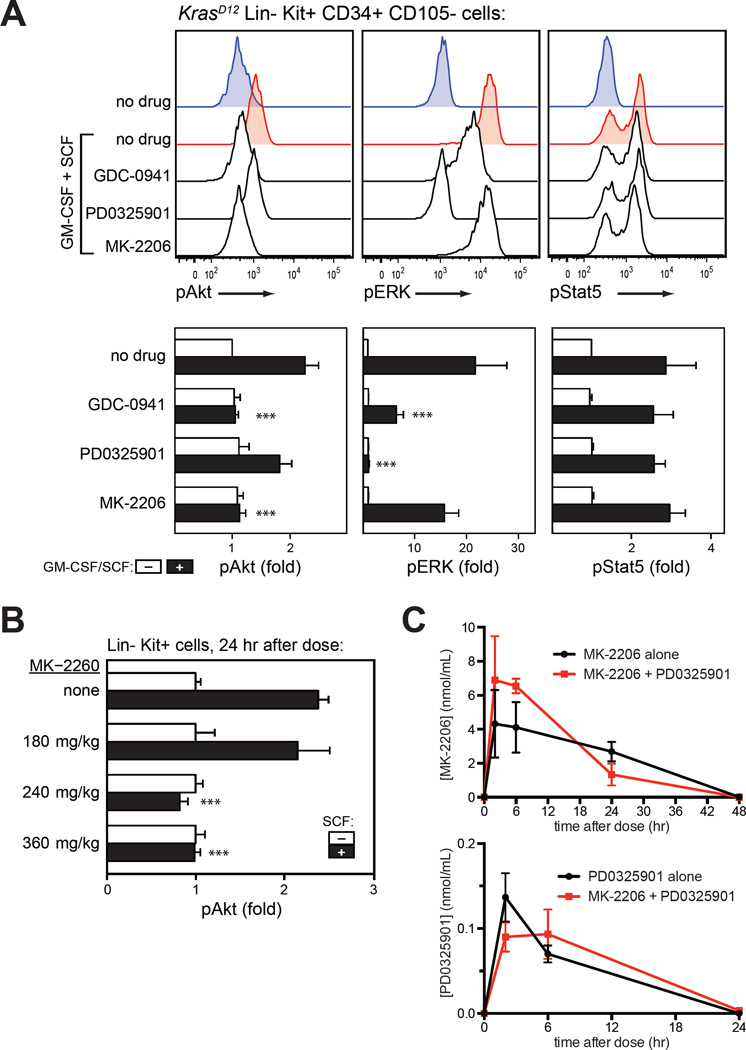
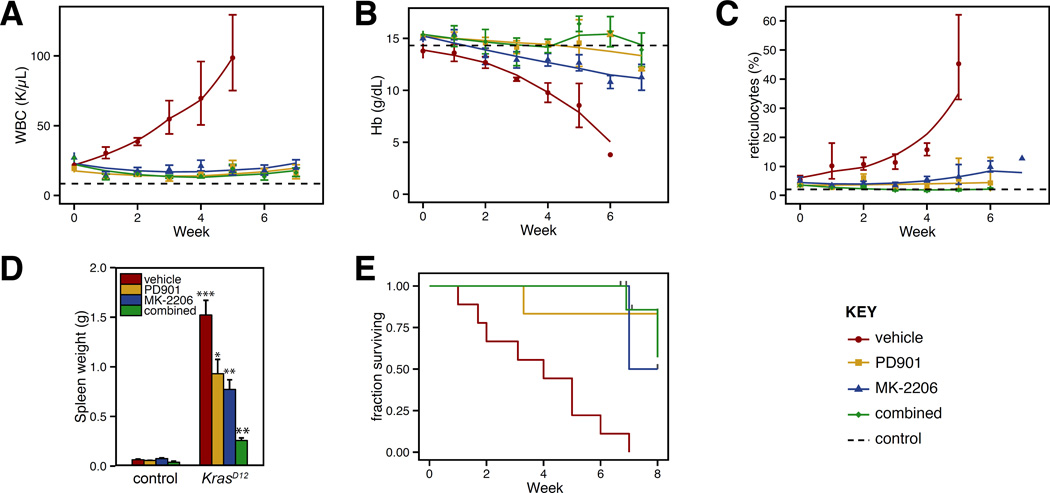
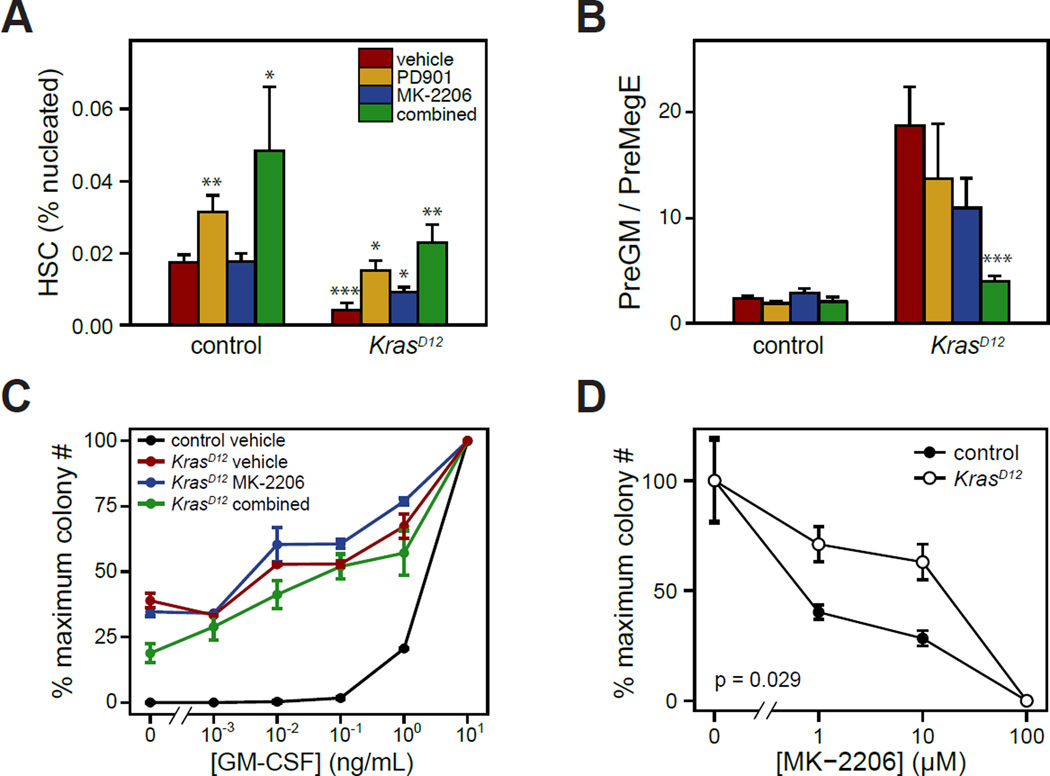
Chronic and juvenile myelomonocytic leukemias (CMML and JMML) are myelodysplastic/myeloproliferative neoplasia (MDS/MPN) overlap syndromes that respond poorly to conventional treatments. Aberrant Ras activation because of NRAS, KRAS, PTPN11, CBL and NF1 mutations is common in CMML and JMML. However, no mechanism-based treatments currently exist for cancers with any of these mutations. An alternative therapeutic strategy involves targeting Ras-regulated effector pathways that are aberrantly activated in CMML and JMML, which include the Raf/MEK/ERK and phosphoinositide-3'-OH kinase (PI3K)/Akt cascades. Mx1-Cre, Kras(D12) and Mx1-Cre, Nf1(flox/)(-) mice accurately model many aspects of CMML and JMML. Treating Mx1-Cre, Kras(D12) mice with GDC-0941 (also referred to as pictilisib), an orally bioavailable inhibitor of class I PI3K isoforms, reduced leukocytosis, anemia and splenomegaly while extending survival. However, GDC-0941 treatment attenuated activation of both PI3K/Akt and Raf/MEK/ERK pathways in primary hematopoietic cells, suggesting it could be acting through suppression of Raf/MEK/ERK signals. To interrogate the importance of the PI3K/Akt pathway specifically, we treated mice with the allosteric Akt inhibitor MK-2206. This compound had no effect on Raf/MEK/ERK signaling, yet it also induced robust hematologic responses in Kras and Nf1 mice with MPN. These data support investigating PI3K/Akt pathway inhibitors as a therapeutic strategy in JMML and CMML patients.
慢性粒单核细胞白血病和青少年粒单核细胞白血病(CMML和JMML)是骨髓增生异常/骨髓增殖性肿瘤(MDS/MPN)重叠综合征,对传统治疗反应不佳。由于NRAS、KRAS、PTPN11、CBL和NF1突变导致的Ras异常激活在CMML和JMML中很常见。然而,目前尚无针对具有这些突变的癌症的基于机制的治疗方法。另一种治疗策略是靶向在CMML和JMML中异常激活的Ras调节效应通路,其中包括Raf/MEK/ERK和磷酸肌醇-3'-OH激酶(PI3K)/Akt级联反应。Mx1-Cre、Kras(D12)和Mx1-Cre、Nf1(flox/)(-)小鼠准确模拟了CMML和JMML的许多方面。用GDC-0941(也称为pictilisib)治疗Mx1-Cre、Kras(D12)小鼠,GDC-0941是一种口服生物可利用的I类PI3K亚型抑制剂,可减少白细胞增多、贫血和脾肿大,同时延长生存期。然而,GDC-0941治疗减弱了原代造血细胞中PI3K/Akt和Raf/MEK/ERK通路的激活,表明它可能通过抑制Raf/MEK/ERK信号起作用。为了具体探究PI3K/Akt通路的重要性,我们用变构Akt抑制剂MK-2206治疗小鼠。该化合物对Raf/MEK/ERK信号没有影响,但它也在患有MPN的Kras和Nf1小鼠中诱导了强烈的血液学反应。这些数据支持将PI3K/Akt通路抑制剂作为JMML和CMML患者的一种治疗策略进行研究。