Weel Hanneke, Tromp Wouter, Krekel Peter R, Randelli Pietro, van den Bekerom Michel P J, van Deurzen Derek F P
Department of Orthopaedics, Academic Medical Center, Meibergdreef 9, 1105 AZ, Amsterdam, The Netherlands.
BovenIJ Hospital, Amsterdam, The Netherlands.
Arch Orthop Trauma Surg. 2016 Jun;136(6):741-6. doi: 10.1007/s00402-016-2443-7. Epub 2016 Mar 14.
Recurrent anterior shoulder instability after surgical treatment can be caused by bony defects. Several diagnostic tools have been designed to measure the extent of these bony lesions. Currently, there is no consensus which measurement tool to use and decide which type of surgery is most appropriate. We therefore performed an evaluation of agreement in surgeons' preference of diagnostic work-up and surgical treatment of anterior shoulder instability.
An international survey was conducted amongst orthopaedic shoulder surgeons. The survey contained questions about surgeons' experience, clinical and radiological examination and the subsequent treatment for anterior shoulder instability. Descriptive statistics were used to present the data, and percentages of responding surgeons were calculated.
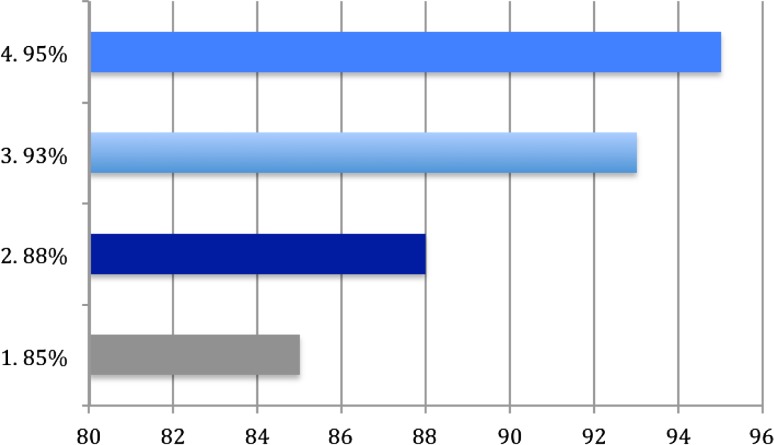
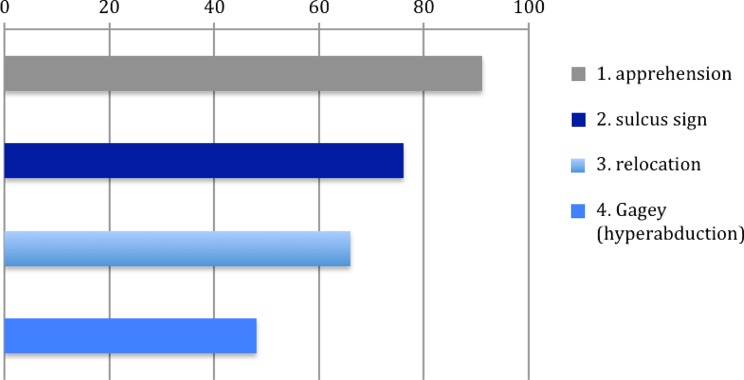
The questionnaire was completed by 197 delegates from 46 countries. 55 % of the respondents think evidence in current literature is sufficient on diagnostic work-up for anterior shoulder instability. Anamnestic, number of dislocations was most frequently asked (by 95 % of respondents), the most frequently used test is the apprehension test (91 %). For imaging, conventional X-ray in various directions was most performed, followed by MR arthrography and plane CT scan respectively. The responding surgeons perform surgery (labrum repair or Latarjet) in 51 % of the patients. A median of 25 % glenoid bone loss was given by the respondents, as cut-off from when to perform a bony repair.
Many different diagnostic examinations for assessing shoulder instability are used and a high variety is seen in the use of diagnostic tools. Also no consensus is seen in the use of different surgical options (arthroscopic and open procedures). This implies the need for more research on diagnostic imaging and the correlation with specific subsequent surgical treatment.
Survey, level of evidence IV.
手术治疗后复发性肩关节前脱位可能由骨缺损引起。已经设计了几种诊断工具来测量这些骨损伤的程度。目前,对于使用哪种测量工具以及决定哪种手术类型最合适尚无共识。因此,我们对外科医生在肩关节前脱位诊断检查和手术治疗方面的偏好一致性进行了评估。
对国际上的肩关节外科医生进行了一项调查。该调查包含有关外科医生的经验、临床和放射学检查以及随后对肩关节前脱位的治疗等问题。使用描述性统计来呈现数据,并计算做出回应的外科医生的百分比。
来自46个国家的197名代表完成了问卷。55%的受访者认为当前文献中关于肩关节前脱位诊断检查的证据是充分的。在问诊方面,脱位次数是最常被询问的(95%的受访者),最常用的检查是恐惧试验(91%)。对于影像学检查,最常进行的是各个方向的传统X线检查,其次分别是磁共振关节造影和平面CT扫描。做出回应的外科医生对51%的患者进行了手术(盂唇修复或Latarjet手术)。受访者给出的作为何时进行骨修复的截止标准的盂骨缺损中位数为25%。
在评估肩关节脱位时使用了许多不同的诊断检查方法,诊断工具的使用也多种多样。在不同手术方式(关节镜手术和开放手术)的使用上也没有达成共识。这意味着需要对诊断影像学及其与特定后续手术治疗的相关性进行更多研究。
调查,证据水平IV。