Pharmaceutical and Healthcare Research Laboratories Fujifilm Corporation Ashigarakami-gun Kanagawa Japan.
Pharmaceutical Products Division Fujifilm Corporation Minato-ku Tokyo Japan.
Pharmacol Res Perspect. 2016 Jan 28;4(1):e00206. doi: 10.1002/prp2.206. eCollection 2016 Feb.
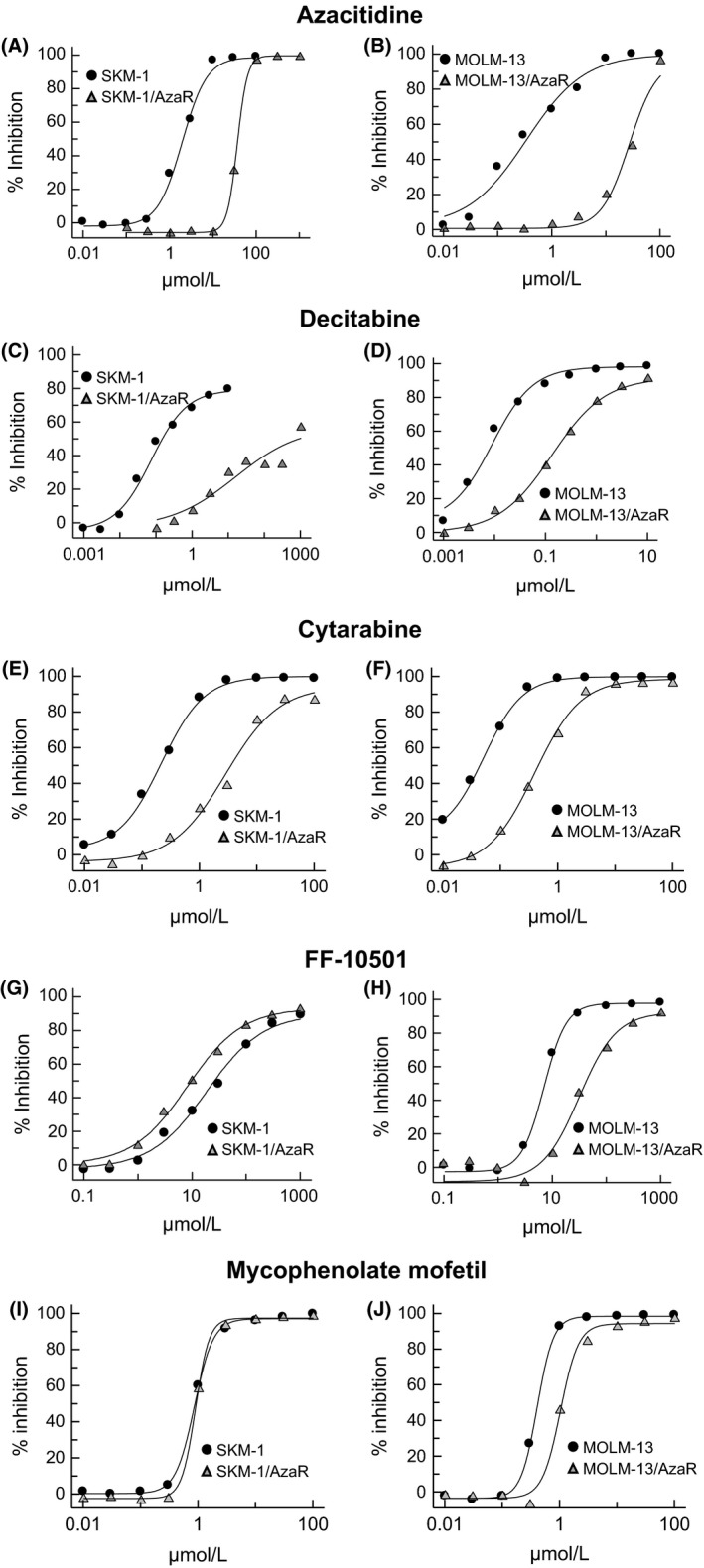
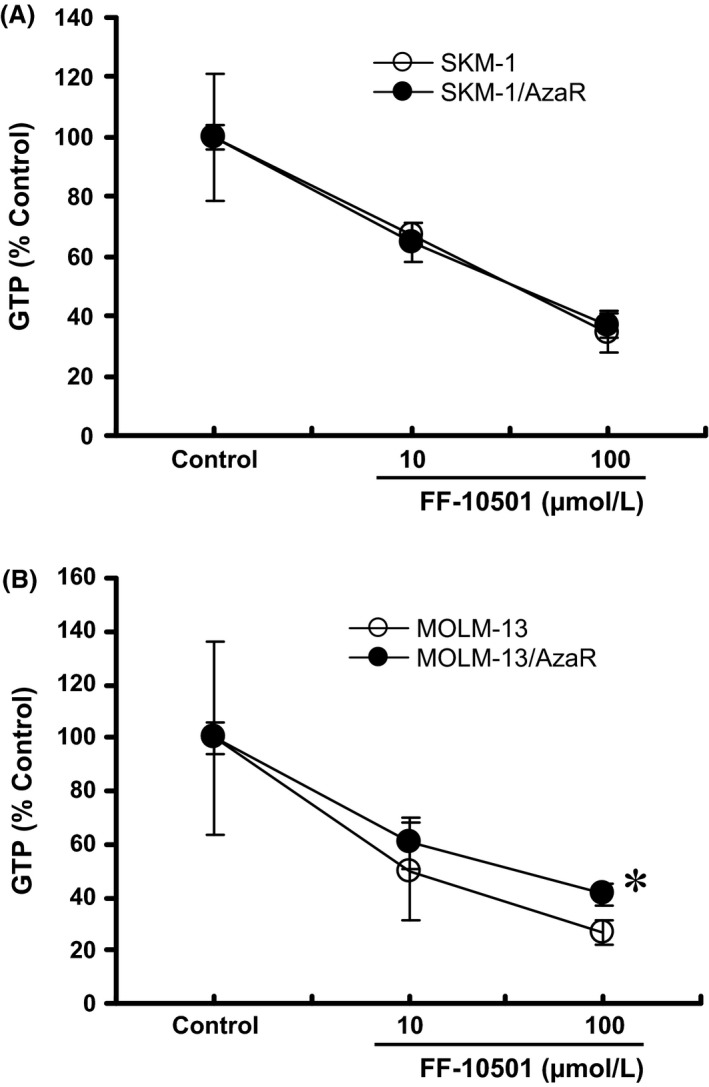
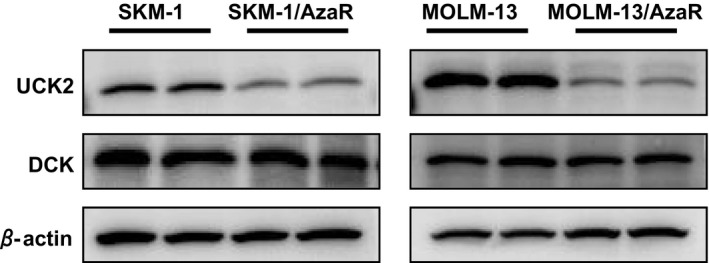
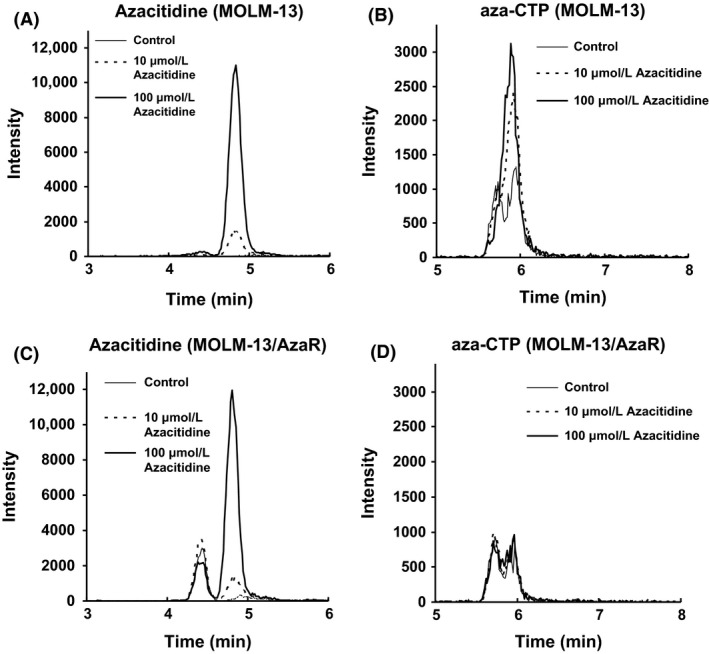
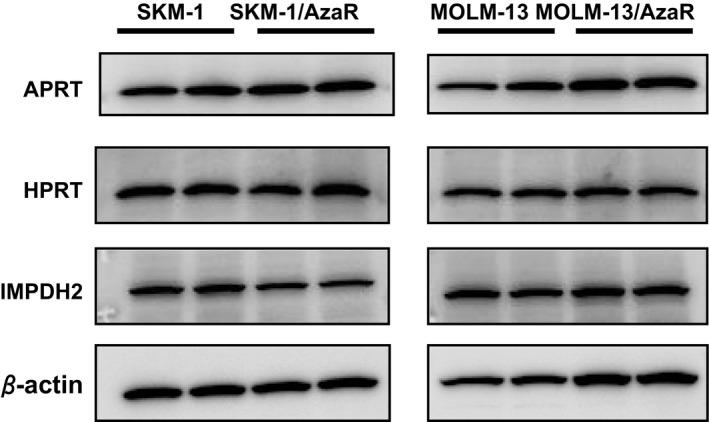
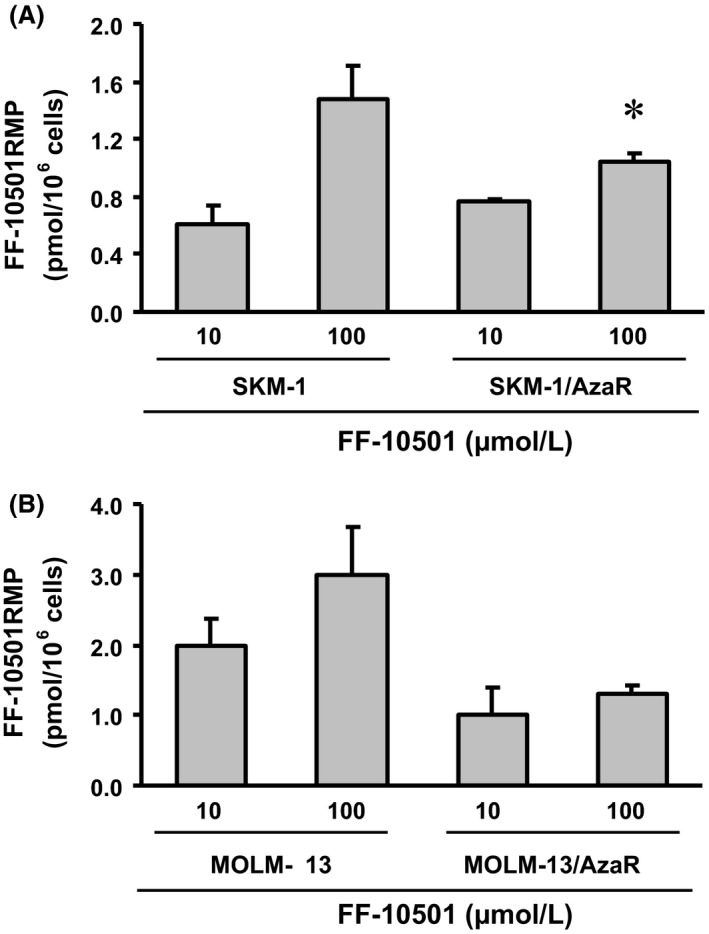
Resistance to azacitidine is a major issue in the treatments of myelodysplastic syndrome and acute myeloid leukemia, and previous studies suggest that changes in drug metabolism are involved in the resistance. Therefore, drugs with mechanisms resistant or alternative to such metabolic changes have been desired for the treatment of resistant disease. We generated azacitidine-resistant cells derived from SKM-1 and MOLM-13 leukemia cell lines in vitro, analyzed the mechanisms, and examined the impact on the efficacy of other antimetabolic drugs. It appeared that the cell growth-inhibitory effect of azacitidine, expression levels of uridine-cytidine kinase 2, and the concentrations of azacitidine triphosphate were remarkably decreased in the resistant cells compared with those in parent cells. These results were consistent with previous observations that azacitidine resistance is derived from metabolic changes. Cross-resistance of greater than 10-fold (shift in IC50 value) was observed in azacitidine-resistant cells for decitabine and for cytarabine, but not for gemcitabine or the inosine-5'-monophosphate dehydrogenase (IMPDH) inhibitors FF-10501 and mycophenolate mofetil (cross-resistance to 5-fluorouracil was cell line dependent). The IMPDH inhibitors maintained their cell growth-inhibitory activities in the azacitidine-resistant cell lines, in which the levels of adenine phosphoribosyltransferase (which converts FF-10501 to its active form, FF-10501 ribosylmonophosphate [FF-10501RMP]), FF-10501RMP, and the target enzyme, IMPDH, were equivalent to those in the parent cell lines. These results suggest that an IMPDH inhibitor such as FF-10501 could be an alternative therapeutic treatment for leukemia patients with acquired resistance to azacitidine.
阿扎胞苷耐药是骨髓增生异常综合征和急性髓系白血病治疗中的一个主要问题,先前的研究表明,药物代谢的变化与耐药性有关。因此,人们一直希望有一种具有耐药或替代这种代谢变化机制的药物来治疗耐药疾病。我们在体外生成了源自 SKM-1 和 MOLM-13 白血病细胞系的阿扎胞苷耐药细胞,分析了这些机制,并研究了它们对其他代谢抑制剂疗效的影响。与亲本细胞相比,耐药细胞中阿扎胞苷的细胞生长抑制作用、尿嘧啶胞苷激酶 2 的表达水平和阿扎胞苷三磷酸的浓度明显降低。这些结果与先前的观察结果一致,即阿扎胞苷耐药是由代谢变化引起的。在阿扎胞苷耐药细胞中,地西他滨和阿糖胞苷的交叉耐药性大于 10 倍(IC50 值转移),但对吉西他滨或肌苷 5'-单磷酸脱氢酶(IMPDH)抑制剂 FF-10501 和霉酚酸酯(与 5-氟尿嘧啶的交叉耐药性与细胞系有关)则没有交叉耐药性。在阿扎胞苷耐药细胞系中,IMPDH 抑制剂保持其细胞生长抑制活性,其中腺嘌呤磷酸核糖转移酶(将 FF-10501 转化为其活性形式,FF-10501 核糖单磷酸[FF-10501RMP])、FF-10501RMP 和靶酶 IMPDH 的水平与亲本细胞系相当。这些结果表明,一种 IMPDH 抑制剂,如 FF-10501,可能是治疗获得性阿扎胞苷耐药白血病患者的一种替代治疗方法。