
软骨糖蛋白CHI3L1和润滑素在骨关节炎软骨中的共表达与共定位:形态学、免疫组织化学及基因表达谱
Co-Expression and Co-Localization of Cartilage Glycoproteins CHI3L1 and Lubricin in Osteoarthritic Cartilage: Morphological, Immunohistochemical and Gene Expression Profiles.
作者信息
Szychlinska Marta Anna, Trovato Francesca Maria, Di Rosa Michelino, Malaguarnera Lucia, Puzzo Lidia, Leonardi Rosy, Castrogiovanni Paola, Musumeci Giuseppe
机构信息
Department of Biomedical and Biotechnological Sciences, Human Anatomy and Histology Section, School of Medicine, University of Catania, Via S. Sofia 87, 95123 Catania, Italy.
Departments of Clinical and Experimental Medicine, Internal Medicine Division, School of Medicine, University of Catania, 95123 Catania, Italy.
出版信息
Int J Mol Sci. 2016 Mar 11;17(3):359. doi: 10.3390/ijms17030359.
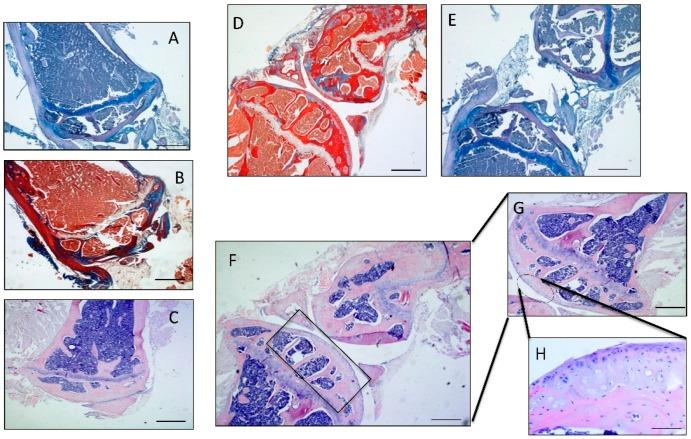
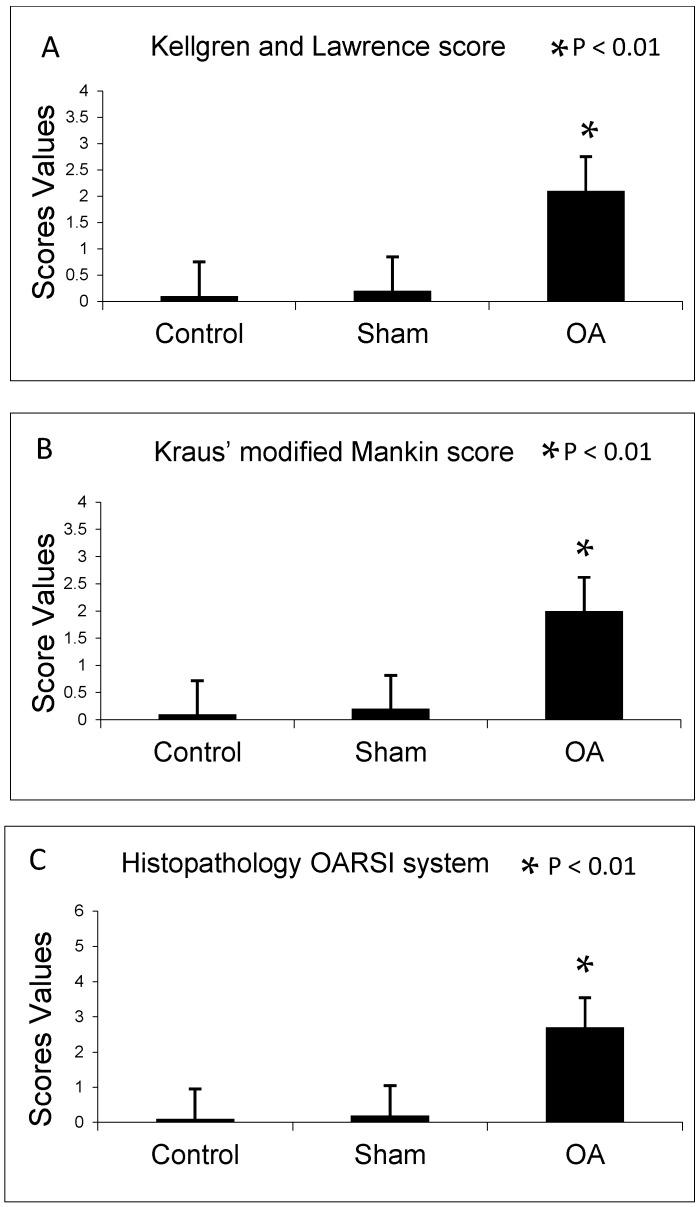
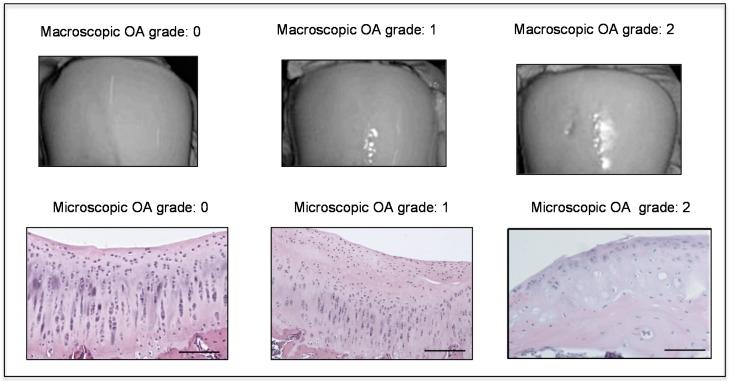
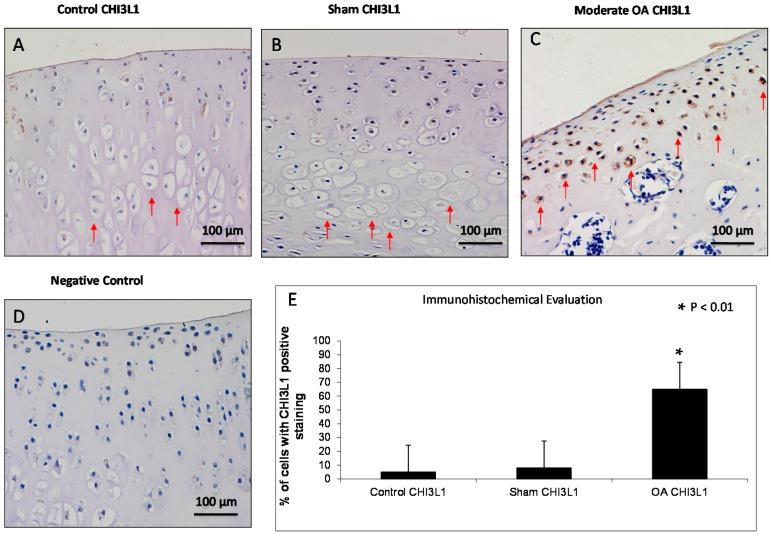
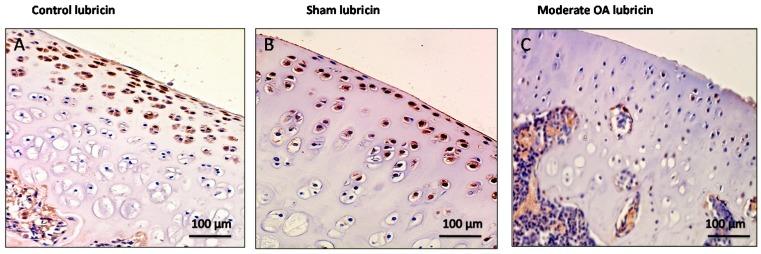
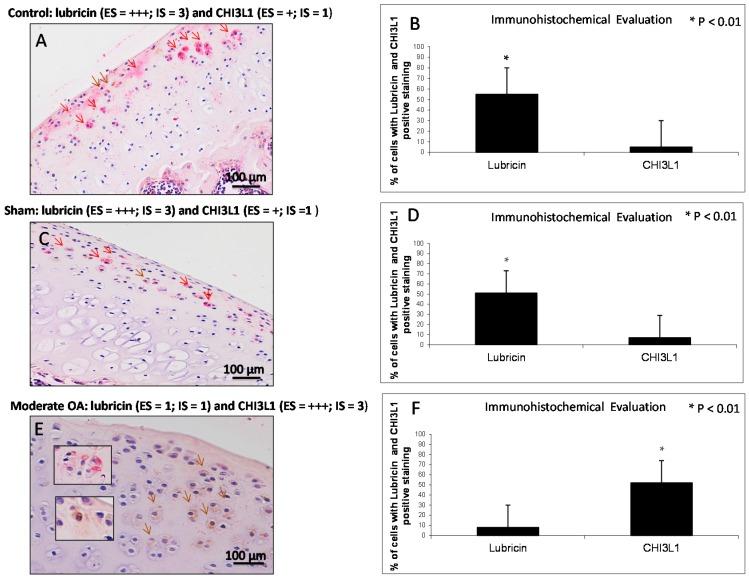
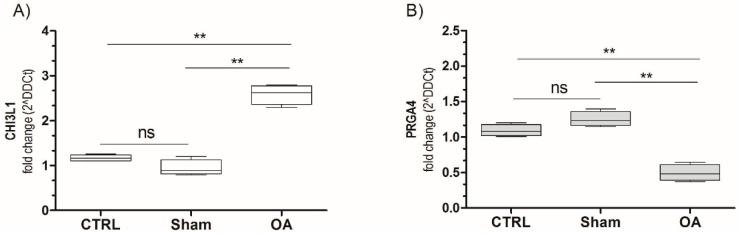
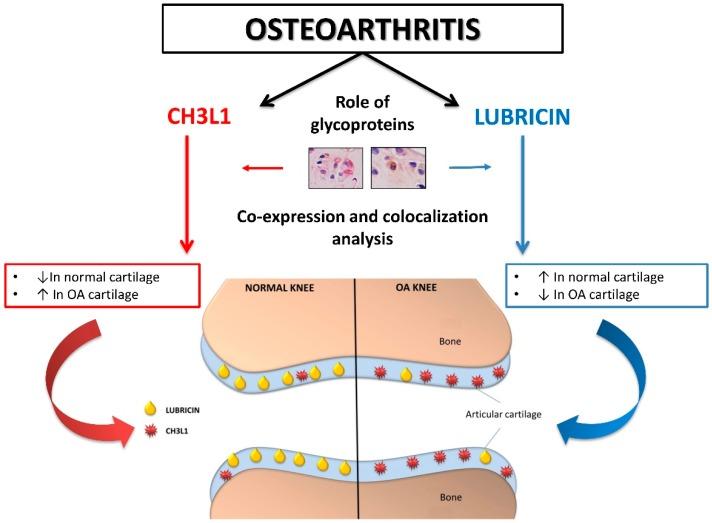
Osteoarthritis is the most common human arthritis characterized by degeneration of articular cartilage. Several studies reported that levels of human cartilage glycoprotein chitinase 3-like-1 (CHI3L1) are known as a potential marker for the activation of chondrocytes and the progression of Osteoarthritis (OA), whereas lubricin appears to be chondroprotective. The aim of this study was to investigate the co-expression and co-localization of CHI3L1 and lubricin in normal and osteoarthritic rat articular cartilage to correlate their modified expression to a specific grade of OA. Samples of normal and osteoarthritic rat articular cartilage were analyzed by the Kellgren-Lawrence OA severity scores, the Kraus' modified Mankin score and the Histopathology Osteoarthritis Research Society International (OARSI) system for histomorphometric evaluations, and through CHI3L1 and lubricin gene expression, immunohistochemistry and double immuno-staining analysis. The immunoexpression and the mRNA levels of lubricin increased in normal cartilage and decreased in OA cartilage (normal vs. OA, p < 0.01). By contrast, the immunoexpression and the mRNA levels of CHI3L1 increased in OA cartilage and decreased in normal cartilage (normal vs. OA, p < 0.01). Our findings are consistent with reports suggesting that these two glycoproteins are functionally associated with the development of OA and in particular with grade 2/3 of OA, suggesting that in the future they could be helpful to stage the severity and progression of the disease.
骨关节炎是最常见的人类关节炎,其特征是关节软骨退变。多项研究报告称,人软骨糖蛋白几丁质酶3样-1(CHI3L1)的水平是软骨细胞活化和骨关节炎(OA)进展的潜在标志物,而润滑素似乎具有软骨保护作用。本研究的目的是调查CHI3L1和润滑素在正常和骨关节炎大鼠关节软骨中的共表达和共定位情况,以将它们的表达改变与特定等级的OA相关联。通过Kellgren-Lawrence OA严重程度评分、Kraus改良的Mankin评分以及组织病理学国际骨关节炎研究学会(OARSI)系统对正常和骨关节炎大鼠关节软骨样本进行组织形态计量学评估,并通过CHI3L1和润滑素基因表达、免疫组织化学和双重免疫染色分析。润滑素的免疫表达和mRNA水平在正常软骨中升高,在OA软骨中降低(正常组与OA组,p < 0.01)。相比之下,CHI3L1的免疫表达和mRNA水平在OA软骨中升高,在正常软骨中降低(正常组与OA组,p < 0.01)。我们的研究结果与报告一致,表明这两种糖蛋白在功能上与OA的发展相关,特别是与OA的2/3级相关,这表明未来它们可能有助于对疾病的严重程度和进展进行分期。
 Zotero 插件