McGill Mitchell R, Kennon-McGill Stefanie, Durham Dianne, Jaeschke Hartmut
a Department of Pharmacology , Toxicology and Therapeutics and.
b Department of Otolaryngology - Head and Neck Surgery , University of Kansas Medical Center , Kansas City , KS , USA.
Toxicol Mech Methods. 2016 Feb;26(2):104-11. doi: 10.3109/15376516.2015.1122136. Epub 2016 Mar 16.
Although the liver is the primary target organ in acetaminophen (APAP) toxicity, other organs are affected. Previous data suggested that chronic APAP abuse can be ototoxic and the mechanism involves APAP-induced oxidative stress and reactive metabolite (N-acetyl-p-benzoquinone imine, NAPQI)-induced endoplasmic reticulum stress. However, the effect of a single acute overdose on hearing has not been tested.
To determine if a single acute APAP overdose causes hearing damage, and to explore possible mechanisms of APAP ototoxicity.
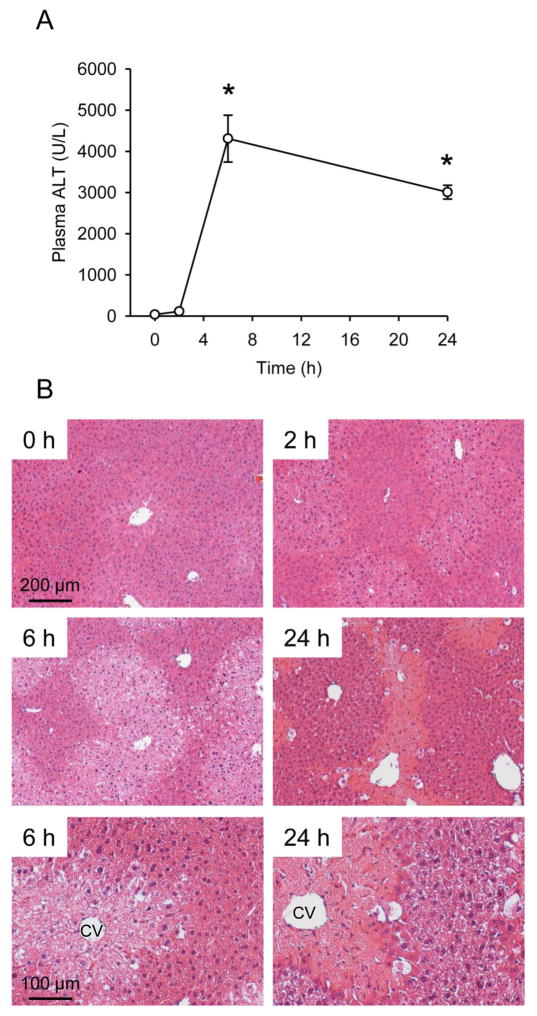
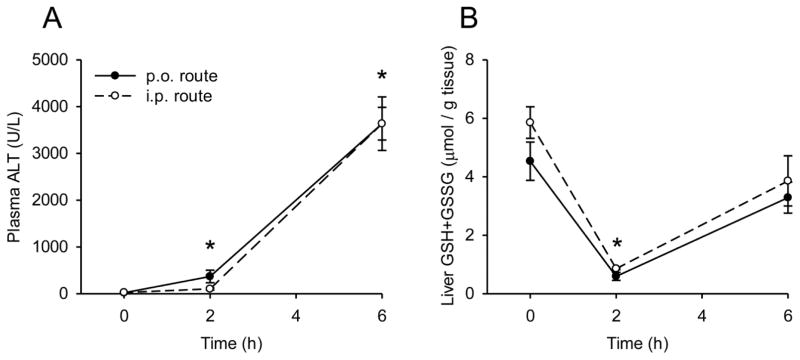
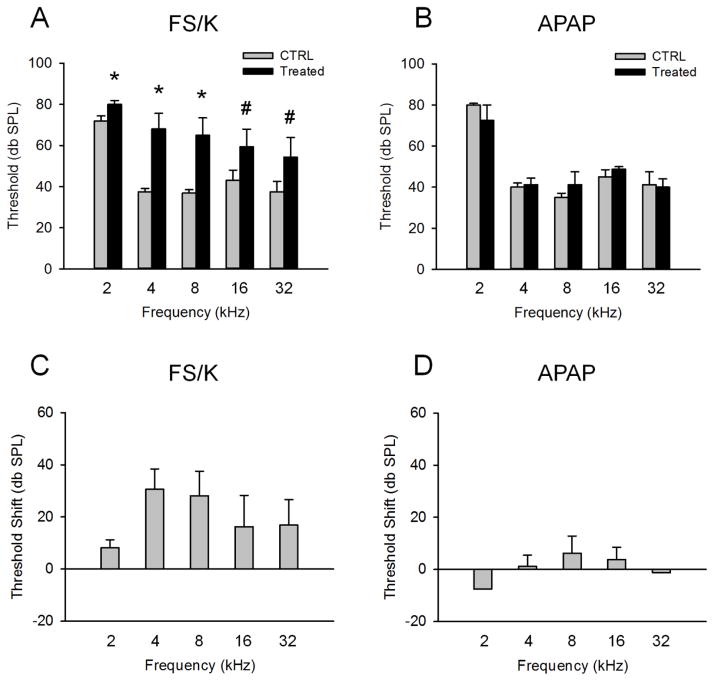
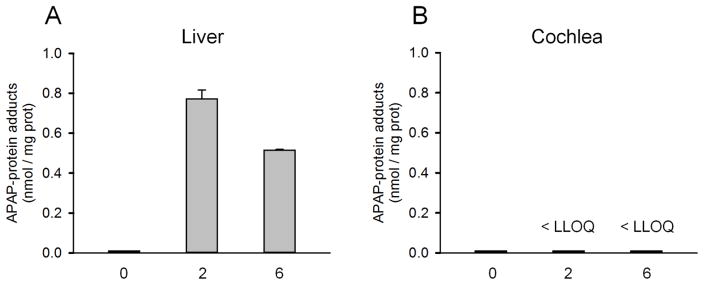
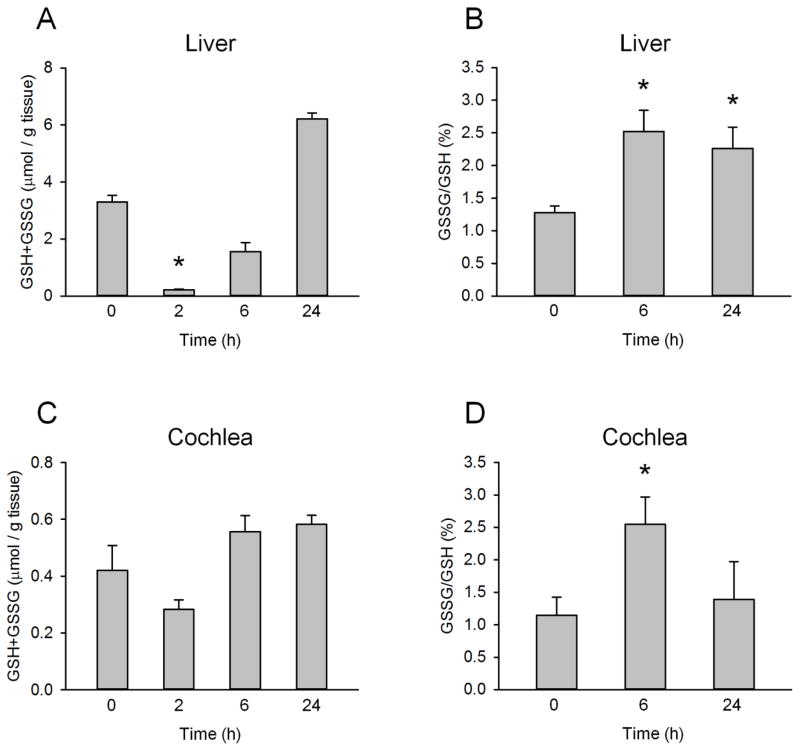
Male C57BL/6 J mice were treated with a single human-relevant overdose of APAP (300 mg APAP per kg bodyweight). Blood, liver and cochleae were harvested at 0, 2, 6 and 24 h post-APAP. In some mice, auditory brainstem responses (ABRs) to a range of frequencies were measured at 24 h. The furosemide plus kanamycin (FS/K) model of drug ototoxicity was used as a positive control for hearing loss. NAPQI formation after APAP was assessed by measuring glutathione depletion and covalent protein binding, and oxidative stress was assessed by measuring glutathione disulfide.
There was no evidence of reactive metabolite formation or hearing loss after a single overdose of APAP at a clinically relevant dose. However, there was a transient increase in oxidative stress.
Although a single acute overdose was not ototoxic, there was evidence of oxidative stress which may support a role for oxidative stress in hearing loss due to chronic APAP abuse.
A single human-relevant acute overdose of APAP causes transient oxidative stress in cochleae but not hearing loss.
尽管肝脏是对乙酰氨基酚(APAP)毒性作用的主要靶器官,但其他器官也会受到影响。先前的数据表明,长期滥用APAP可能具有耳毒性,其机制涉及APAP诱导的氧化应激以及反应性代谢产物(N-乙酰对苯醌亚胺,NAPQI)诱导的内质网应激。然而,单次急性过量服用APAP对听力的影响尚未得到测试。
确定单次急性过量服用APAP是否会导致听力损害,并探讨APAP耳毒性的可能机制。
对雄性C57BL/6 J小鼠给予单次与人类相关的过量APAP(每千克体重300 mg APAP)。在服用APAP后的0、2、6和24小时采集血液、肝脏和耳蜗。在一些小鼠中,于24小时测量对一系列频率的听觉脑干反应(ABR)。使用速尿加卡那霉素(FS/K)药物耳毒性模型作为听力损失的阳性对照。通过测量谷胱甘肽消耗和共价蛋白结合来评估APAP后NAPQI的形成,并通过测量谷胱甘肽二硫化物来评估氧化应激。
在临床相关剂量下单次过量服用APAP后,没有反应性代谢产物形成或听力损失的证据。然而,氧化应激有短暂增加。
尽管单次急性过量服用没有耳毒性,但有氧化应激的证据,这可能支持氧化应激在长期滥用APAP导致的听力损失中所起的作用。
单次与人类相关的急性过量服用APAP会导致耳蜗短暂的氧化应激,但不会导致听力损失。