Ananthula Suryatheja, Sinha Abhilasha, El Gassim Mohamed, Batth Simran, Marshall Gailen D, Gardner Lauren H, Shimizu Yoshiko, ElShamy Wael M
Cancer Institute, University of Mississippi Medical Center, Jackson, MS, USA.
Department of Medicine, University of Mississippi Medical Center, Jackson, MS, USA.
Oncotarget. 2016 Apr 12;7(15):20869-89. doi: 10.18632/oncotarget.8029.
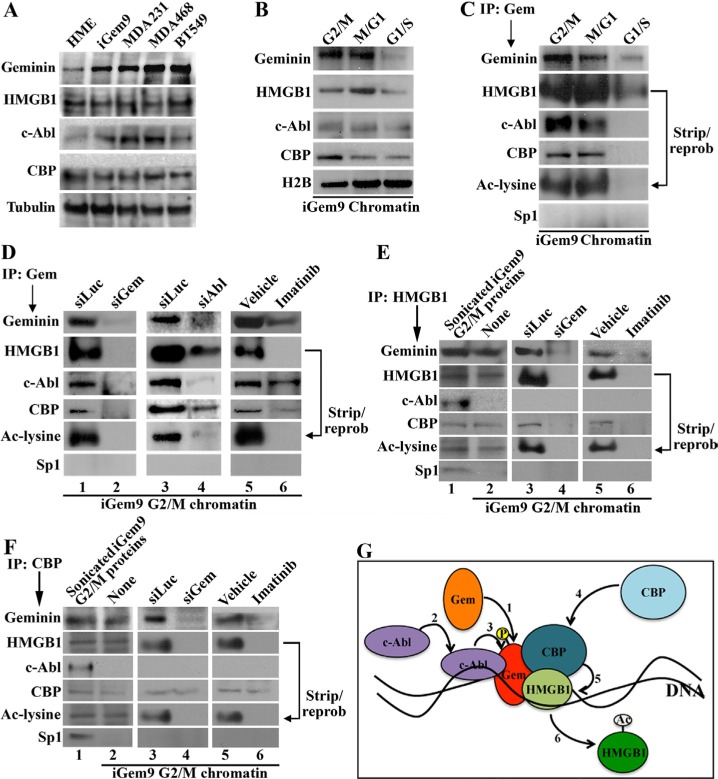
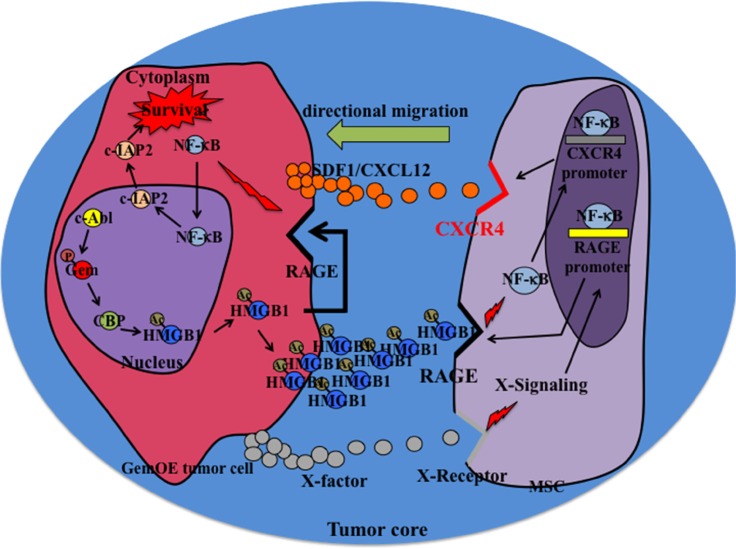
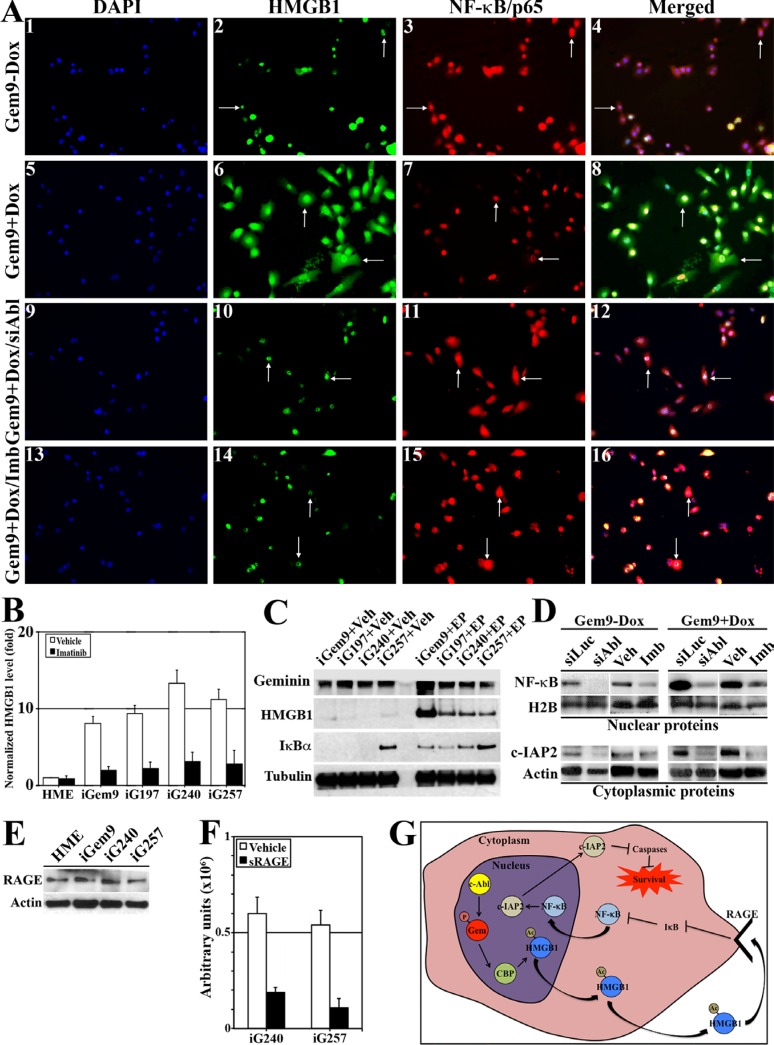
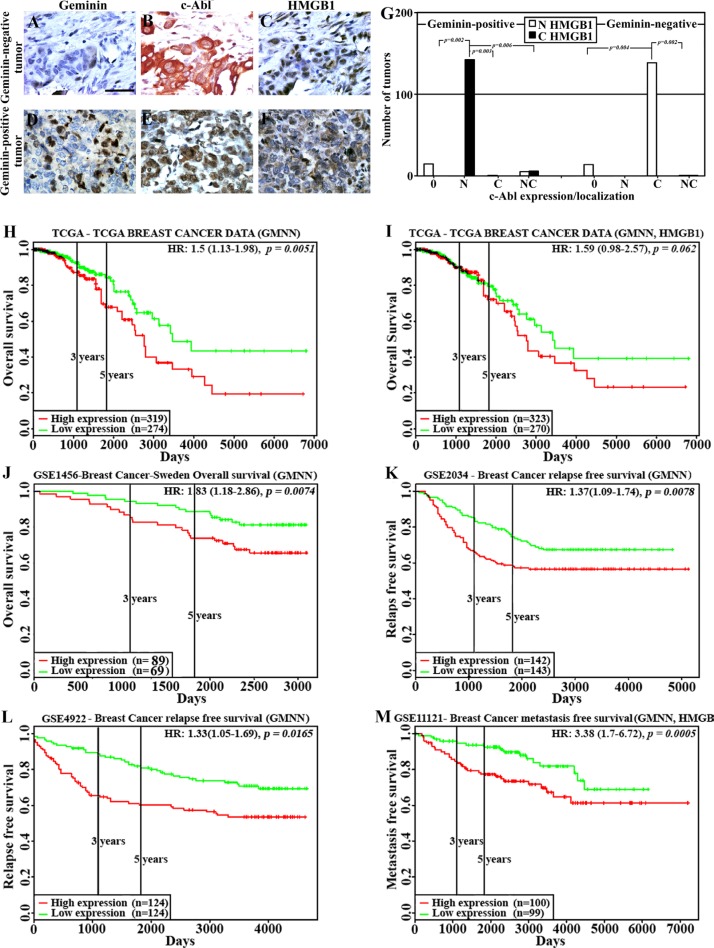
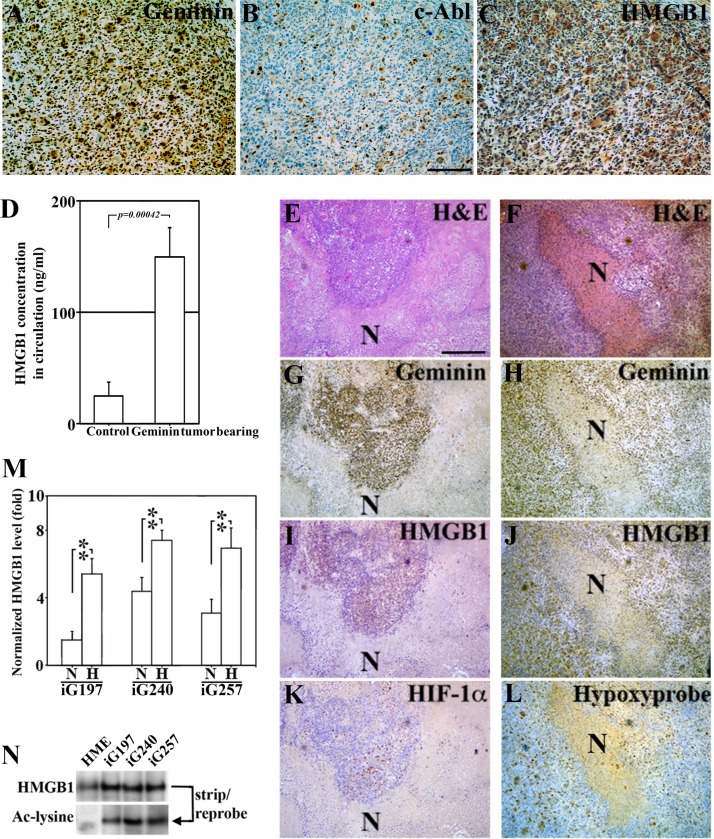
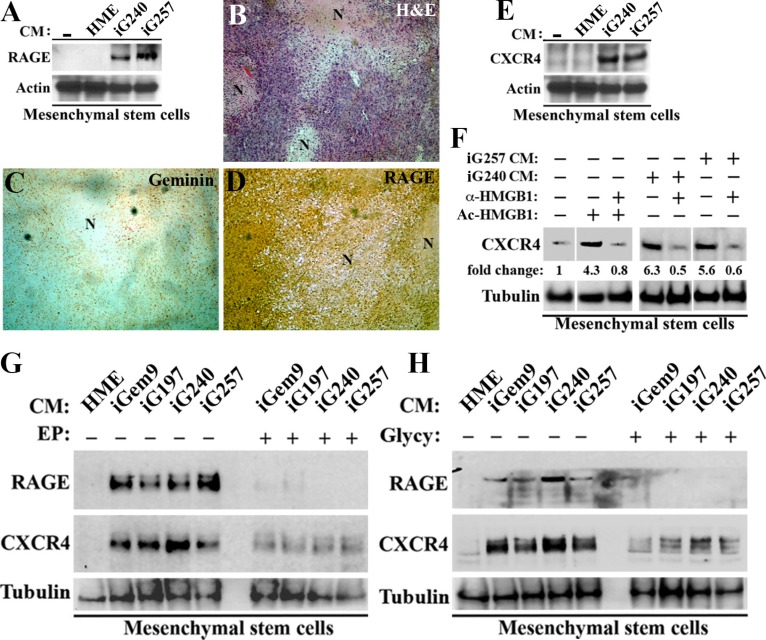
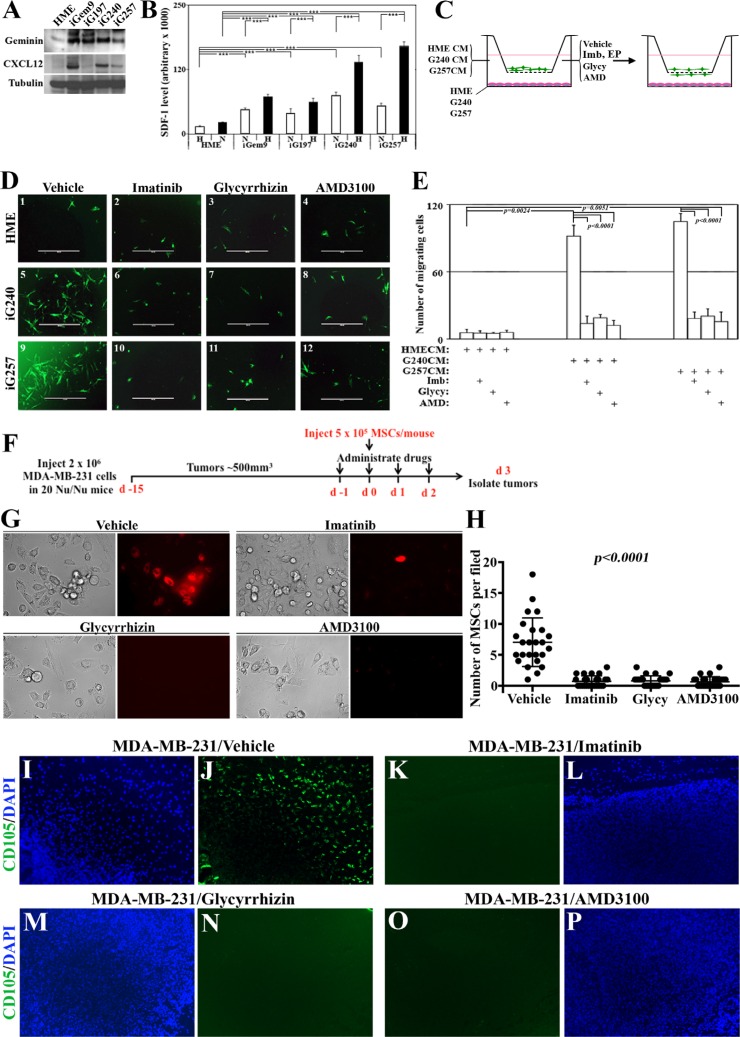
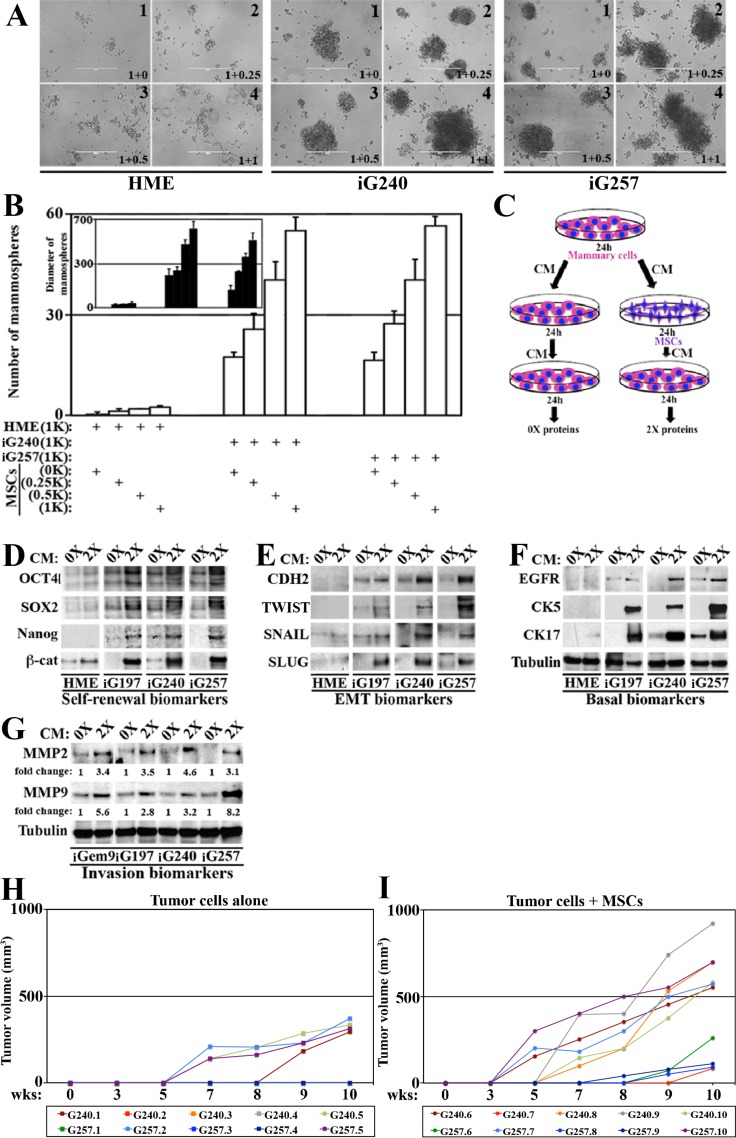
Resident mesenchymal stem cells (MSCs) promote cancer progression. However, pathways and mechanisms involved in recruiting MSCs into breast tumors remain largely undefined. Here we show that geminin-dependent acetylation releases HMGB1 from the chromatin to the cytoplasm and extracellular space. Extracellular acetylated HMGB1 (Ac-HMGB1) promotes geminin overexpressing (GemOE) cells survival by binding to RAGE and activating NF-κB signaling. Extracellular Ac-HMGB1 also triggers expression and activation of RAGE in the non-expressing MSCs. RAGE activation induces expression of CXCR4 in MSCs and directional migration towards SDF1 (aka CXCL12)-expressing GemOE cells in vitro and in vivo. These effects augmented by the necrotic and hypoxic environment in GemOE tumors, especially within their cores. Reciprocal interactions between newly recruited MSCs and GemOE tumor cells elevate tumor-initiating (TIC), basal and epithelial-to-mesenchymal transition (EMT) traits and enhance aggressiveness in vitro and in vivo in GemOE tumor cells. Indeed, faster, larger and more aggressive tumors develop when GemOE cells are co-injected with MSCs in orthotopic breast tumor model. Concurrently, inhibiting c-Abl (and thus geminin function), RAGE or CXCR4 prevented MSCs recruitment to GemOE cells in vitro and in vivo, and decreased the TIC, basal and EMT phenotypes in these tumor cells. Accordingly, we propose that GemOE tumor cells present within tumor cores represent metastatic precursors, and suppressing the GemOE→HMGB1/RAGE→SDF1/CXCR4 signaling circuit could be a valid target for therapies to inhibit GemOE tumors and their metastases.
驻留间充质干细胞(MSCs)促进癌症进展。然而,将MSCs募集到乳腺肿瘤中的途径和机制在很大程度上仍不明确。在这里,我们表明,geminin依赖性乙酰化作用将HMGB1从染色质释放到细胞质和细胞外空间。细胞外乙酰化HMGB1(Ac-HMGB1)通过与RAGE结合并激活NF-κB信号通路,促进过表达geminin(GemOE)的细胞存活。细胞外Ac-HMGB1还能触发未表达的MSCs中RAGE的表达和激活。RAGE激活诱导MSCs中CXCR4的表达,并在体外和体内向表达SDF1(又名CXCL12)的GemOE细胞定向迁移。GemOE肿瘤中的坏死和缺氧环境,尤其是肿瘤核心区域,会增强这些效应。新募集的MSCs与GemOE肿瘤细胞之间的相互作用增强了肿瘤起始(TIC)、基底样和上皮-间质转化(EMT)特征,并在体外和体内增强了GemOE肿瘤细胞的侵袭性。事实上,在原位乳腺肿瘤模型中,当GemOE细胞与MSCs共同注射时,会形成更快、更大且更具侵袭性的肿瘤。同时,抑制c-Abl(从而抑制geminin功能)、RAGE或CXCR4可在体外和体内阻止MSCs向GemOE细胞募集,并降低这些肿瘤细胞的TIC、基底样和EMT表型。因此,我们提出肿瘤核心区域存在的GemOE肿瘤细胞代表转移前体,抑制GemOE→HMGB1/RAGE→SDF1/CXCR4信号通路可能是抑制GemOE肿瘤及其转移的有效治疗靶点。