Barbarash L, Kudryavtsev I, Rutkovskaya N, Golovkin A
Federal State Budgetary Institution Research Institute for Complex Issues of Cardiovascular Diseases, Kemerovo 650002, Russia.
Federal State Budgetary Institution Research Institute for Experimental Medicine, Saint Petersburg 197376, Russia; Far Eastern Federal University, Vladivostok 690091, Russia.
Mediators Inflamm. 2016;2016:1937564. doi: 10.1155/2016/1937564. Epub 2016 Feb 17.
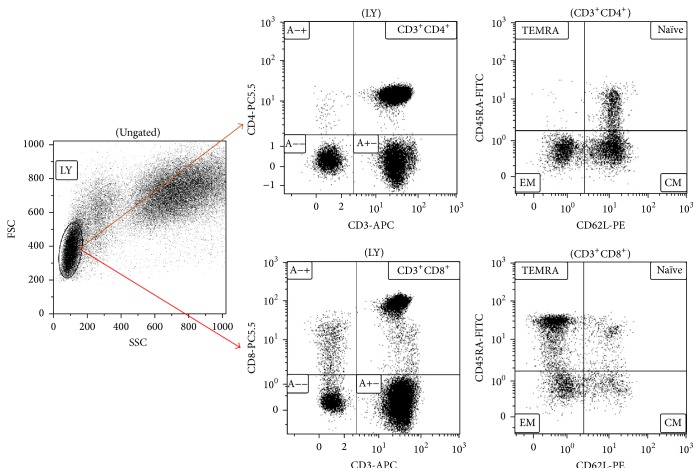
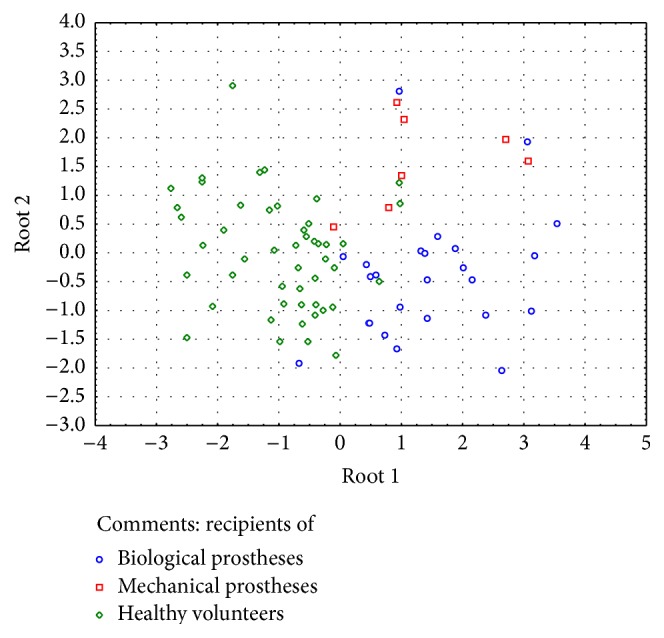
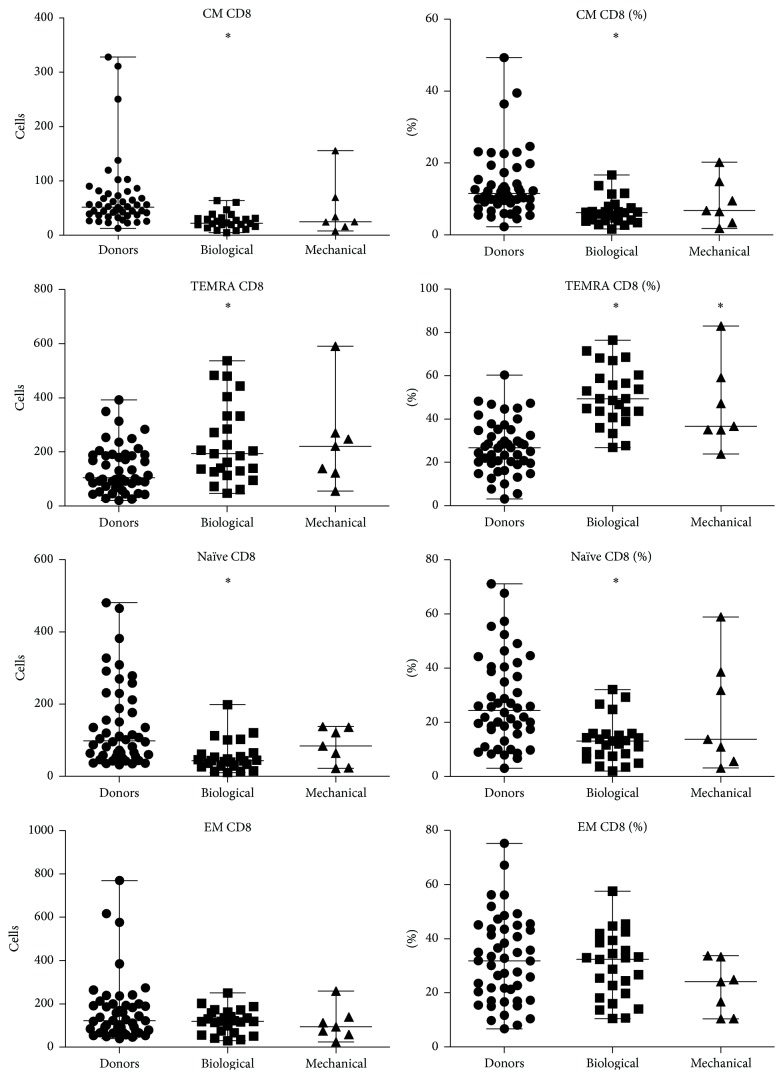
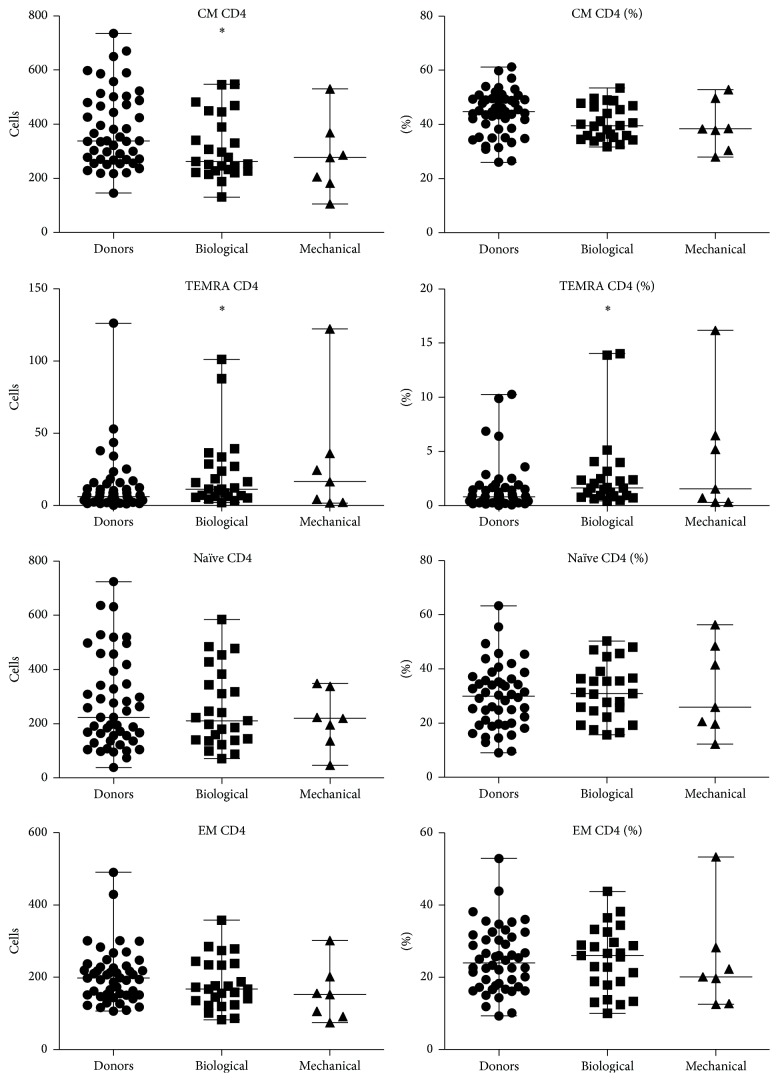
The study was aimed at assessing T cell subsets of peripheral blood from recipients of long-term functioning (more than 60 months) biological and mechanical heart valve prostheses. The absolute and relative number of CD4 and CD8 T cell subsets was analyzed: naïve (N, CD45RA(+)CD62L(+)), central memory (CM, CD45RA(-)CD62L(+)), effector memory (EM, CD45RA(-)CD62L(-)), and terminally differentiated CD45RA-positive effector memory (TEMRA, CD45RA(+)CD62L(-)) in 25 persons with biological and 7 with mechanical prosthesis compared with 48 apparently healthy volunteers. The relative and absolute number of central memory and naïve CD3(+)CD8(+) in patients with biological prosthesis was decreased (p < 0.001). Meanwhile the number of CD45RA(+)CD62L(-)CD3(+)CD8(+) and CD3(+)CD4(+) was increased (p < 0.001). Patients with mechanical prosthesis had increased absolute and relative number of CD45RA(+)CD62L(-)CD3(+)CD8(+) cells (p = 0.006). Also the relative number of CD3(+)CD4(+) cells was reduced (p = 0.04). We assume that altered composition of T cell subsets points at development of xenograft rejection reaction against both mechanical and biological heart valve prostheses.
本研究旨在评估长期功能良好(超过60个月)的生物和机械心脏瓣膜假体接受者外周血中的T细胞亚群。分析了CD4和CD8 T细胞亚群的绝对数量和相对数量:25名接受生物假体和7名接受机械假体的患者与48名明显健康的志愿者相比,幼稚型(N,CD45RA(+)CD62L(+))、中枢记忆型(CM,CD45RA(-)CD62L(+))、效应记忆型(EM,CD45RA(-)CD62L(-))和终末分化的CD45RA阳性效应记忆型(TEMRA,CD45RA(+)CD62L(-))。接受生物假体的患者中,中枢记忆型和幼稚型CD3(+)CD8(+)的相对数量和绝对数量减少(p < 0.001)。同时,CD45RA(+)CD62L(-)CD3(+)CD8(+)和CD3(+)CD4(+)的数量增加(p < 0.001)。接受机械假体的患者中,CD45RA(+)CD62L(-)CD3(+)CD8(+)细胞的绝对数量和相对数量增加(p = 0.006)。此外,CD3(+)CD4(+)细胞的相对数量减少(p = 0.04)。我们认为,T细胞亚群组成的改变表明针对机械和生物心脏瓣膜假体均发生了异种移植排斥反应。