Kenkel W M, Yee J R, Moore K, Madularu D, Kulkarni P, Gamber K, Nedelman M, Ferris C F
The Kinsey Institute, Indiana University, Bloomington, IN, USA.
Department of Psychology, Center for Translational NeuroImaging, Northeastern University, Boston, MA, USA.
Transl Psychiatry. 2016 Mar 22;6(3):e763. doi: 10.1038/tp.2016.15.
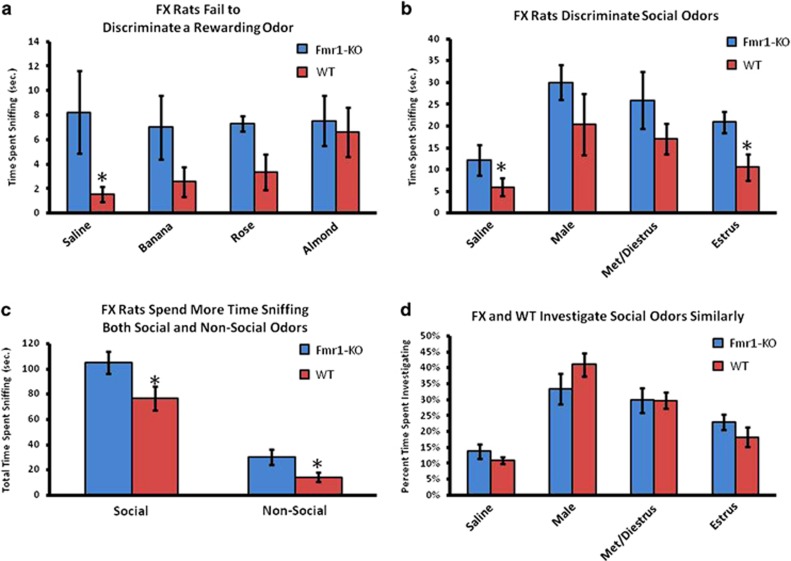
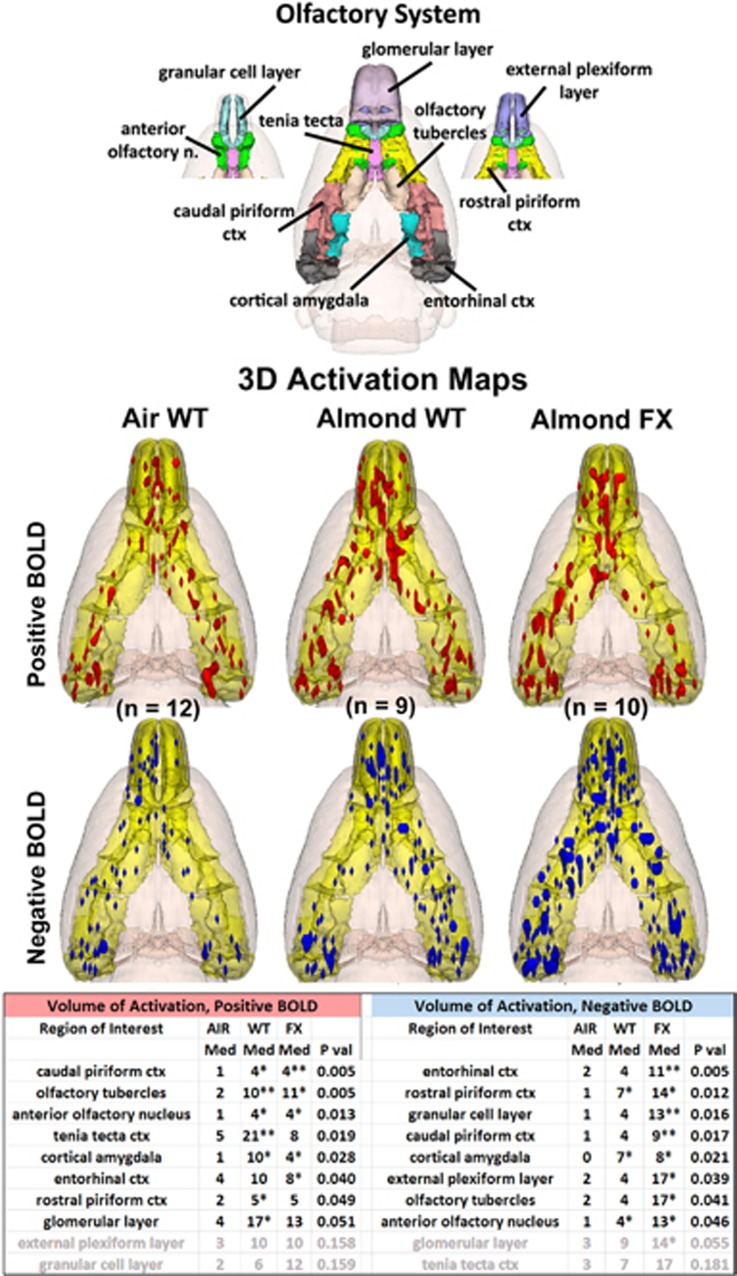
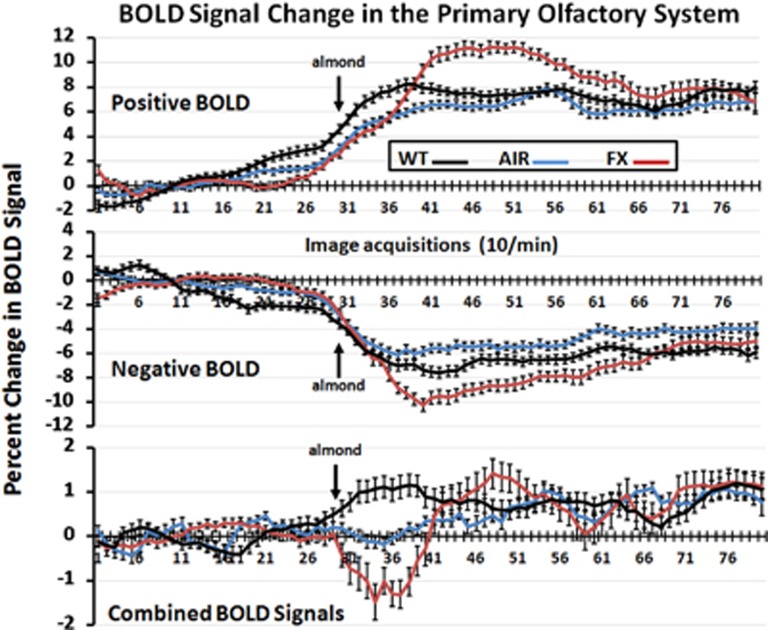
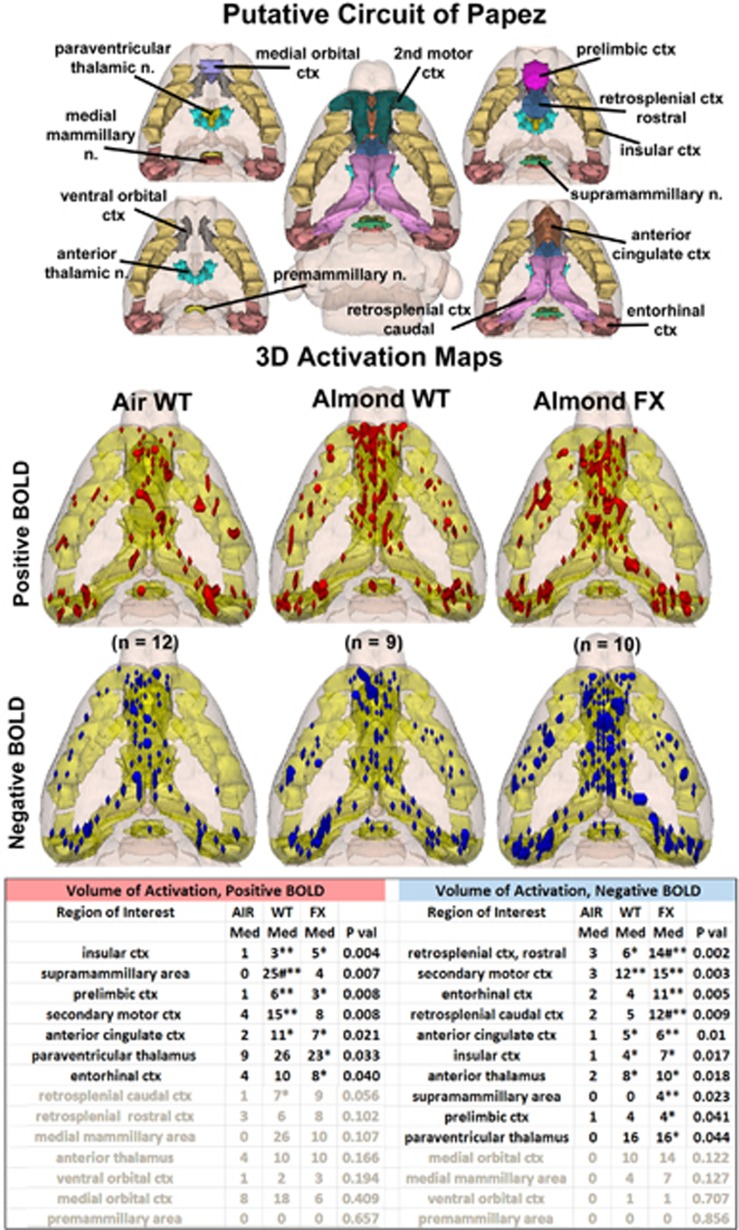
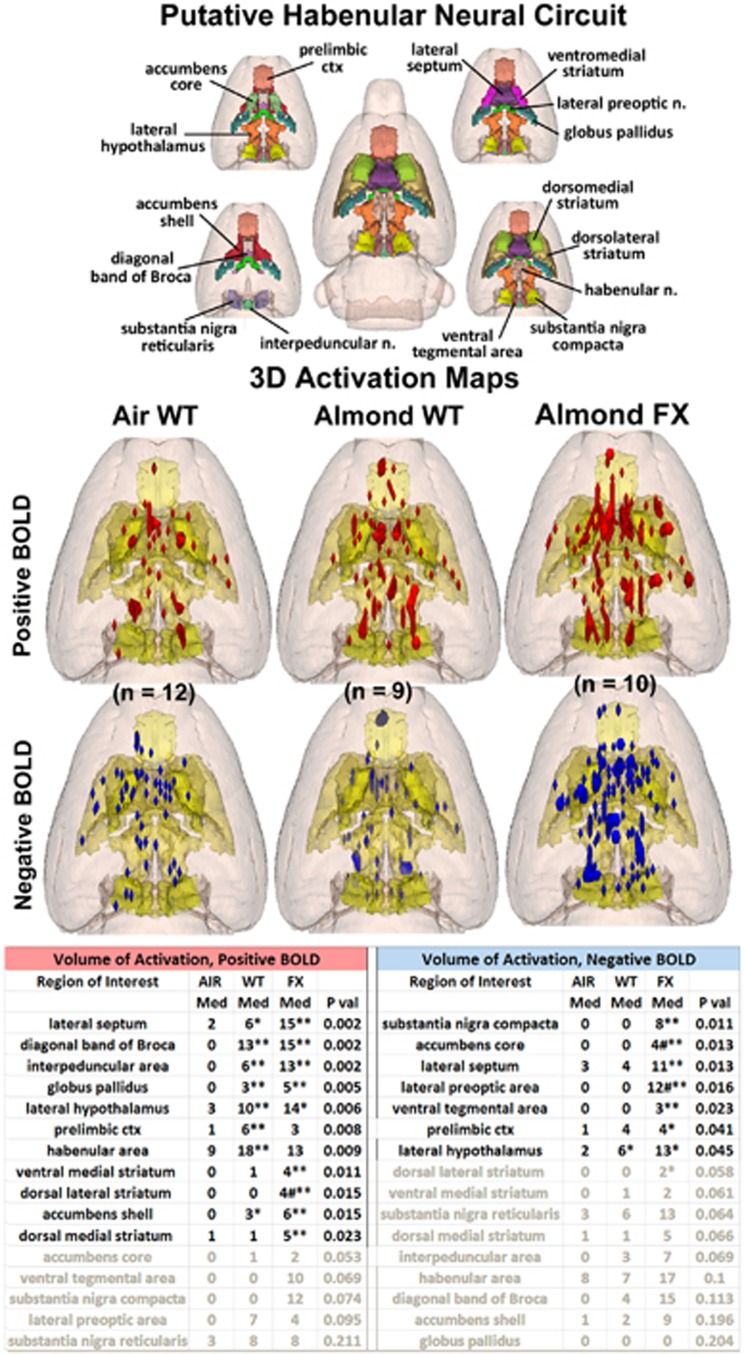
Anxiety and social deficits, often involving communication impairment, are fundamental clinical features of fragile X syndrome. There is growing evidence that dysregulation in reward processing is a contributing factor to the social deficits observed in many psychiatric disorders. Hence, we hypothesized that transgenic fragile X mental retardation 1 gene (fmr1) KO (FX) rats would display alterations in reward processing. To this end, awake control and FX rats were imaged for changes in blood oxygen level dependent (BOLD) signal intensity in response to the odor of almond, a stimulus to elicit the innate reward response. Subjects were 'odor naive' to this evolutionarily conserved stimulus. The resulting changes in brain activity were registered to a three-dimensional segmented, annotated rat atlas delineating 171 brain regions. Both wild-type (WT) and FX rats showed robust brain activation to a rewarding almond odor, though FX rats showed an altered temporal pattern and tended to have a higher number of voxels with negative BOLD signal change from baseline. This pattern of greater negative BOLD was especially apparent in the Papez circuit, critical to emotional processing and the mesolimbic/habenular reward circuit. WT rats showed greater positive BOLD response in the supramammillary area, whereas FX rats showed greater positive BOLD response in the dorsal lateral striatum, and greater negative BOLD response in the retrosplenial cortices, the core of the accumbens and the lateral preoptic area. When tested in a freely behaving odor-investigation paradigm, FX rats failed to show the preference for almond odor which typifies WT rats. However, FX rats showed investigation profiles similar to WT when presented with social odors. These data speak to an altered processing of this highly salient novel odor in the FX phenotype and lend further support to the notion that altered reward systems in the brain may contribute to fragile X syndrome symptomology.
焦虑和社交缺陷,常伴有沟通障碍,是脆性X综合征的基本临床特征。越来越多的证据表明,奖赏处理失调是许多精神疾病中观察到的社交缺陷的一个促成因素。因此,我们假设转基因脆性X智力低下1基因(fmr1)敲除(FX)大鼠在奖赏处理方面会出现改变。为此,对清醒的对照大鼠和FX大鼠进行成像,以观察其对杏仁气味(一种引发先天奖赏反应的刺激)的血氧水平依赖(BOLD)信号强度的变化。实验对象对这种在进化上保守的刺激“未接触过该气味”。将由此产生的大脑活动变化记录到一个三维分割的、有注释的大鼠脑图谱上,该图谱描绘了171个脑区。野生型(WT)大鼠和FX大鼠对奖赏性杏仁气味均表现出强烈的大脑激活,不过FX大鼠表现出不同的时间模式,且与基线相比,具有负BOLD信号变化的体素数量往往更多。这种更大的负BOLD模式在对情绪处理至关重要的帕佩兹回路以及中脑边缘/缰核奖赏回路中尤为明显。WT大鼠在乳头体上区表现出更大的正BOLD反应,而FX大鼠在背外侧纹状体表现出更大的正BOLD反应,在压后皮质、伏隔核核心和外侧视前区表现出更大的负BOLD反应。当在自由行为的气味探究范式中进行测试时,FX大鼠没有表现出WT大鼠典型的对杏仁气味的偏好。然而,当呈现社交气味时,FX大鼠表现出与WT大鼠相似的探究模式。这些数据表明FX表型对这种高度显著的新气味的处理发生了改变,并进一步支持了大脑中奖赏系统改变可能导致脆性X综合征症状的观点。