Berezin Alexander E, Kremzer Alexander A
Department of Internal Medicine, State Medical University, Zaporozhye, Ukraine.
Department of Clinical Pharmacology, State Medical University, Zaporozhye, Ukraine.
Biomed J. 2015 Dec;38(6):523-30. doi: 10.1016/j.bj.2015.08.002. Epub 2016 Feb 19.
Osteonectin (OSN) plays a pivotal role in cardiac remodeling, but predictive value for OSN in ischemic chronic heart failure (CHF) has not been defined. The aim of the study was to evaluate the prognostic value of OSN for cumulative survival and hospitalization among patients with ischemic-induced CHF.
A total of 154 patients with ischemic symptomatic moderate-to-severe CHF were enrolled in the study at discharge from the hospital. Observation period was up to 3 years (156 weeks). Blood samples for biomarkers measurements were collected at baseline prior to study entry. ELISA methods for measurements of circulating level of OSN were used.
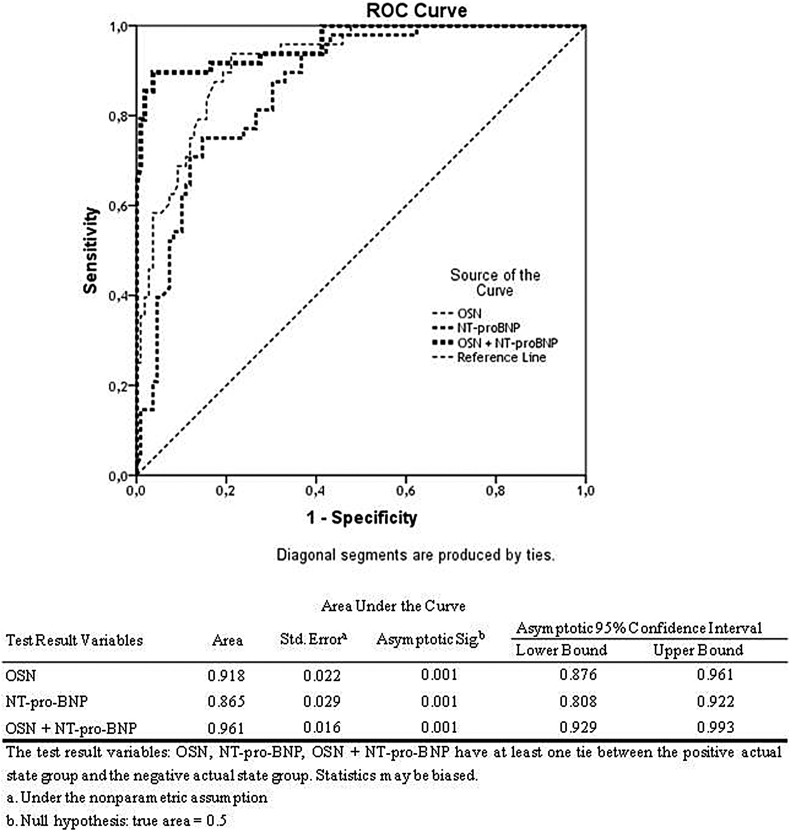
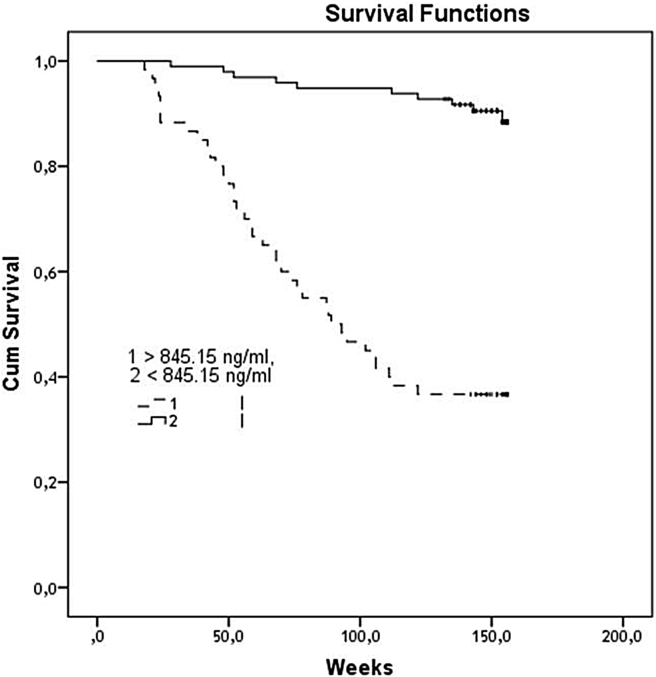
During a median follow-up of 2.18 years, 21 participants died and 106 subjects were re-admitted. Medians of circulating levels of OSN in survival and died patient cohorts were 670.96 ng/mL (95% confidence interval [CI] = 636.53-705.35 ng/mL) and 907.84 ng/mL (95% CI = 878.02-937.60 ng/mL). Receiver operation characteristic curve analysis has shown that cut off point of OSN concentration for cumulative survival function was 845.15 ng/mL. It has been found a significant divergence of Kaplan-Meier survival curves in patients with high (>845.15 ng/mL) and low (<845.15 ng/mL) concentrations of OSN. Circulating OSN independently predicted all-cause mortality (odds ratio [OR] = 1.23; 95% CI = 1.10-1.36; p < 0.001), CHF-related death (OR = 1.46; 95% CI = 1.22-1.80; p < 0.001), and also CHF-related re-admission (OR = 1.92; 95% CI = 1.77-2.45; p < 0.001) within 3 years of observation period.
Increased circulating secreted protein acidic and rich in cysteine family member OSN associates with increased 3-year CHF-related death, all-cause mortality, and risk for recurrent hospitalization due to CHF.
骨连接蛋白(OSN)在心脏重塑中起关键作用,但OSN在缺血性慢性心力衰竭(CHF)中的预测价值尚未明确。本研究的目的是评估OSN对缺血性CHF患者累积生存率和住院率的预后价值。
共有154例缺血性中重度症状性CHF患者在出院时纳入本研究。观察期长达3年(156周)。在研究入组前的基线时采集用于生物标志物测量的血样。采用ELISA方法测量循环中OSN的水平。
在中位随访2.18年期间,21名参与者死亡,106名受试者再次入院。生存队列和死亡队列中循环OSN水平的中位数分别为670.96 ng/mL(95%置信区间[CI]=636.53 - 705.35 ng/mL)和907.84 ng/mL(95%CI = 878.02 - 937.60 ng/mL)。受试者工作特征曲线分析表明,累积生存函数的OSN浓度截断点为845.15 ng/mL。已发现OSN浓度高(>845.15 ng/mL)和低(<845.15 ng/mL)的患者的Kaplan-Meier生存曲线存在显著差异。循环OSN独立预测全因死亡率(比值比[OR]=1.23;95%CI = 1.10 - 1.36;p<0.001)、CHF相关死亡(OR = 1.46;95%CI = 1.22 - 1.80;p<0.001),以及在观察期3年内CHF相关再入院(OR = 1.92;95%CI = 1.77 - 2.45;p<0.001)。
循环中分泌性富含半胱氨酸的酸性蛋白家族成员OSN水平升高与3年CHF相关死亡、全因死亡率增加以及因CHF再次住院的风险增加相关。