Garcia-Baran Dynela, Johnson Thomas M, Wagner Joyce, Shen Joann, Geers Michelle
From the Regimental Aid Station, NHCL (DG-B); Department of Neurology, NHCL Intrepid Spine Concussion Recovery Center (TMJ, JW); and Speech-language Pathologist (JS, MG).
Medicine (Baltimore). 2016 Mar;95(12):e2886. doi: 10.1097/MD.0000000000002886.
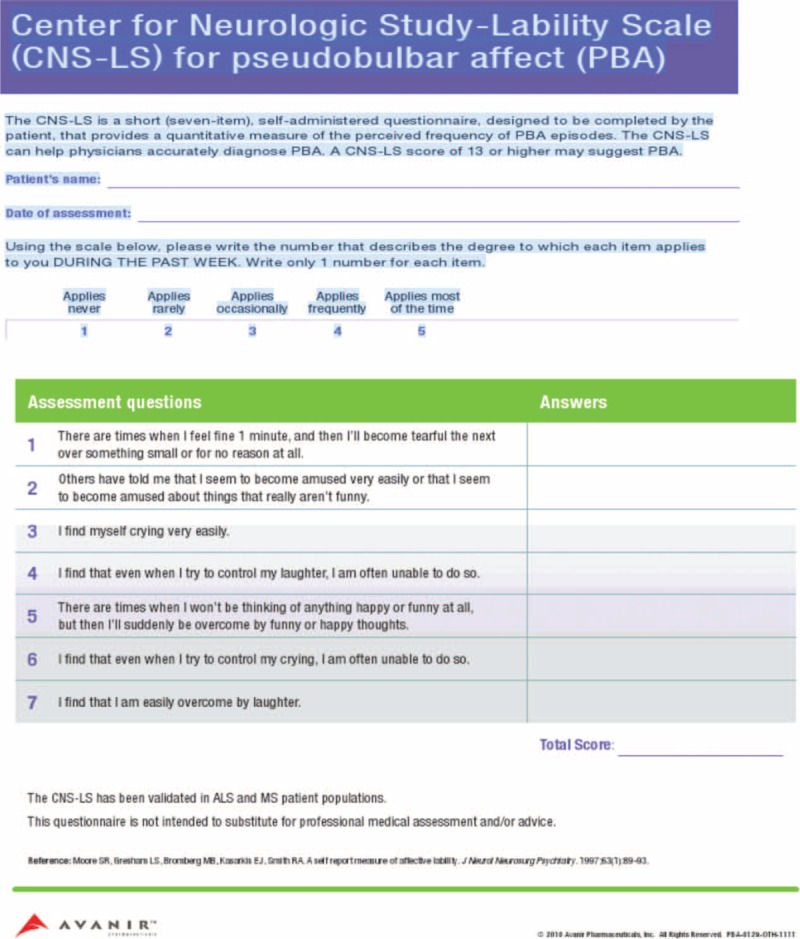
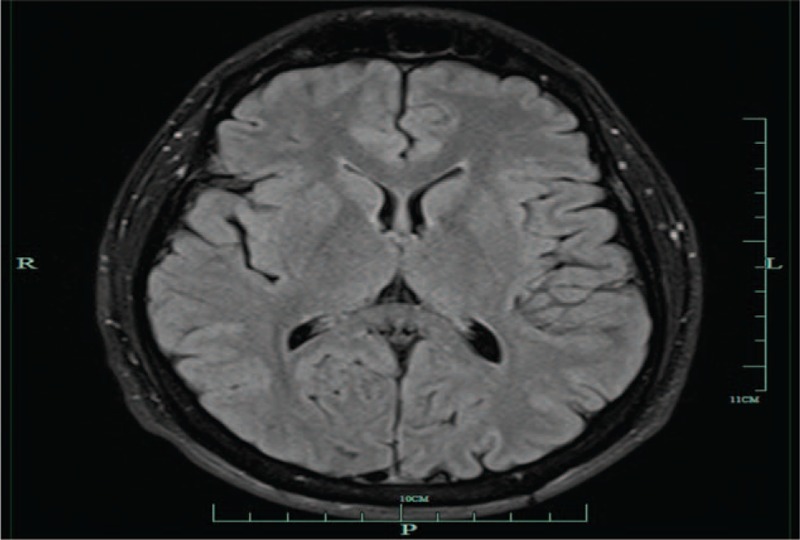
Pathological laughing and crying, or pseudobulbar affect (PBA), has been described in patients with neurological disorders such as multiple sclerosis, amyotrophic lateral sclerosis, Alzheimer's disease, stroke, and traumatic brain injury (TBI) since the 19th century (Schiffer 2005). The syndrome is characterized by inappropriate episodes of laughing or crying after minor stimuli. It was first coined a disinhibition of cortical control by Kinnier Wilson in 1924. It was observed in brain disease and seen with mild TBI. It can impair social and occupational function and is largely underrecognized in clinical settings. PBA is usually treated with antidepressants and dopaminergic agents. In this case we treated a military recruit with TBI with Nuedexta-a dextromethorphan/Quinidine derivative with a subsequent decrease in his episodes.
病理性哭笑,即假性延髓情绪(PBA),自19世纪以来就在患有神经系统疾病的患者中被描述过,如多发性硬化症、肌萎缩侧索硬化症、阿尔茨海默病、中风和创伤性脑损伤(TBI)(希弗,2005年)。该综合征的特征是在轻微刺激后出现不适当的哭笑发作。1924年,金尼尔·威尔逊首次将其定义为皮质控制的去抑制。它在脑部疾病中被观察到,并在轻度创伤性脑损伤中出现。它会损害社交和职业功能,在临床环境中很大程度上未被认识到。PBA通常用抗抑郁药和多巴胺能药物治疗。在这个案例中,我们用Nuedexta(一种右美沙芬/奎尼丁衍生物)治疗了一名患有创伤性脑损伤的新兵,随后他的发作次数减少了。