Kumar Rajiv B, Goren Nira D, Stark David E, Wall Dennis P, Longhurst Christopher A
Department of Pediatrics, Stanford School of Medicine, Palo Alto, CA, USA Department of Clinical Informatics, Stanford Children's Health, Palo Alto, CA, USA
Department of Pediatrics, Stanford School of Medicine, Palo Alto, CA, USA.
J Am Med Inform Assoc. 2016 May;23(3):532-7. doi: 10.1093/jamia/ocv206. Epub 2016 Mar 27.
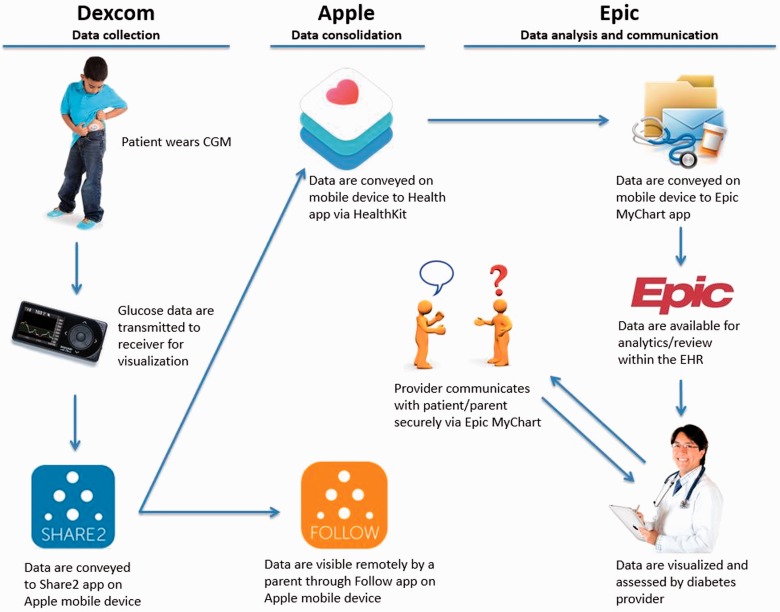
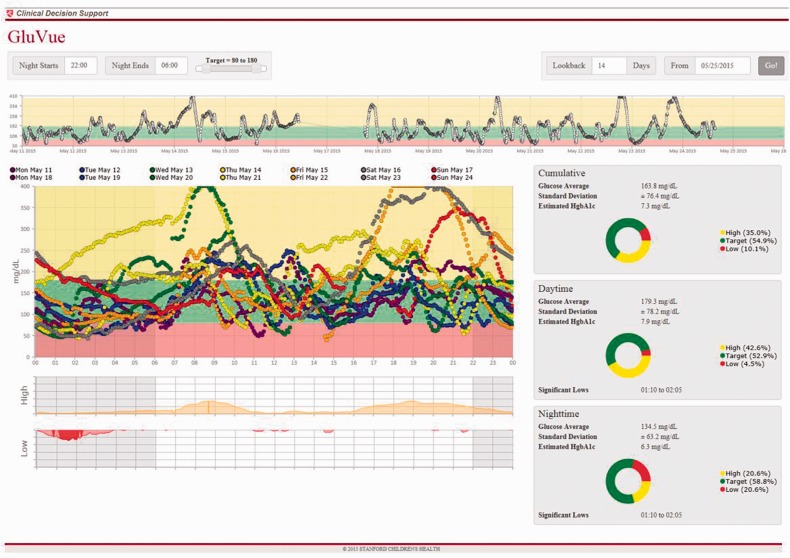
The diabetes healthcare provider plays a key role in interpreting blood glucose trends, but few institutions have successfully integrated patient home glucose data in the electronic health record (EHR). Published implementations to date have required custom interfaces, which limit wide-scale replication. We piloted automated integration of continuous glucose monitor data in the EHR using widely available consumer technology for 10 pediatric patients with insulin-dependent diabetes. Establishment of a passive data communication bridge via a patient's/parent's smartphone enabled automated integration and analytics of patient device data within the EHR between scheduled clinic visits. It is feasible to utilize available consumer technology to assess and triage home diabetes device data within the EHR, and to engage patients/parents and improve healthcare provider workflow.
糖尿病医疗服务提供者在解读血糖趋势方面发挥着关键作用,但很少有机构成功地将患者家庭血糖数据整合到电子健康记录(EHR)中。迄今为止已发布的实施案例都需要定制接口,这限制了大规模推广。我们使用广泛可用的消费技术,对10名患有胰岛素依赖型糖尿病的儿科患者进行了连续血糖监测数据在EHR中的自动化整合试点。通过患者/家长的智能手机建立被动数据通信桥梁,能够在预定的门诊就诊期间实现EHR内患者设备数据的自动化整合和分析。利用现有的消费技术在EHR中评估和分类家庭糖尿病设备数据,并让患者/家长参与其中并改善医疗服务提供者的工作流程是可行的。