Olivares Carla N, Alaniz Laura D, Menger Michael D, Barañao Rosa I, Laschke Matthias W, Meresman Gabriela F
Instituto de Biología y Medicina Experimental (IBYME-CONICET), Ciudad Autónoma de Buenos Aires, Argentina.
CIT NOBA, Universidad Nacional del Noroeste de la Provincia de Buenos Aires (CONICET-UNNOBA), Junín, Buenos Aires, Argentina.
PLoS One. 2016 Mar 28;11(3):e0152302. doi: 10.1371/journal.pone.0152302. eCollection 2016.
The development and long-term survival of endometriotic lesions is crucially dependent on an adequate vascularization. Hyaluronic acid (HA) through its receptor CD44 has been described to be involved in the process of angiogenesis.
To study the effect of HA synthesis inhibition using non-toxic doses of 4-methylumbelliferone (4-MU) on endometriosis-related angiogenesis.
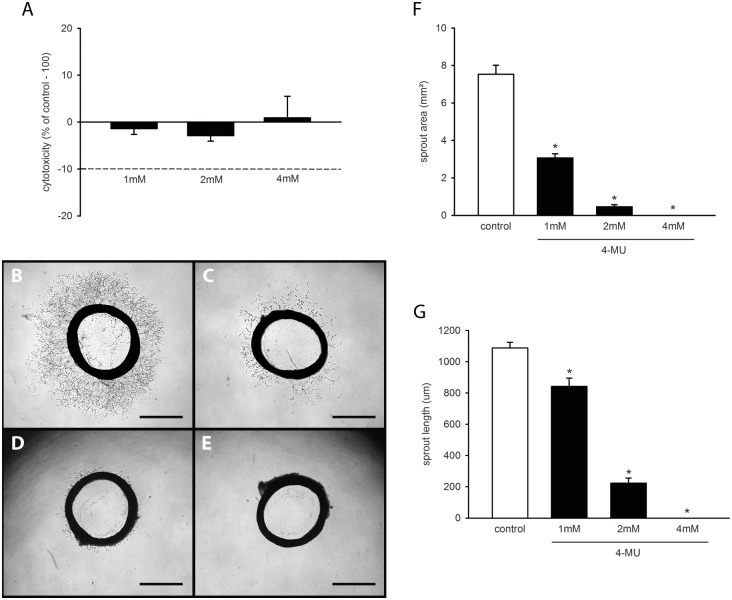
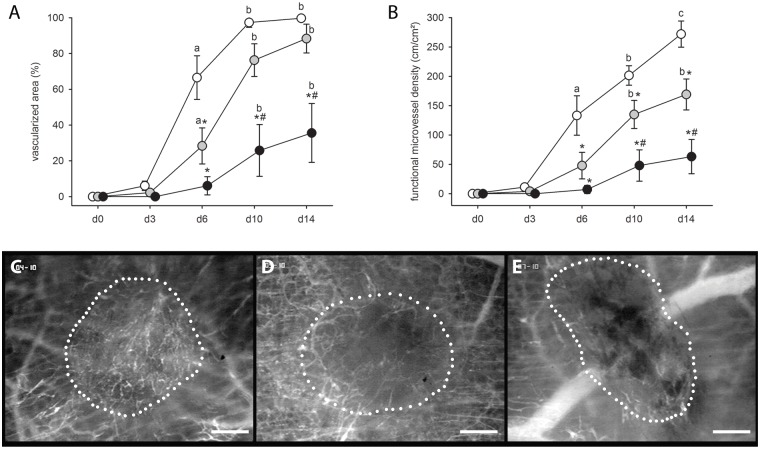
The cytotoxicity of different in vitro doses of 4-MU on endothelial cells was firstly tested by means of a lactate dehydrogenase assay. The anti-angiogenic action of non-cytotoxic doses of 4-MU was then assessed by a rat aortic ring assay. In addition, endometriotic lesions were induced in dorsal skinfold chambers of female BALB/c mice, which were daily treated with an intraperitoneal injection of 0.9% NaCl (vehicle group; n = 6), 20 mg/kg 4-MU (n = 8) or 80 mg/kg 4-MU (n = 7) throughout an observation period of 14 days. The effect of 4-MU on their vascularization, survival and growth were studied by intravital fluorescence microscopy, histology and immunohistochemistry.
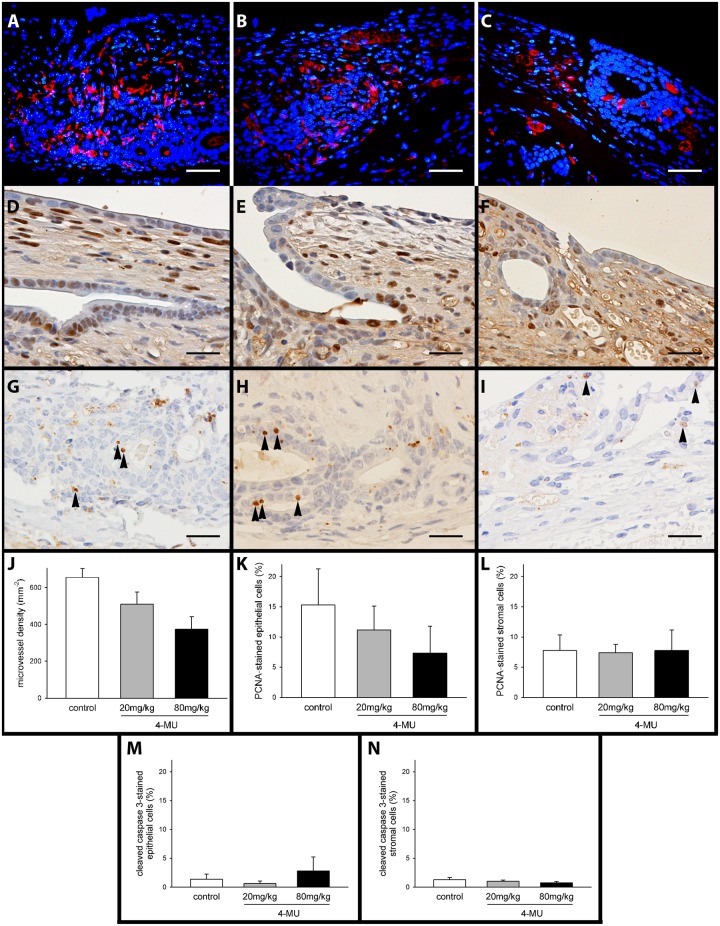
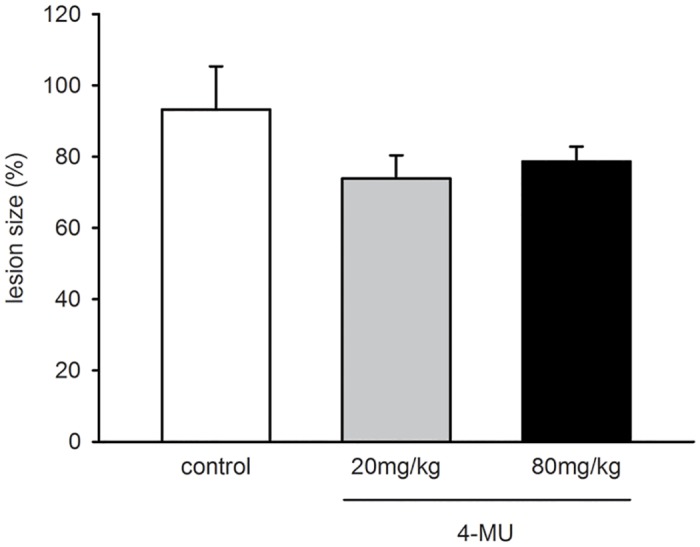
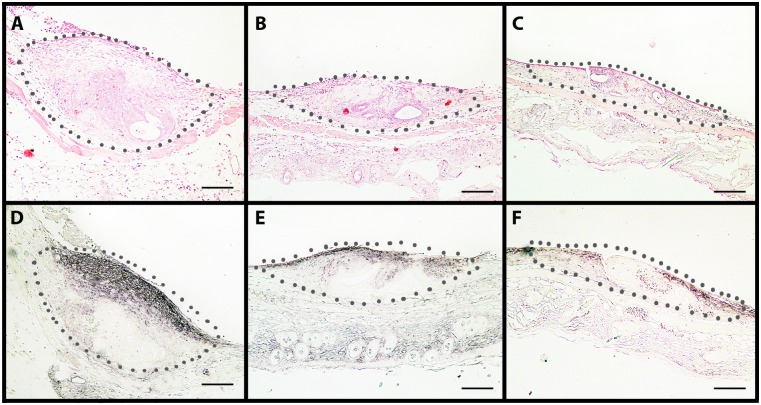
Non-cytotoxic doses of 4-MU effectively inhibited vascular sprout formation in the rat aortic ring assay. Endometriotic lesions in dorsal skinfold chambers of 4-MU-treated mice dose-dependently exhibited a significantly smaller vascularized area and lower functional microvessel density when compared to vehicle-treated controls. Histological analyses revealed a downregulation of HA expression in 4-MU-treated lesions. This was associated with a reduced density of CD31-positive microvessels within the lesions. In contrast, numbers of PCNA-positive proliferating and cleaved caspase-3-positive apoptotic cells did not differ between 4-MU-treated and control lesions.
The present study demonstrates for the first time that targeting the synthesis of HA suppresses angiogenesis in developing endometriotic lesions. Further studies have to clarify now whether in the future this anti-angiogenic effect can be used beneficially for the treatment of endometriosis.
子宫内膜异位症病灶的发生发展及长期存活严重依赖于充足的血管形成。已有研究表明,透明质酸(HA)通过其受体CD44参与血管生成过程。
研究使用无毒剂量的4-甲基伞形酮(4-MU)抑制HA合成对子宫内膜异位症相关血管生成的影响。
首先通过乳酸脱氢酶测定法检测不同体外剂量的4-MU对内皮细胞的细胞毒性。然后采用大鼠主动脉环试验评估无细胞毒性剂量的4-MU的抗血管生成作用。此外,在雌性BALB/c小鼠的背部皮褶小室中诱导子宫内膜异位症病灶,在14天的观察期内,每天腹腔注射0.9%氯化钠(载体组;n = 6)、20 mg/kg 4-MU(n = 8)或80 mg/kg 4-MU(n = 7)。通过活体荧光显微镜检查、组织学和免疫组织化学研究4-MU对其血管形成、存活和生长的影响。
在大鼠主动脉环试验中,无细胞毒性剂量的4-MU有效抑制血管芽形成。与载体处理的对照组相比,4-MU处理小鼠背部皮褶小室中的子宫内膜异位症病灶剂量依赖性地表现出明显更小的血管化区域和更低的功能性微血管密度。组织学分析显示,4-MU处理的病灶中HA表达下调。这与病灶内CD31阳性微血管密度降低有关。相比之下,4-MU处理组和对照组病灶中PCNA阳性增殖细胞和裂解的caspase-3阳性凋亡细胞的数量没有差异。
本研究首次表明,靶向HA合成可抑制子宫内膜异位症病灶的血管生成。现在必须通过进一步研究来阐明,这种抗血管生成作用未来是否可有效用于治疗子宫内膜异位症。