Mbuli Lindisa, Mapiye Darlington, Okpechi Ikechi
Department of Medicine, Groote Schuur Hospital and University of Cape Town, Cape Town, South Africa.
South Africa National Bioinformatics Institute (SANBI), University of the Western Cape, Cape Town, South Africa.
Pan Afr Med J. 2015 Dec 14;22:365. doi: 10.11604/pamj.2015.22.365.7897. eCollection 2015.
Systemic lupus erythematosus (SLE) is a multi-system auto-immune disease common in females of child-bearing age. The effect of pregnancy on SLE and vice versa have not been well characterised in Africans. The aim of this study is to describe the pregnancy outcomes of patients with SLE presenting to the maternity department of Groote Schuur Hospital, Cape Town.
This study was designed as a retrospective review of records of pregnant women known with SLE and followed-up at the maternity section of Groote Schuur Hospital. The duration of survey was from the 1(st) January 2003 to 31(st) December 2013.
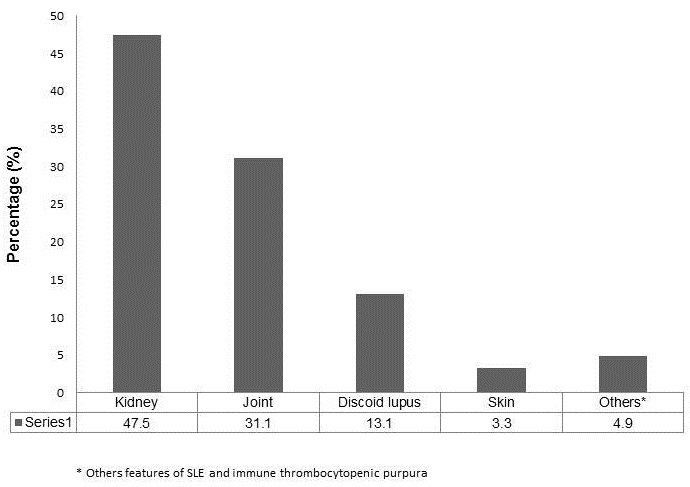
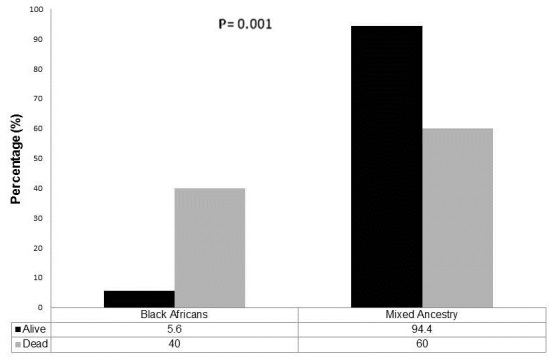
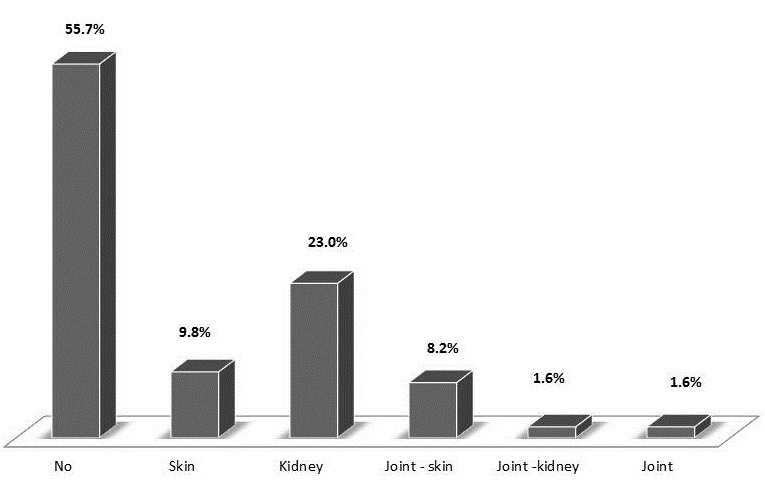
There were 61 pregnancies reviewed in 49 patients; 80.3% of the pregnancies were in patients of mixed ancestry and the rest (19.7%) in black African patients. The mean age at presentation of the current pregnancy was 27.2 ± 5.0 years. Mean gestational age at presentation and delivery was 13.0 ± 6.0 weeks and 28.9 ± 9.8 weeks respectively and 47.5% of the pregnancies were in patients with lupus nephritis (LN). Thirty nine (63.9%) pregnancies reached the third trimester and 11.5% of all pregnancies ended in the first trimester. There was a lower number of live births to mothers of African ancestry than to those of mixed ancestry (p = 0.001). In 55.7% of the pregnancies, no flare was reported while a renal flare was reported in 23%. Pregnancies in patients with LN had higher frequencies of flares (58.6% vs 31.3%; p = 0.032), pre-eclampsia (34.5% vs 12.5%; p = 0.041), longer stay in hospital (12.0 ± 9.1 days vs 6.1 ± 5.1 days; p = 0.004) and low birth weight babies (1.94 ± 1.02 kg vs 2.55 ± 0.95 kg; p = 0.046) than in patients without LN. Only 36 (59%) of the neonates were discharged home alive and of these 2 (5.6%) were to mothers of black African ancestry (p = 0.001).
Increased lupus activity in pregnant SLE patients may account for the increased deaths of neonates born to SLE mothers. Patients of black African descent and those with LN tend to have a poorer outcome. A multi-disciplinary approach to the management of SLE patients (of child-bearing age or pregnant) needs to be further assessed for better outcomes.
系统性红斑狼疮(SLE)是一种多系统自身免疫性疾病,在育龄女性中较为常见。在非洲人群中,妊娠对SLE的影响以及SLE对妊娠的影响尚未得到充分描述。本研究的目的是描述在开普敦格罗特·舒尔医院产科就诊的SLE患者的妊娠结局。
本研究设计为对已知患有SLE并在格罗特·舒尔医院产科进行随访的孕妇记录进行回顾性研究。调查时间为2003年1月1日至2013年12月31日。
共对49例患者的61次妊娠进行了回顾;80.3%的妊娠发生在混血患者中,其余(19.7%)发生在非洲黑人患者中。本次妊娠就诊时的平均年龄为27.2±5.0岁。就诊时和分娩时的平均孕周分别为13.0±6.0周和28.9±9.8周,47.5%的妊娠患者患有狼疮性肾炎(LN)。39例(63.9%)妊娠进入孕晚期,所有妊娠中有11.5%在孕早期结束。非洲裔母亲的活产数低于混血母亲(p = 0.001)。在55.7%的妊娠中,未报告病情复发,而23%的妊娠报告有肾脏病情复发。LN患者的妊娠病情复发频率更高(58.6%对31.3%;p = 0.032)、子痫前期发生率更高(34.5%对12.5%;p = 0.041)、住院时间更长(12.0±9.1天对6.1±5.1天;p = 0.004),且低体重儿发生率更高(1.94±1.02千克对2.55±0.95千克;p = 0.046)。只有36例(59%)新生儿存活出院,其中2例(5.6%)为非洲黑人母亲的新生儿(p = 0.001)。
妊娠SLE患者狼疮活动增加可能是SLE母亲所生新生儿死亡增加的原因。非洲裔患者和LN患者的妊娠结局往往较差。对于(育龄或妊娠的)SLE患者的管理,需要进一步评估多学科方法以获得更好的结局。