Chomicki Guillaume, Renner Susanne S
Systematic Botany and Mycology, University of Munich (LMU), Menzinger Str. 67, 80638, Munich, Germany.
PLoS One. 2016 Mar 30;11(3):e0151317. doi: 10.1371/journal.pone.0151317. eCollection 2016.
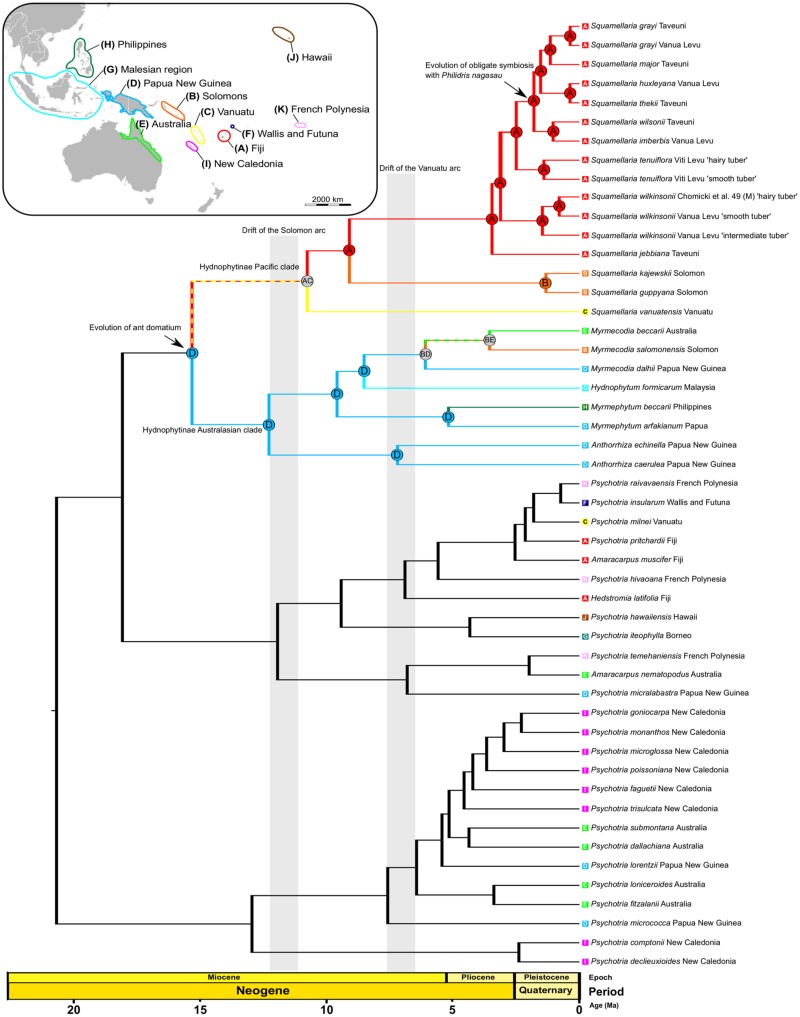
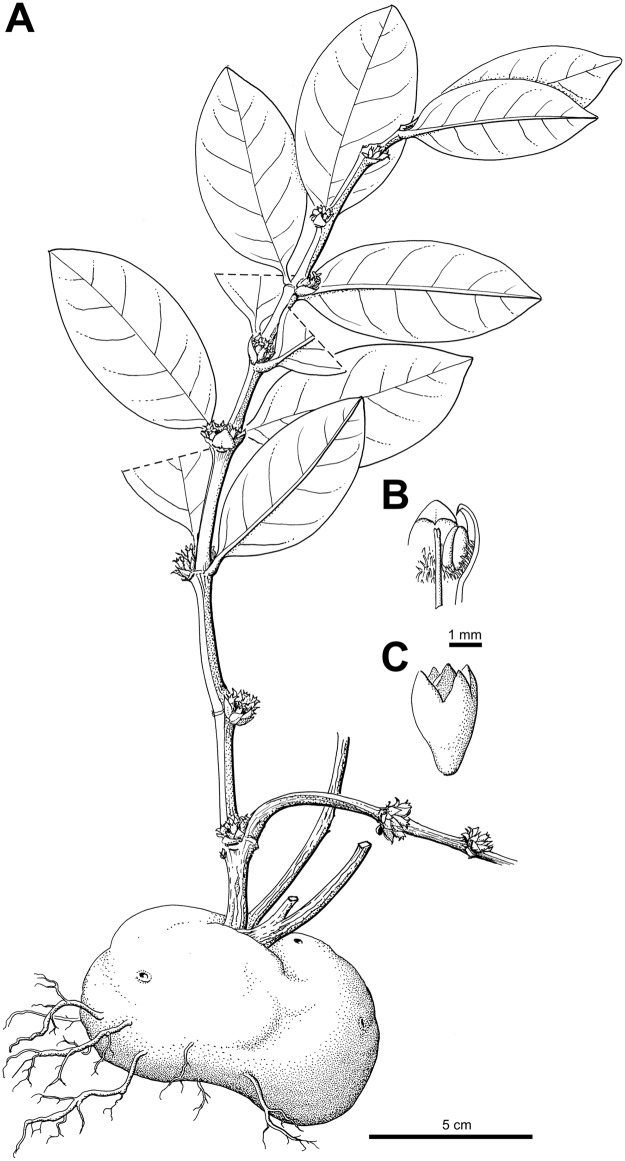
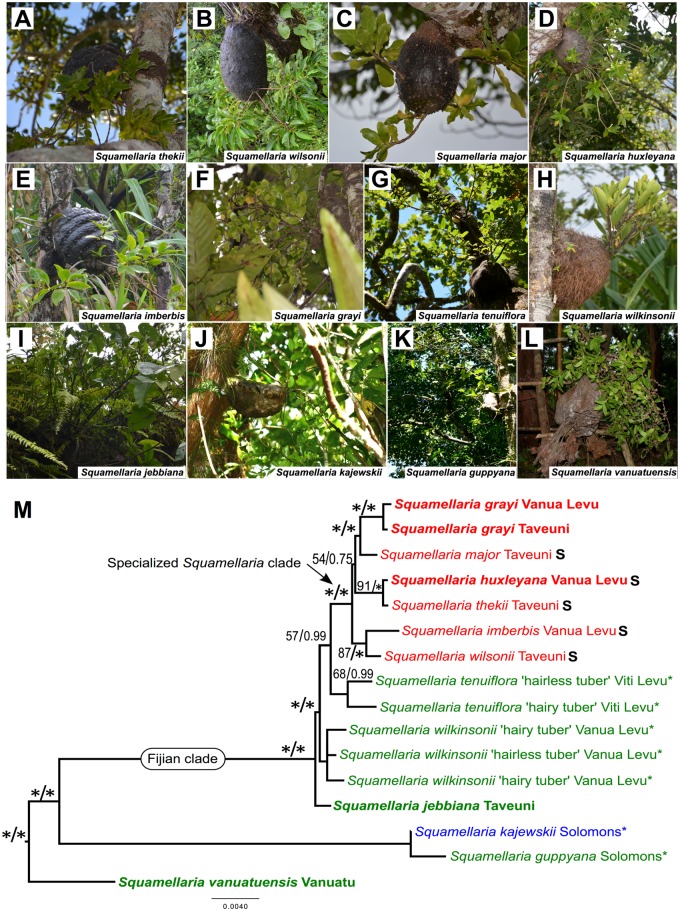
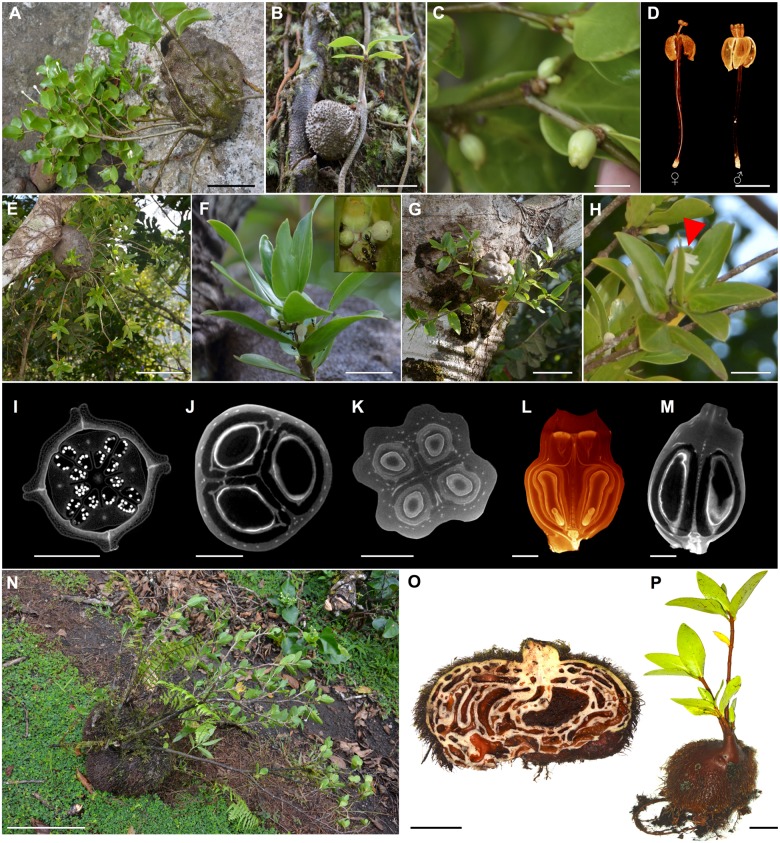
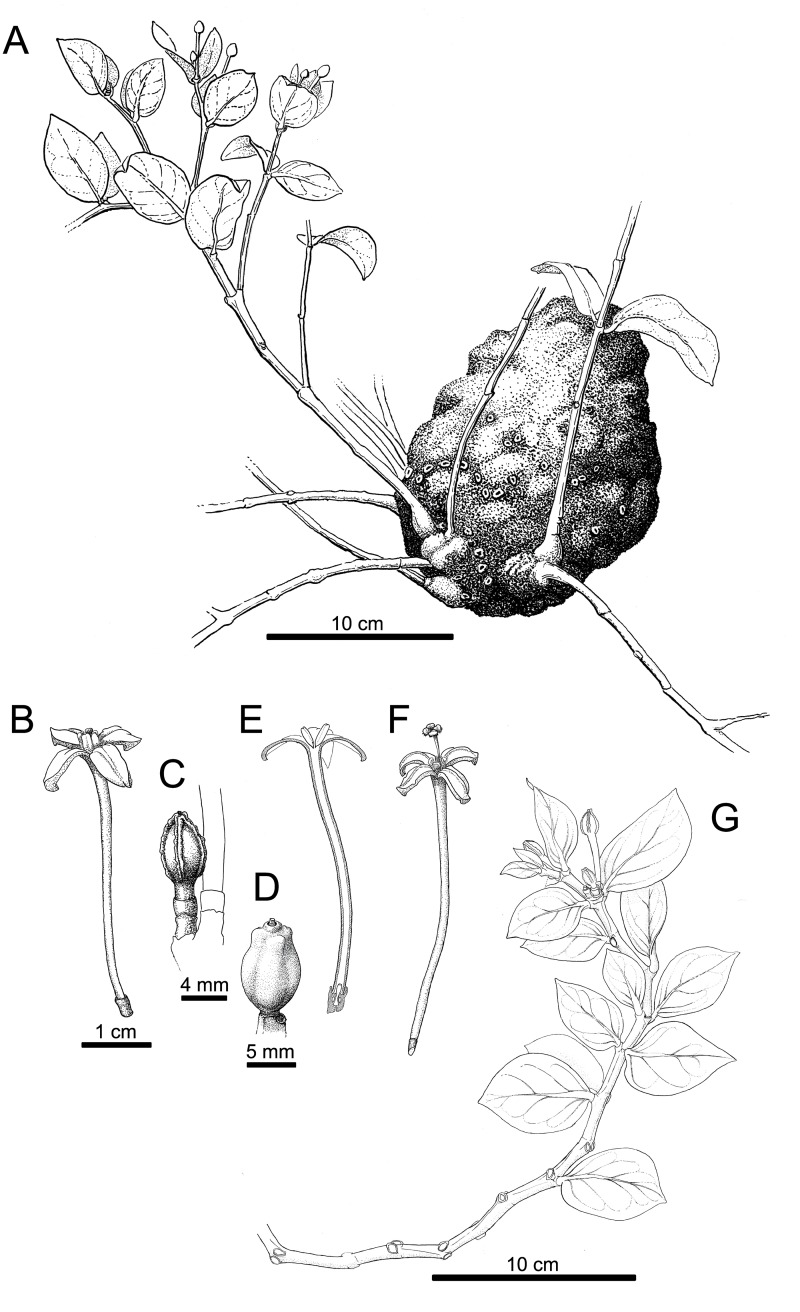
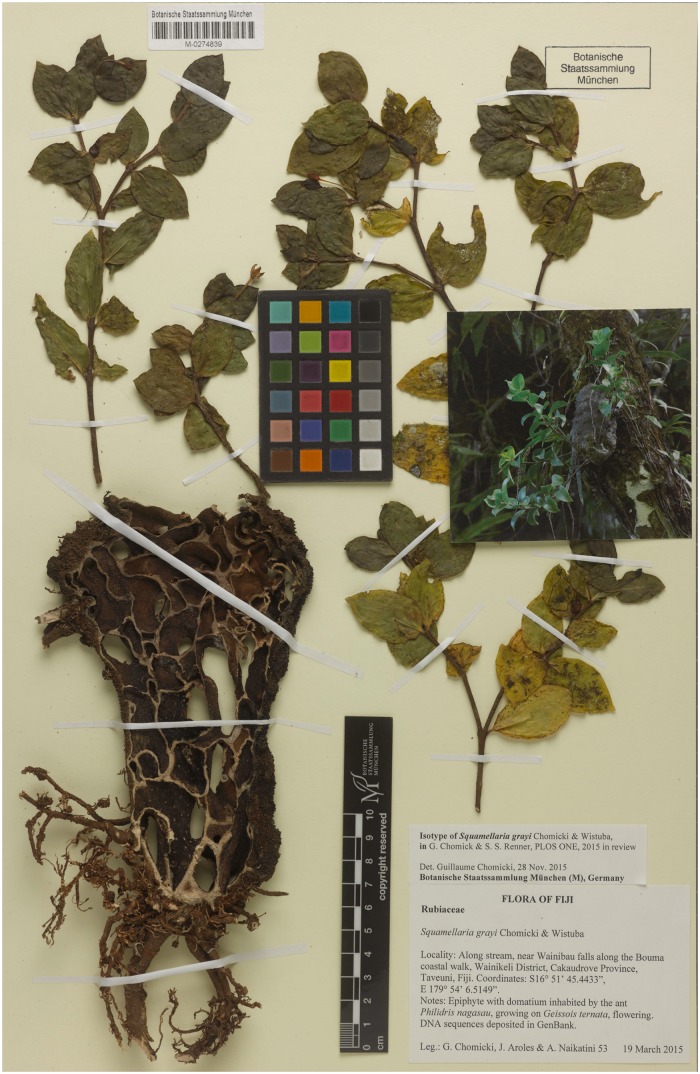
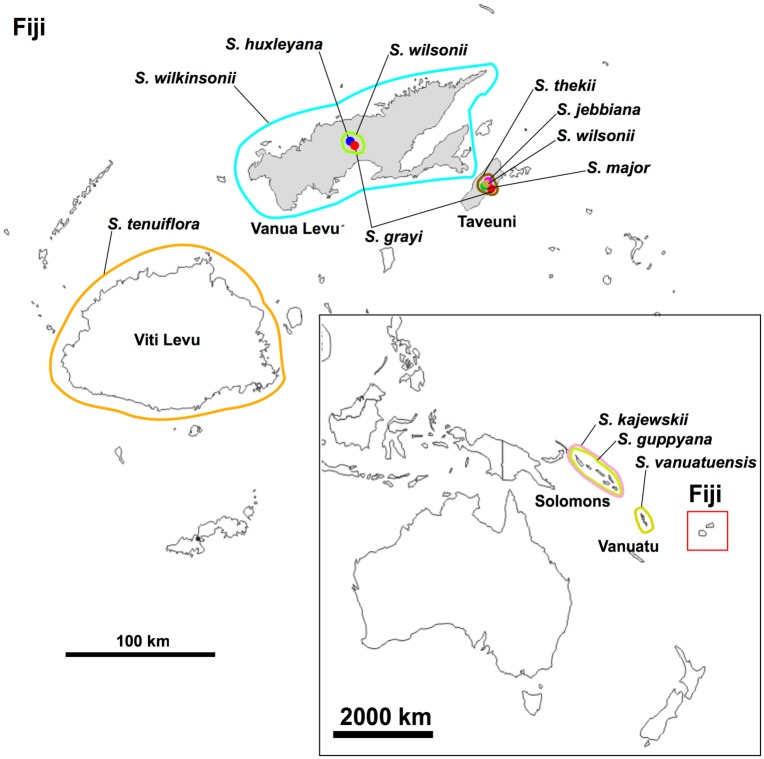
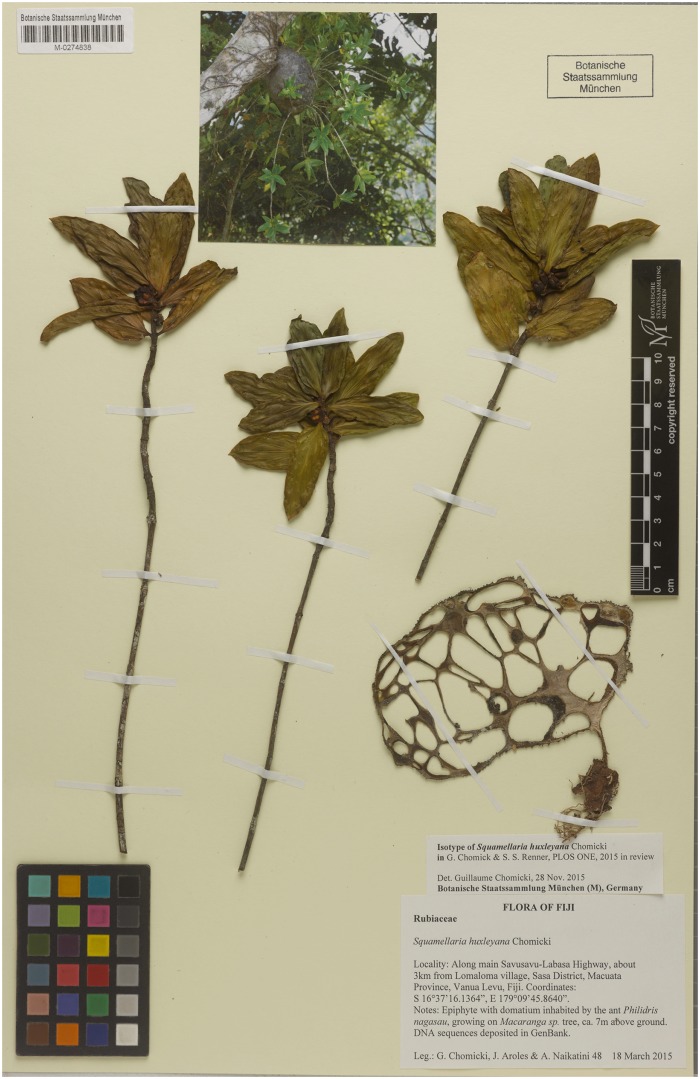
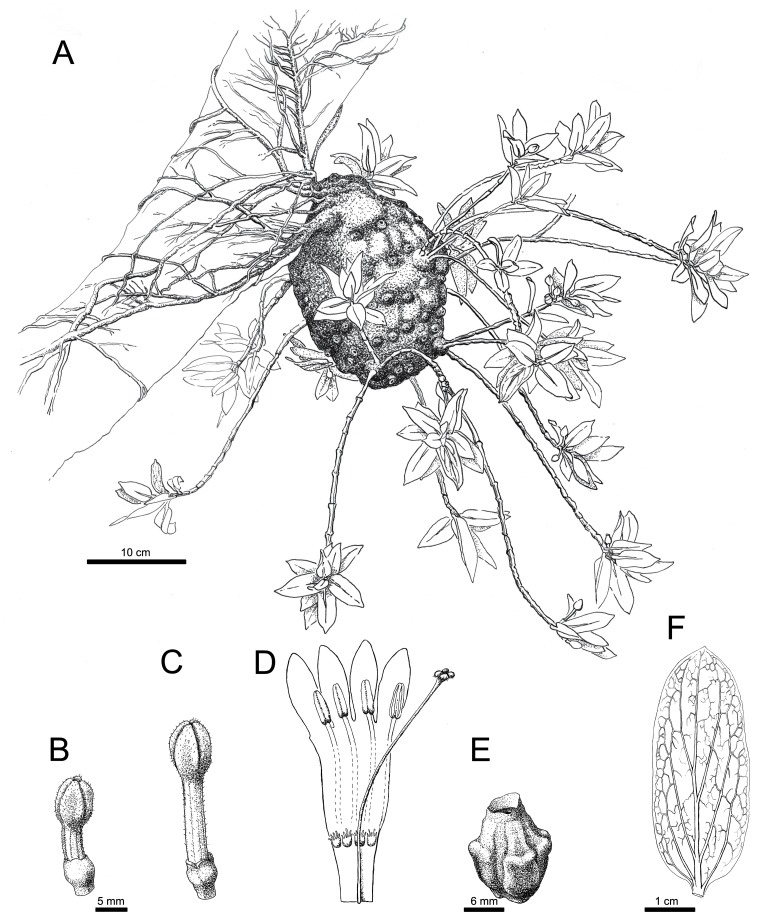
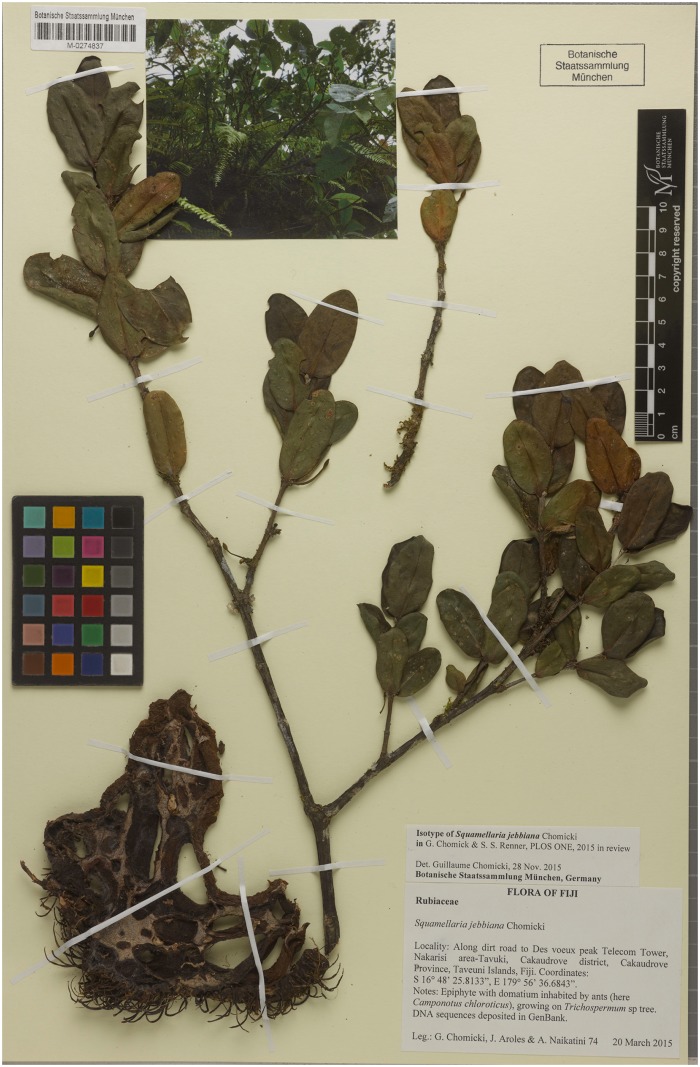
Ecological research on ant/plant symbioses in Fiji, combined with molecular phylogenetics, has brought to light four new species of Squamellaria in the subtribe Hydnophytinae of the Rubiaceae tribe Psychotrieae and revealed that four other species, previously in Hydnophytum, need to be transferred to Squamellaria. The diagnoses of the new species are based on morphological and DNA traits, with further insights from microCT scanning of flowers and leaf δ(13)C ratios (associated with Crassulacean acid metabolism). Our field and phylogenetic work results in a new circumscription of the genus Squamellaria, which now contains 12 species (to which we also provide a taxonomic key), not 3 as in the last revision. A clock-dated phylogeny and a model-testing biogeographic framework were used to infer the broader geographic history of rubiaceous ant plants in the Pacific, specifically the successive expansion of Squamellaria to Vanuatu, the Solomon Islands, and Fiji. The colonization of Vanuatu may have occurred from Fiji, when these islands were still in the same insular arc, while the colonization of the Solomon islands may have occurred after the separation of this island from the Fiji/Vanuatu arc. Some of these ant-housing epiphytes must have dispersed with their specialized ants, for instance attached to floating timber. Others acquired new ant symbionts on different islands.
对斐济蚂蚁与植物共生关系的生态学研究,结合分子系统发育学,发现了茜草科九节族水团花亚族中的四个新的 Squamellaria 物种,并揭示另外四个先前归入水团花属的物种需要转移到 Squamellaria 属。新物种的鉴定基于形态学和 DNA 特征,并通过对花朵的显微计算机断层扫描和叶片δ(13)C 比率(与景天酸代谢相关)获得了进一步的见解。我们的野外和系统发育研究成果对 Squamellaria 属进行了新的界定,该属现在包含 12 个物种(我们还为其提供了分类检索表),而非上次修订时的 3 个物种。利用一个带有时钟的系统发育树和一个模型测试生物地理框架来推断太平洋茜草科蚁栖植物更广泛的地理历史,特别是 Squamellaria 先后向瓦努阿图、所罗门群岛和斐济的扩张。瓦努阿图的殖民化可能发生在这些岛屿仍处于同一岛弧时从斐济开始,而所罗门群岛的殖民化可能发生在该岛与斐济/瓦努阿图岛弧分离之后。这些蚁栖附生植物中的一些必定是与其特化的蚂蚁一起扩散的,例如附着在漂浮的木材上。其他一些则在不同岛屿上获得了新的蚂蚁共生体。